



Ali Saip Ursavaş
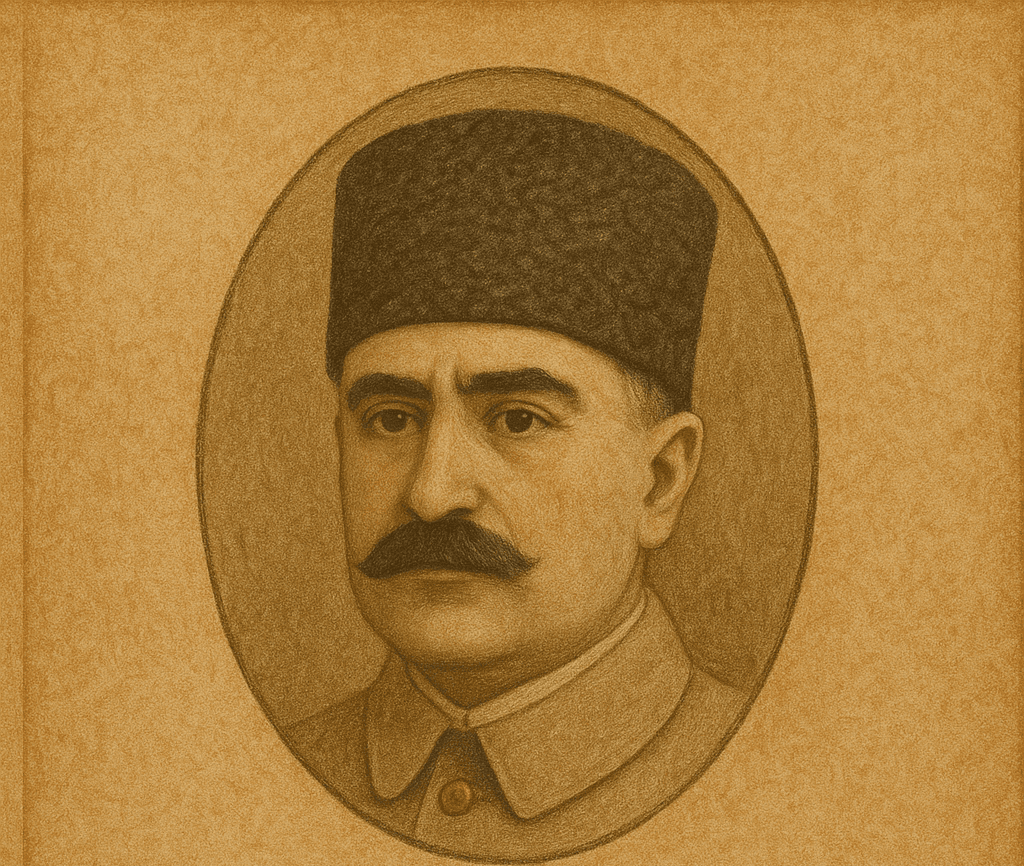
Ali Saip Ursavaş was a soldier and politician who lived in the early 20th century. He is particularly known for his efforts in liberating Urfa from occupation. His story is the account of a difficult life lived both on the battlefield and on the parliamentary podium.
Youth and Education
Ali Saip’s father was retired Lieutenant Emin Efendi. His childhood was spent in a household dominated by military discipline. In 1905, he graduated from the War School as a cavalry officer. His diploma described him as “short in stature, wheat-colored in skin, with black eyes.” His interest in military education led him to the War Academy in 1905. In 1912 he was promoted to senior lieutenant, and in 1913 he transferred to the gendarmerie. In 1917 he was promoted to captain.
During those years, serving in the Ottoman Army meant not only wielding weapons but also protecting the population under harsh conditions. Ali Saip began his service with this awareness.

(Generated by artificial intelligence)
Military Career and War Years
Ali Saip displayed great courage in the battles of Tripolitania (Libya) and Benghazi. For his achievements in the 8th Corps 1st Cavalry Regiment, he was awarded the 5th Class Order of Medjidie. His services during the Balkan Wars earned him the 4th Class Order of Medjidie. He also received one year of seniority promotion and a war medal.
While serving in Deir ez-Zor during World War I, he exerted influence over tribal groups and conducted significant operations against espionage activities. He became known for turning the Anazeh Tribe, which was under the influence of British spy Lawrence, to the Ottoman side. This success earned him three years of seniority promotion.
Role in the Liberation of Urfa
After the Armistice of Mudros, the Ottoman Army was forced to withdraw. Ali Saip took up duties in Adana and Kozan against French occupation. Under difficult conditions, he sometimes delayed French advances and at other times established contact with the Kuva-yı Milliye to lay the groundwork for resistance.
Towards the end of 1919, he began openly cooperating with the Kuva-yı Milliye. He planned a major uprising against the French in Urfa. The operation, originally scheduled to begin on 28 January 1920, was delayed due to communication problems with tribal groups. The struggle that began on 20 February 1920 culminated in the liberation of Urfa on 10 April 1920.
This success strengthened both his identity as a soldier and as a leader. On 9 May 1920, he joined the Grand National Assembly of Türkiye.

(Generated by artificial intelligence)
Political Years
Ali Saip served as a member of parliament for Urfa and Kozan during various terms in the Grand National Assembly. He held positions on committees including Posts and Telegraphs and National Defense. After the Sheikh Said Rebellion, he became a member and later president of the Eastern Independence Tribunal.
When the Surname Law was enacted in 1934, Atatürk granted him the surname “Ursavaş” in recognition of his role in the liberation of Urfa. However, throughout his political career, he remained at the center of various controversies.
Final Years
Ali Saip compiled his memoirs in a book titled “Cilicia Fronts and the Liberation of Urfa.” He died on 26 September 1939 in the Kadirli district of Adana and was buried in the Adana Military Cemetery. His name was given to a barracks, a school, a street, and an alley in Şanlıurfa.

(Generated by artificial intelligence)
Timeline
- 1885: Birth (Revandiz)
- 1905: Graduation from War School
- 1912: Promotion to senior lieutenant
- 1917: Promotion to captain
- 1920: Liberation of Urfa
- 1934: Granted the surname “Ursavaş”
- 1939: Death