


Altai Mountains
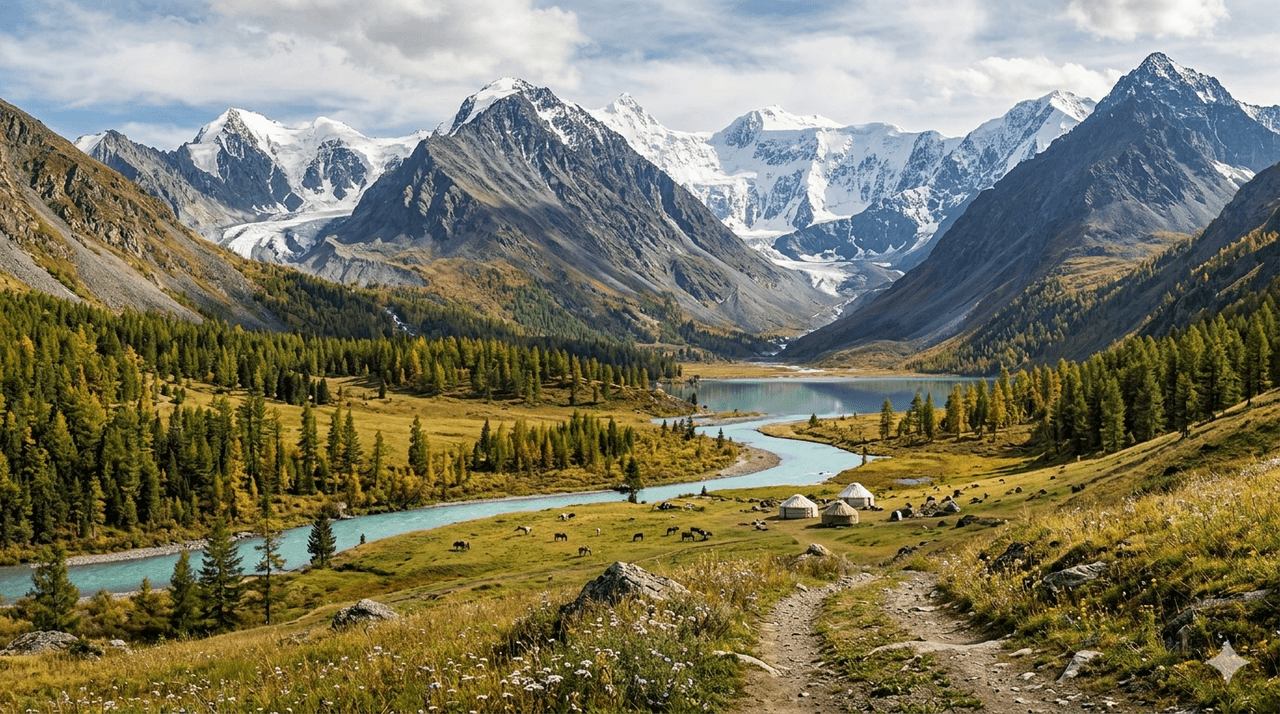
Altay Dağları, with their colossal peaks that seem to have sprung from fairy tales and their emerald forests, lie at the very heart of Central Asia. This region possesses both an ancient history and a name that carries a hidden shimmer. Are you curious about what lies behind these golden peaks? Let us explore this mysterious world together!
The Mysterious Name of the Golden Mountains
Researchers have put forward many intriguing theories about the origin of the name Altay. According to some scholars, the name derives from "Ala-Tau," meaning "Variegated Mountain", or "Altın-Tau," meaning "Golden Mountain". Some even suggest that the word Altay is directly related to the word for "gold."
Another view holds that the name comes from "Al-Tayga," meaning "high-stone mountain". Whether they shimmer like gold or rise as towering stones, these mountains have always captivated human admiration.
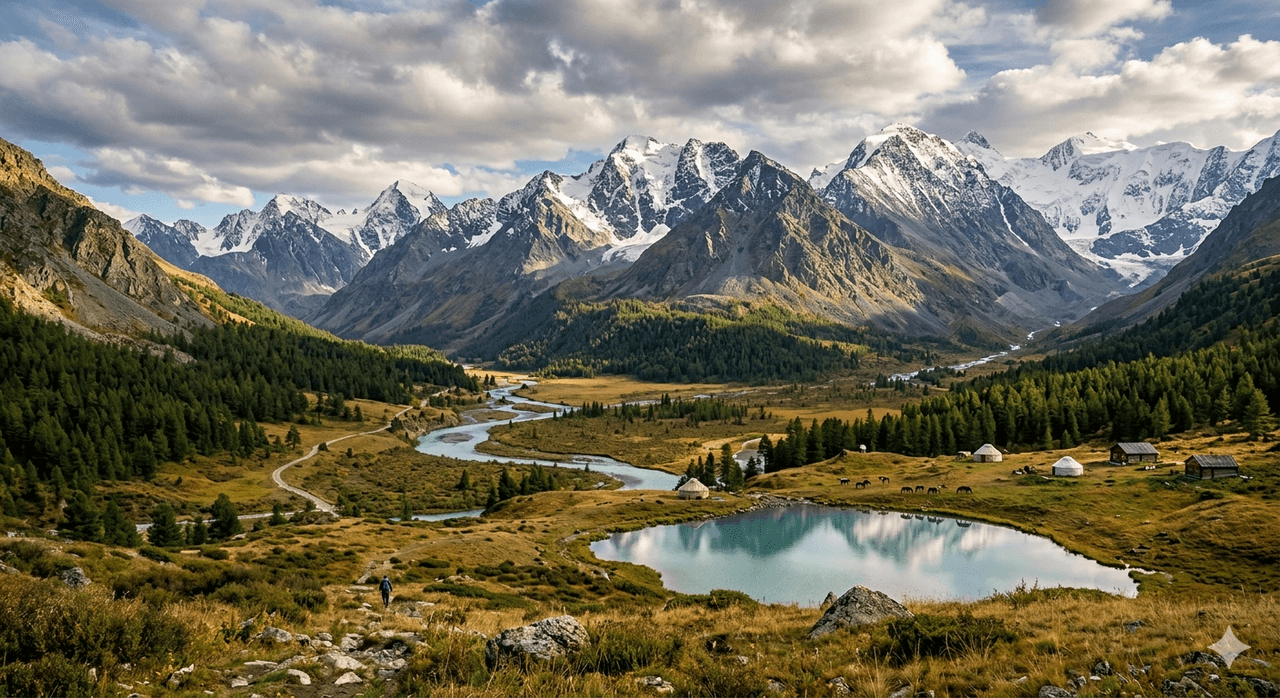
Altay Mountains (generated by artificial intelligence)
Journey to the Center of the World
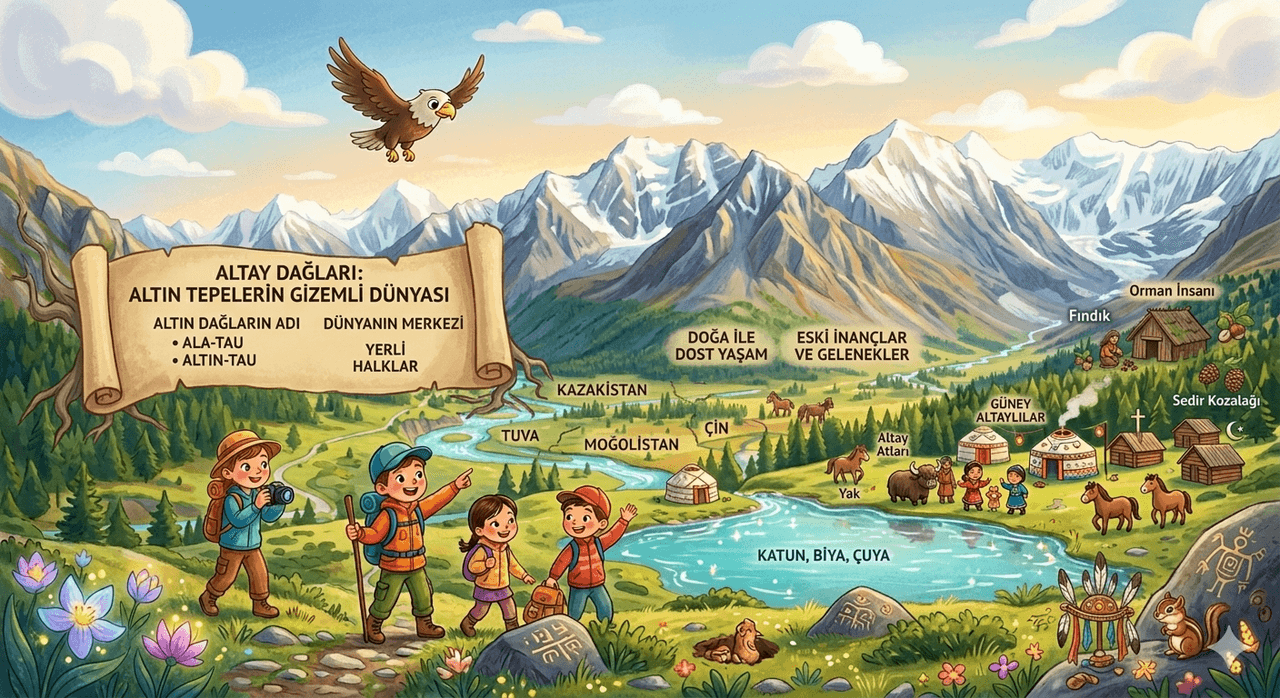
The Altai Republic lies just north of the geographic center of the Asian continent. It is a region bordered by Kazakhstan to the west, Tuva and Khakas Turk Republics to the east, and Mongolia and China to the south.
The region is known for its steep mountains and roaring rivers. Rivers such as the Katun, Biya, and Chuya flow through these mountains, bringing life to the landscape. This is also a ancient ancestral homeland where Turkic peoples have lived since time immemorial.
Representative image of the Altay Mountains. (generated by artificial intelligence)
The Indigenous People of the Altay Mountains
The Turkic groups living in this region are generally known as Altay Turks. However, they themselves are divided into two main groups based on their locations and traditions:
- Southern Altayans: Primarily engaged in animal husbandry. The Altai Kyrgyz, Teleuts, and Telengits belong to this group.
- Northern Altayans: Inhabit forested areas and were historically known as "Forest People." The Tuba, Chalkandu, and Kumandy Turks are examples of this group.
In the past, Russians referred to the Altayans by other names such as "Kalmuks" or "Tatars." Yet they have always identified themselves as an integral part of Altay.
A Life in Harmony with Nature
Life in Altay follows the rhythm of nature. Most people live in rural areas, and their primary livelihood is animal husbandry. Here, in addition to sheep and goats, they raise Yaks—Tibetan cattle—and resilient Altay horses.
In the forested northern regions, people engage in hunting and gather hazelnuts and cedar cones. Fishing and beekeeping are also among the traditional means of subsistence. Thus, each season in Altay brings a different gift from nature.
Ancient Beliefs and Traditions
The Altay Turks' oldest belief is Shamanism. They believe that everything in nature has a spirit and hold deep reverence for the natural world. Later, Christianity spread in the region, and in the early 1900s, a new belief known as "Ak Cang" (White Path), also called Burhanism, emerged.
Today, traces of Shamanism, Christianity, and Islam can all be found side by side in the region. This diversity further enriches the cultural heritage of the Altay people.
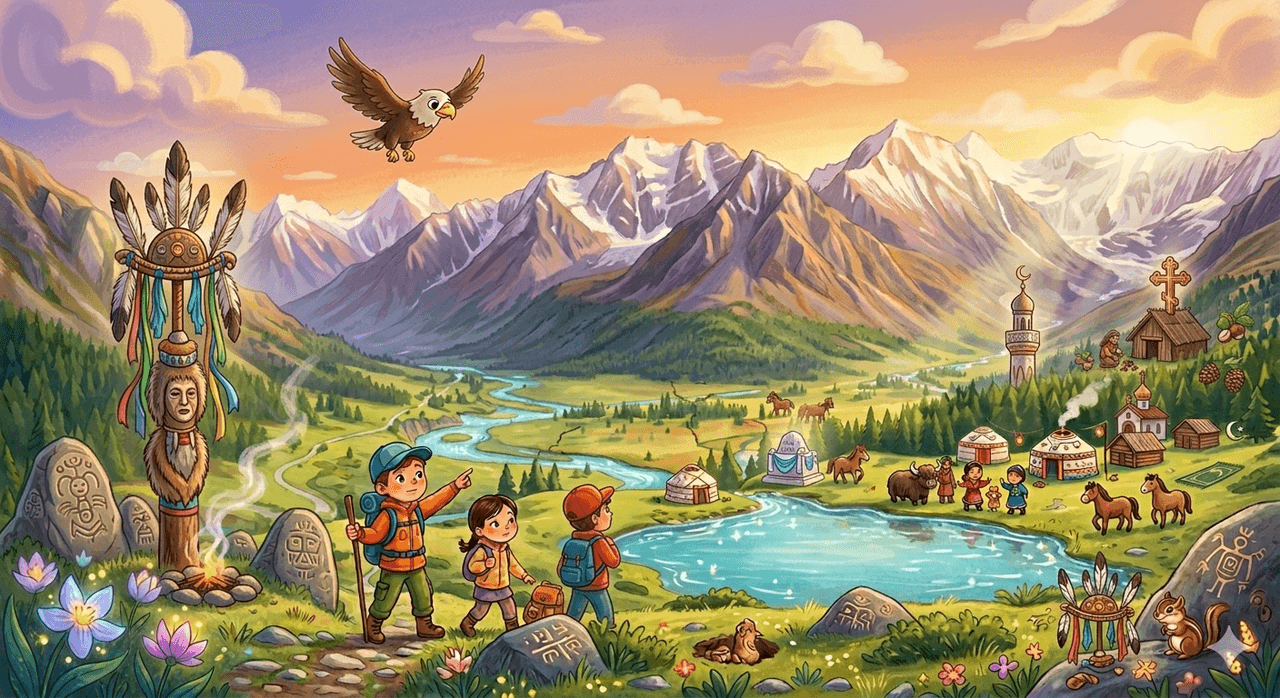
Image of the Altay Mountains. (generated by artificial intelligence)