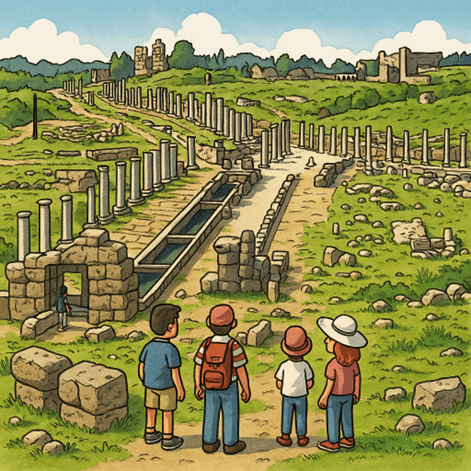




Ancient City of Perge
Location and Significance
Located 17 kilometers from the city center of Antalya, the Ancient City of Perge in the district of Aksu is one of Anatolia’s most important and best-preserved ancient cities. This cultural treasure of the Mediterranean Region is listed on the UNESCO World Heritage Tentative List due to its magnificent structures and historical heritage. The city has been recognized as an example of the “planned city” concept both in antiquity and today.
Foundation and History
The history of Perge extends back to the Hittite period. In Hittite inscriptions, the city is referred to as “Parha”. Archaeological findings indicate that settlement in the area dates back to the Early Bronze Age.
- Hellenistic Period (3rd century BCE): Perge was rebuilt as a planned city with a grid layout centered on a main north-south street intersected by an east-west street. Hellenistic walls and towers from this era remain as iconic features.
- Roman Empire Period (2nd–3rd centuries CE): The city reached its golden age during the Pax Romana, growing wealthy and acquiring monumental buildings.
- Byzantine Period (5th–6th centuries CE): With the spread of Christianity, religious structures became prominent and the city acquired the title of Metropolitan.

(Generated by Artificial Intelligence)
Urban Plan and Architecture
The urban plan of Perge reflects the most advanced urban design principles of its time.
- Two Main Streets: Wide colonnaded avenues running east-west and north-south
- Aqueduct System: A canal running through the center of the city supplied water to fountains and baths
- City Walls: The outer city walls, towers, and gates still stand and provide insight into ancient defensive architecture
- Akropolis: The original settlement area and administrative center
Perge Theatre
- Capacity: 13,000 to 15,000 spectators
- Features: Two-story marble-decorated stage building with relief carvings depicting mythological scenes
- Date: Constructed in the 2nd century CE
- Today: The statues discovered here are exhibited in the Perge Theatre Hall of the Antalya Museum
Perge Stadium
- Capacity: Approximately 12,000 people
- Date: Built in the 2nd century BCE
- Significance: One of Turkey’s best-preserved ancient stadiums. Athletic competitions, sporting events, and public performances were held here.
Other Important Structures
- Agora: Rectangular-shaped commercial and social space
- Hellenistic Towers: Symbols of the city’s defense system
- Monumental Fountains: Water structures such as the Kestros and Caracalla fountains
- Baths: Centers of social and cultural life
- Colonnaded Streets: Roads that gave the city its aesthetic and orderly appearance

(Generated by Artificial Intelligence)
Significance in Christianity
Saint Paul arrived in Perge via the Aksu River during his missionary journeys and later traveled to Antioch of Pisidia. Because of its mention in the Bible, both the city and the river are regarded as sacred by Christians. During the Byzantine period, large basilicas were constructed and the city became an important religious center.
Excavations and Perge Today
- First Excavations: Initiated in 1946 by Ord. Prof. Dr. Arif Müfid Mansel
- Ongoing Work: Continued by Prof. Dr. Jale İnan in the 1970s, Prof. Dr. Haluk Abbasoğlu in the 1990s, and since 2012 under the direction of the Antalya Museum
- Today: Visitors can explore the theatre, stadium, agora, and monumental streets
UNESCO World Heritage Nomination
Perge has been nominated for inclusion on the UNESCO World Heritage List due to its planned urban structure, well-preserved architecture, sophisticated water system, and military defense structures. These features make it a significant representative of ancient urban planning.