




Carpenter Ants
Carpenter ants are insects belonging to the order Hymenoptera and the family Formicidae, known for their social lifestyle. The name “carpenter” is given due to their habit of constructing nests by excavating tunnels in wood. However, they do not consume wood; they merely carve out hollow spaces. This distinguishes them from termites. One of the most commonly known species is Camponotus pennsylvanicus.
Appearance and Structure
Carpenter ants live in colonies composed of workers of different sizes. Workers are divided into three groups: small (minor), medium (media), and large (major).
Queen and male ants have wings, while workers are wingless. Their body color is typically black, brown or reddish. They possess a single-node petiole on their abdomen and bent antennae. When viewed from the side, their body shape forms a smooth curve.
Habitat
These ants prefer to build nests in moist, decaying, or damp wood. In nature, their habitats commonly include tree trunks, logs, and tree stumps.
In human settlements, they are often found in moist wood areas such as window frames, roof beams, and around bathrooms. A colony may consist of both a main nest and separate satellite nests. The queen resides in the main nest, while workers and brood inhabit the satellite nests.
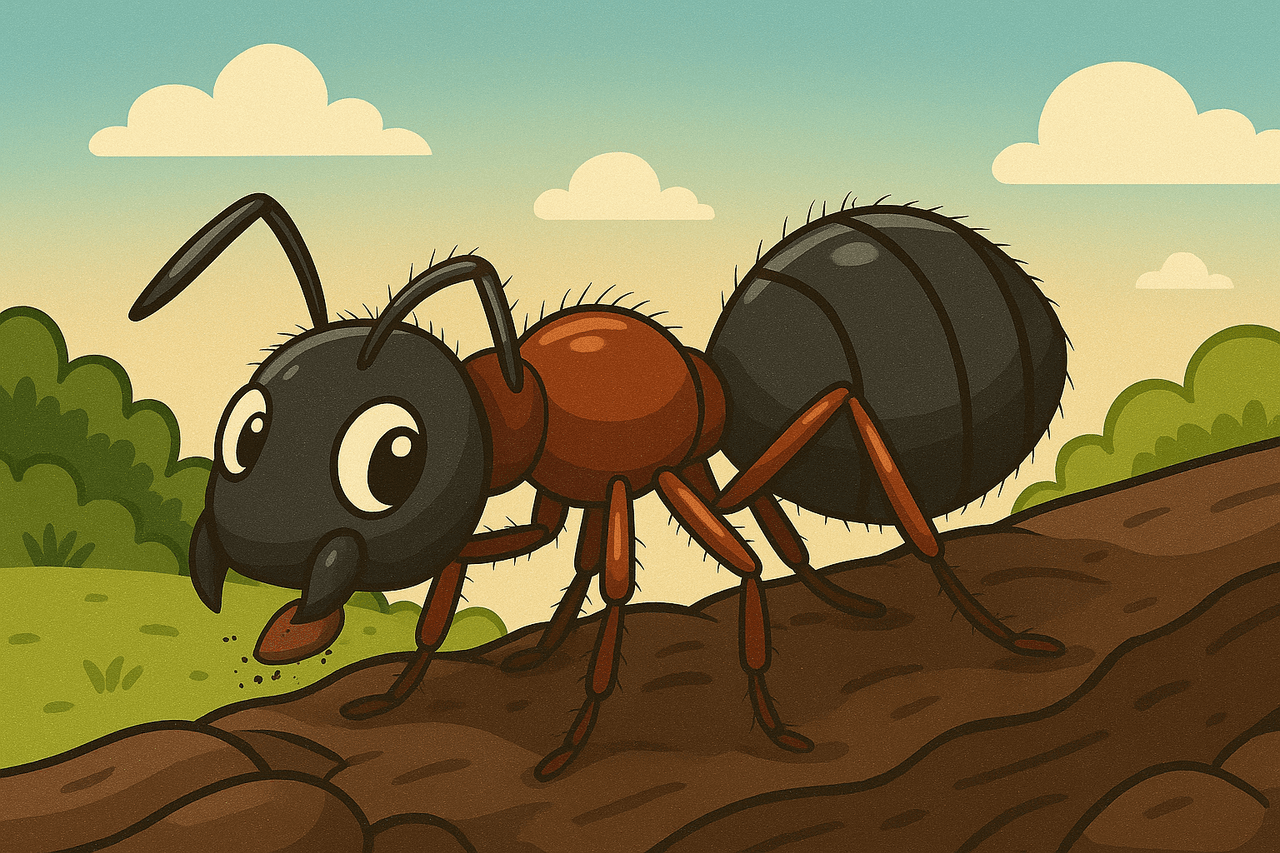
PixabayGenerated by Artificial Intelligence based on this photograph.
Diet and Ecological Roles
Carpenter ants feed on plant sap, honeydew produced by aphids, dead insects, and protein-rich substances.
They play an important role in nature: they aid in the breakdown of decaying trees, thereby contributing to the nutrient cycle.
Colony and Life Cycle
Carpenter ants undergo complete metamorphosis, passing through the stages of egg, larva, pupa, and adult.
A single colony can consist of thousands of individuals and may expand into several satellite nests. The queen ant can live for several years. Worker ants are responsible for nest defense, brood care, and food transport.
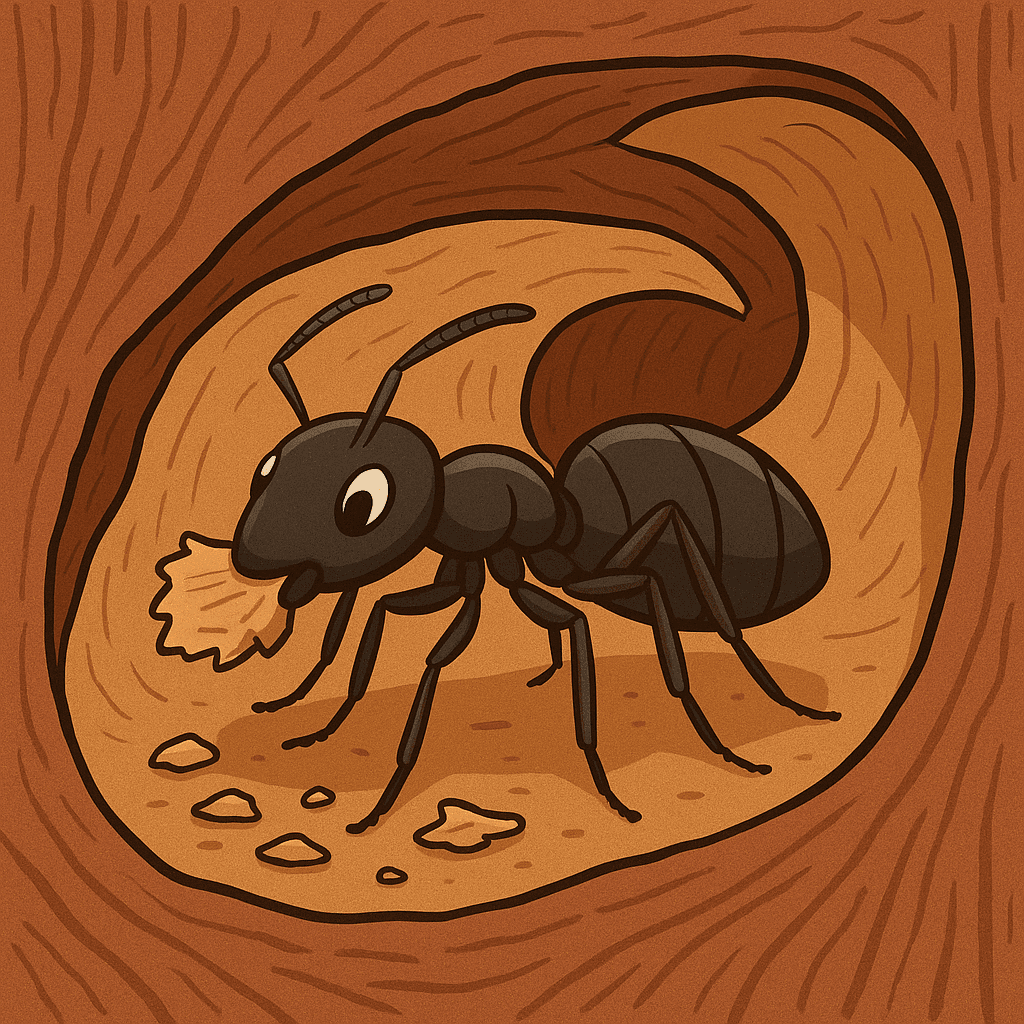
Generated by Artificial Intelligence.
Signs of Infestation
If carpenter ants are present in a location, there is typically a moisture problem. During nest construction, they expel small wood shavings resembling sawdust. These shavings are the most obvious indicator of an active colony. Unlike termites, carpenter ants do not consume wood, so they do not cause rapid, extensive damage; however, over time they can weaken the structural integrity of wood.
Prevention and Control
To control these ants, the first step is to locate their nests.
Important preventive measures include protecting wooden structures from moisture, repairing water leaks, and removing wood debris from around buildings.
Chemical treatments should be applied only by qualified professionals. Surface sprays typically eliminate only the visible ants, not the entire colony. Therefore, bait traps may be more effective.
The true solution lies not only in eliminating the colony but also in removing the source of moisture.