

This article was automatically translated from the original Turkish version.
+2 More
Carpenter ants are social insects belonging to the order Hymenoptera and the family Formicidae. These species exhibit nesting behavior by excavating tunnels, particularly in wooden structures. Their inability to digest wood is the most fundamental characteristic distinguishing them from termites. Among the species, Camponotus pennsylvanicus is the most commonly identified.
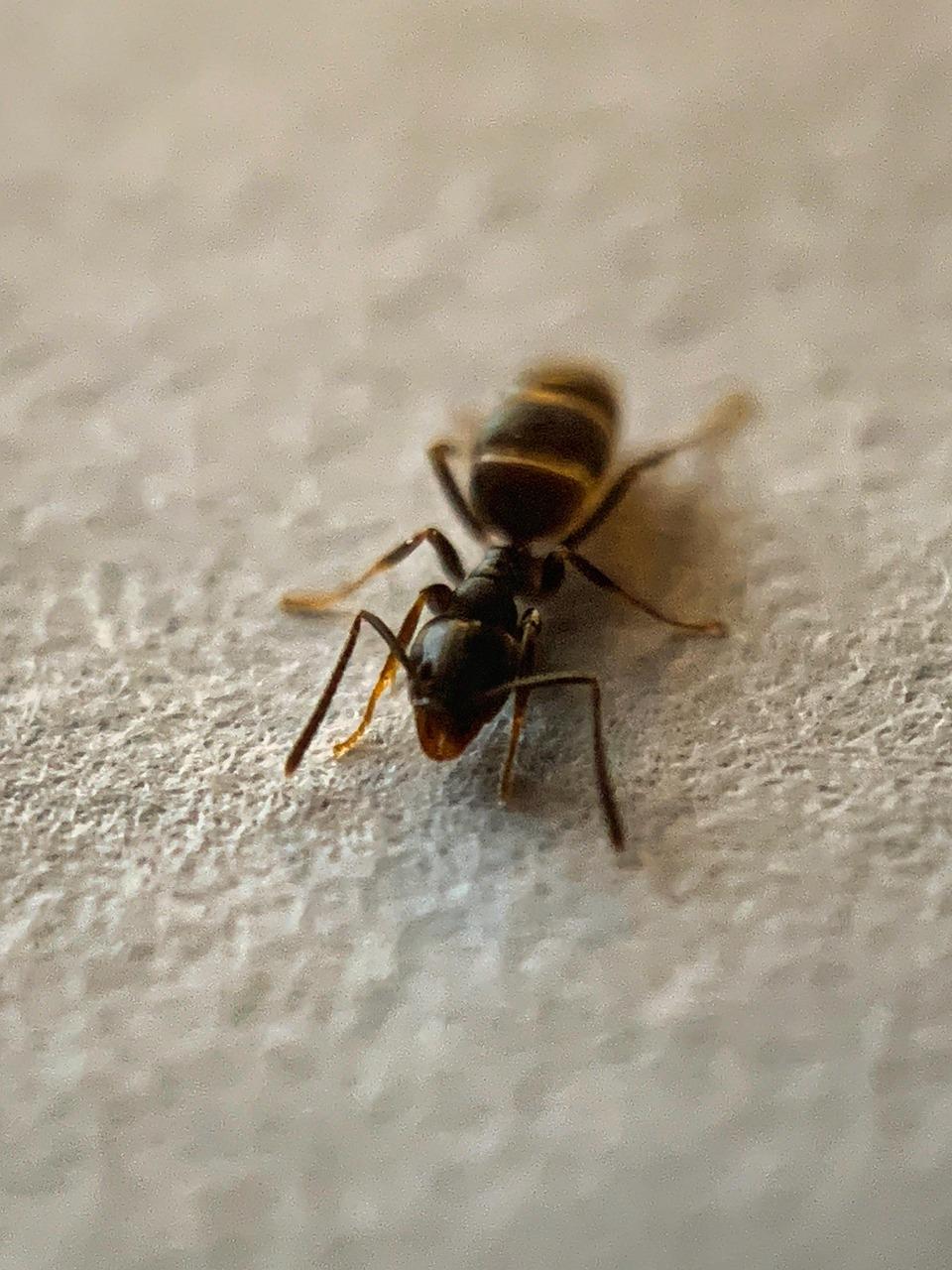
Carpenter ants are recognized by their pronounced size variations among worker castes. Workers are divided into three groups: minor, media, and major. Queens and males are winged and larger than workers. Body color varies by species but is generally black, reddish, or brown. A single node-like segment called a petiole connects the thorax and abdomen. Their antennae are elbowed, and the profile of the thorax forms a smooth curve when viewed from the side.
Carpenter ants typically build nests in moist, decayed, or damp wood. In natural habitats, they prefer tree logs, rotting trunks, and areas beneath logs. In human settlements, they are commonly found in door and window frames, roof rafters, and damp wooden elements near bathrooms. Colonies usually consist of a single “primary nest” and separate “satellite nests.” The primary nest houses the queen, while satellite nests contain workers, larvae, and pupae.

Carpenter Ant (Pixabay)
These ants do not consume wood; they excavate it solely for nesting purposes. Their food sources typically include sugary plant secretions, aphid honeydew, dead insects, and protein-rich organic materials. Within ecosystems, they play an indirect role in nutrient cycling by contributing to the decomposition process of decaying wood.
Carpenter ants undergo complete metamorphosis. Their life cycle consists of egg, larva, pupa, and adult stages. A mature colony can house thousands of individuals and expand through multiple satellite nests. The queen’s lifespan may last several years. Worker individuals are responsible for caring for larvae, defending the nest, and foraging for food.
The presence of carpenter ants often indicates a moisture problem in wooden structures. During nesting activities, they produce wood shavings-like debris known as frass. Accumulation of this material is considered an indicator of active infestation. Unlike termites, carpenter ants do not consume wood, so they do not cause rapid, extensive damage; however, over time they can compromise structural integrity.
Effective control begins with accurately locating the nest. Preventive measures include protecting wooden structures from moisture, repairing water leaks, and removing wood debris from buildings. Chemical treatments should only be applied under professional supervision. Spray applications may eliminate surface individuals but often fail to eradicate the entire colony. Bait traps can yield effective results, especially during periods of high worker activity.
Carpenter ant infestations typically signal the presence of a structural moisture source. Eliminating the moisture problem is as essential as eliminating the colony for a permanent solution. The presence of winged individuals does not always indicate an internal nest; these individuals may occasionally enter buildings temporarily from external nests.

No Discussion Added Yet
Start discussion for "Carpenter Ants (Camponotus pennsylvanicus)" article
Morphological Characteristics
Habitat and Nesting Behavior
Diet and Ecological Role
Colony Development
Structural Damage and Signs
Prevention and Control Methods