



Circulatory System
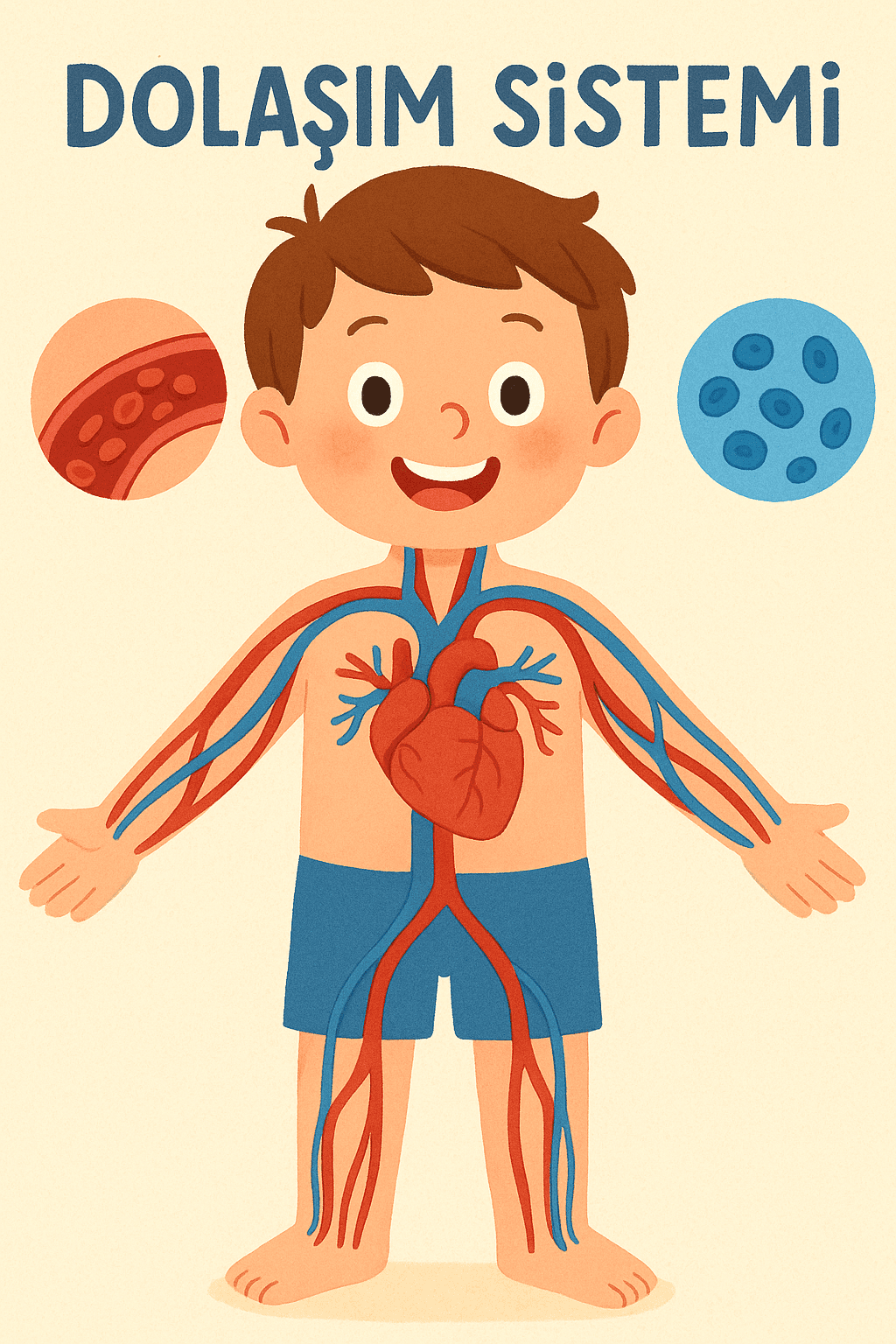
There is a system that works continuously in our body, transporting blood to all our cells and keeping us healthy: The Circulatory System! This system functions like a highway network within our body. It delivers oxygen, nutrients, and essential substances to cells, while removing waste products. Let us explore this system together!

Circulatory System (Generated by Artificial Intelligence)
What Are the Parts of the Circulatory System?
The circulatory system consists of three main components: the heart, blood vessels, and blood. Each has a specific function:
- Heart: An organ that functions like the engine of our body. It is located in the center of our chest, slightly to the left. The heart pumps blood to the entire body. It has four chambers: the right atrium, right ventricle, left atrium, and left ventricle. These chambers ensure that blood flows in the correct direction.
- Blood Vessels: These are tubes that extend throughout our body. There are three types of vessels:
- Blood: The transport fluid of our body. Blood consists of two parts:

Structure of the Heart (Ayancık Atatürk Anatolian High School)
How Does the Heart Work?
The heart contracts and relaxes rhythmically, like a pump. This movement enables blood to circulate throughout the body. Each heartbeat lasts approximately one second and involves the following steps:
- Atria contract: Blood moves from the atria into the ventricles.
- Ventricles contract: Blood is pumped from the ventricles into the blood vessels.
- Heart relaxes: The heart prepares to refill with blood.
How Does Blood Circulation Occur?
There are two types of circulation in our body: Systemic Circulation and Pulmonary Circulation.
- Systemic Circulation: The left ventricle pumps oxygen-rich blood through a large artery called the aorta to the entire body. Blood travels from arteries into capillaries, where it delivers oxygen and nutrients to cells and picks up carbon dioxide and waste products. The dirty blood then returns to the right atrium via veins.
- Pulmonary Circulation: The right ventricle pumps dirty blood to the lungs. In the lungs, blood receives oxygen and releases carbon dioxide through tiny air sacs called alveoli. The cleaned blood returns to the left atrium via the pulmonary veins.
These two circulations continue continuously as the right and left sides of the heart work in harmony.

Journey of Blood Through the Heart (Ayancık Atatürk Anatolian High School)
What Are the Functions of the Circulatory System?
The circulatory system performs vital functions that keep our body healthy:
- Transport: Delivers oxygen, nutrients, and hormones to cells. Removes carbon dioxide and waste products from the body.
- Defense: White blood cells fight microorganisms and protect us from diseases.
- Regulation: Maintains body temperature. In hot weather, blood flows closer to the skin to release excess heat. In cold weather, it is directed toward internal organs.
- Protection: Platelets cause blood to clot when we are injured, preventing excessive blood loss.
What Is the Lymphatic System?
An additional system that supports the circulatory system is the lymphatic system. It collects excess fluid that accumulates in the body and returns it to the bloodstream. The system consists of lymph vessels and lymph nodes. Lymph nodes produce lymphocytes, specialized cells that fight microorganisms. This system helps maintain the strength of our immune system.
Why Is the Circulatory System Important?
The circulatory system delivers everything each cell in our body needs and removes waste products. The heart, blood vessels, and blood work together like a team to keep us healthy. For example, when we run, our heart beats faster, sending more oxygen to our muscles. This increases our energy levels!