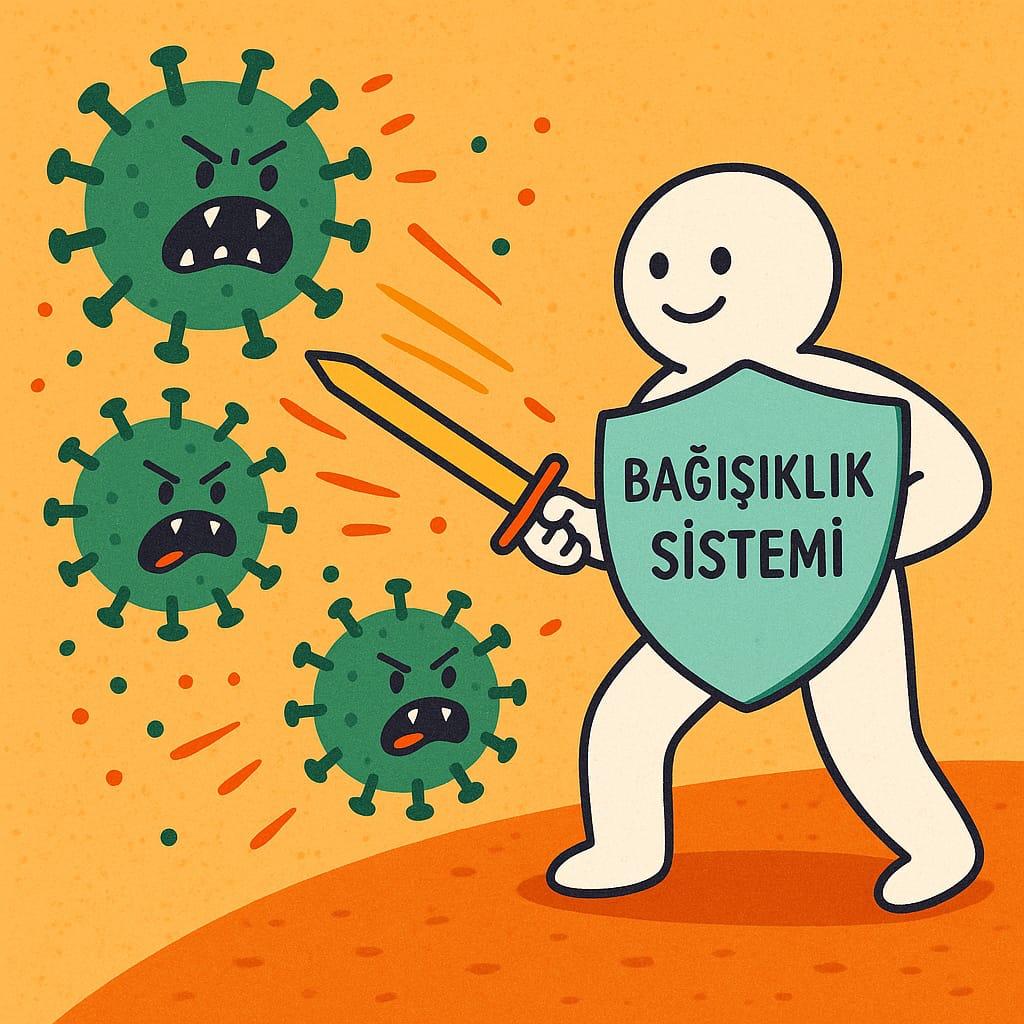




What Is the Immune System?
The immune system is a complex and vital defense mechanism that protects our bodies from harmful microorganisms that cause disease. This system recognizes foreign organisms such as viruses, bacteria, fungi, and parasites that enter the body, neutralizes them, and ensures the body remains healthy.

(Generated by Artificial Intelligence.)
Defense Against Microorganisms Entering the Body
Every day we encounter many microorganisms without being aware of them. These microorganisms can enter our bodies through the respiratory tract via the nose, through food via the mouth, or through small cuts in the skin. In such cases, the immune system activates immediately, recognizing these foreign invaders and launching a defense against them.
What Are Antibodies For?
Antibodies are protective proteins specifically produced by the immune system to fight microorganisms. Antibodies identify unique structures on the surface of microorganisms, target them, and render them harmless. This prevents the microorganisms from multiplying and causing damage to the body.
Components of the Immune System
The immune system does not consist of a single organ or cell; it functions through the coordinated effort of many different structures:
- White Blood Cells (Leukocytes): Specialized cells found in the blood that combat microorganisms.
- Lymph Nodes: Small structures located throughout the body that serve as defense centers where cells fighting microorganisms gather.
- Bone Marrow: The soft tissue inside bones where cells responsible for immune function are produced.
- Spleen and Tonsils: Other important organs that filter harmful substances and assist in immune responses.

(Generated by Artificial Intelligence.)
How to Strengthen the Immune System
To maintain a healthy and strong immune system, certain habits must be observed. Regular and balanced nutrition ensures the body receives the vitamins and minerals it needs for immune cells to function properly. Sufficient sleep helps the immune system rest and regenerate. Being physically active and exercising regularly also supports this system. Additionally, stress and negative emotions such as sadness can weaken immunity; therefore, maintaining happiness and inner peace is also important.
The Role of Vaccines
Vaccines are made from microorganisms that have been weakened or killed. When introduced into the body, the immune system recognizes them as if they were harmful and develops a defense against them. Thus, when the actual microorganisms are encountered later, the immune system immediately recognizes them and eliminates them much more rapidly. Vaccines are especially administered during childhood to prepare the body in advance against many serious diseases.

(Generated by Artificial Intelligence.)
Immune Development in Children
When babies are born, their immune systems are not yet fully developed. During the first months, they are protected against some microorganisms by antibodies received from their mother. Over time, exposure to microorganisms in the environment and vaccination strengthen the immune system. Therefore, childhood is a critical period for immune development, and establishing healthy lifestyle habits during this time is of great importance.
Memory Against Diseases
The immune system has the ability to recognize a microorganism that has previously entered the body and respond rapidly upon re-exposure. This ability is called immune memory. Thanks to this memory, when the same microorganism re-enters the body, the system immediately recalls it and launches a fast and effective defense that prevents the disease from developing.
Why Are Some Diseases More Easily Transmitted?
Some diseases such as influenza, the common cold, or chickenpox spread very easily. They are particularly likely to spread in crowded classrooms, public transportation, or playgrounds. Therefore, frequent handwashing, avoiding contact with sick individuals, and receiving necessary vaccinations are among the most effective ways to protect oneself.