


This article was automatically translated from the original Turkish version.
+1 More
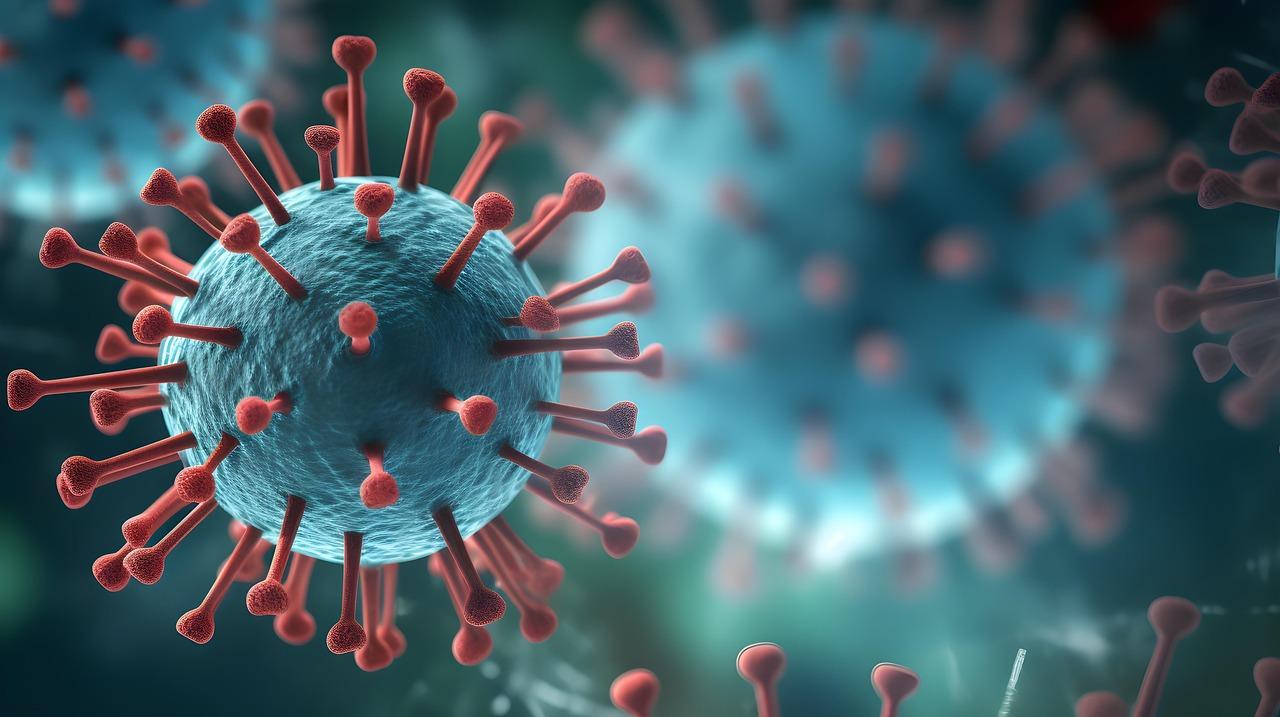
Virology
Discipline | Virology | ||||||||
|---|---|---|---|---|---|---|---|---|---|
Agent | Virus | ||||||||
Genome | DNA or RNA | ||||||||
Structure(s) | Virion (capsid + genome ± envelope) | ||||||||
Dimension | Submicroscopic | ||||||||
Reproduction(s) | Only in living cells | ||||||||
History | 1917: d'Herelle (bacteriophage) 1892: Ivanovsky (plant virus) | ||||||||
Morphology | Enveloped Complex (head-tail) Spherical Filamentous | ||||||||
Stages of Reproduction | Release Assembly Replication Penetration Adsorption | ||||||||
Diagnostic Methods | Immunofluorescence Electron microscopy Serology (HI - IHA - CF) PCR / RT-PCR | ||||||||
Protection | Interferon Antiviral drug Vaccine | ||||||||
Classification(s) | Alga - Fungus - Protozoan Bacterium Plant Animal Human | ||||||||
Special Agents | Viroid Satellite virus Bacteriophage | ||||||||
Virology is a subdiscipline of microbiology that studies the morphology, genetic structure, biochemical properties, replication strategies, interactions with host cells, and methods of diagnosis, treatment, and prevention of diseases caused by viruses. Viruses are obligate intracellular parasites that can replicate only within living cells and lack metabolic activity. In their extracellular phase, viruses are inactive; upon entering a host cell, they use the host’s enzymatic and ribosomal systems to replicate their own genomes.
The existence of viruses was first identified in 1892 by Dmitri Ivanovsky, who determined that the causative agent of tobacco mosaic disease could pass through bacterial filters and was not visible under a microscope. In 1898, Beijerinck confirmed these observations and introduced the term “filterable agent,” establishing the existence of an infectious agent outside the framework of classical microbiology. The first findings regarding animal viruses were associated with foot-and-mouth disease. In 1911, studies were conducted suggesting that cancer might be linked to a viral agent. The discovery of bacteriophages formed the experimental foundation of virology. In 1915, Twort and in 1917, d’Herelle discovered phages that lyse bacterial cells; d’Herelle named this lysis phenomenon “bacteriophage.” These agents specifically target host bacteria, inducing lysis and providing the basis for quantitative analyses such as plaque assays.
Viral genomes consist exclusively of either DNA or RNA; no virus contains both nucleic acid types simultaneously. Viral genomes are typically small and often segmented. The genetic material is enclosed within a protein coat called a capsid. Some viruses also possess an outer lipid envelope in addition to the capsid. Viruses cannot generate their own energy, lack ribosomes, and cannot replicate outside a host cell. Viruses exhibit host specificity; they initiate infection by binding to specific receptors on the cell surface through specialized protein structures.
The complete infectious viral particle is called a virion. Virions may be filamentous, spherical, complex head-tail structures, or enveloped. The genetic material may be single-stranded or double-stranded DNA or RNA. The primary criteria for virus classification include genome type, presence or absence of an envelope, host spectrum, and morphological structure.
Viruses can be classified as follows:
The process of viral infection consists of six main stages:
Some viruses can enter a lysogenic phase and integrate into the host genome (e.g., certain bacteriophages).
The following methods are used for virus diagnosis:
Biosafety levels (BSL 1–4) are applied to virology laboratories working with high-risk biological materials. During the COVID-19 pandemic, the possibility of laboratory-acquired infections became a subject of ethical and scientific debate. Therefore, laboratories must operate under independent oversight and adhere to internationally binding protocols.
Prevention of viral infections involves:
Hepatitis viruses (HAV, HBV, HCV, HDV, HEV) cause inflammation of the liver. HBV is a DNA virus and has a vaccine available. HCV is an RNA virus with a high rate of chronicity. HDV can replicate only in the presence of HBV. HAV and HEV are transmitted via the fecal-oral route. Diagnosis relies on serological markers (anti-HBs, HBeAg, etc.) and molecular tests (HBV DNA, HCV RNA). Treatment is determined based on the disease stage and viral load.
Virology is the scientific discipline that studies the structural, genetic, and biochemical properties of viruses—nucleic acid-based infectious agents capable of replication only within living cells. This field encompasses a broad range of topics, from virus identification and classification to infection mechanisms, host-cell interactions, molecular diagnostic techniques, and immune-based prevention strategies. Virological research provides essential data for understanding, diagnosing, and treating infectious diseases. Moreover, biosafety in virus laboratories and research on viral genomes fall within the scientific responsibility of mitigating biological risks to public health. Virology plays an integrative role in both basic and applied medicine, directly linked to molecular biology, immunology, epidemiology, and clinical medicine.
Ertürk, Arife. 2021. “Viral Hastalıklarda Teşhis Metodları.” Anadolu Kliniği Tıp Bilimleri Dergisi 25, Özel Sayı 1 (January): 49–55. Accessed May 31, 2025. https://dergipark.org.tr/tr/download/article-file/1494178.
Karakaya, Haydar. 2017. Viroloji. Samsun: Ondokuz Mayıs Üniversitesi, Fen-Edebiyat Fakültesi, Biyoloji Bölümü. PDF file. Accessed May 31, 2025. https://avys.omu.edu.tr/storage/app/public/haydar.karakaya/61224/Viroloji%202017.pdf.
Karakeçili, Faruk. 2022. “Hepatit C Virüsü: Viroloji ve Epidemiyoloji.” Klimik Hepatit Akademisi 2022 Özet Kitabı, 33. İstanbul: Klinik Mikrobiyoloji ve İnfeksiyon Hastalıkları Derneği. Accessed May 31, 2025. https://www.klimik.org.tr/wp-content/uploads/2022/05/KLMIK_Hepatit_Akademisi_2022_Ozet_Kitabi.pdf#page=33.
Korkmaz, Derya. 2022. “Hepatit B Virusu; Viroloji ve Epidemiyoloji.” Klimik Hepatit Akademisi 2022 Özet Kitabı, 17. Istanbul: Klinik Mikrobiyoloji ve İnfeksiyon Hastalıkları Derneği. Accessed May 31, 2025. https://www.klimik.org.tr/wp-content/uploads/2022/05/KLMIK_Hepatit_Akademisi_2022_Ozet_Kitabi.pdf#page=17.
Nasuhbeyoğlu, Nazım, and İbrahim Topçu. 2020. “Önemli Bir Etik Problem Olarak Viroloji Laboratuvarlarının Biyogüvenliği.” Anadolu Kliniği Tıp Bilimleri Dergisi 25, Special Issue 1 (January): 185–186. Accessed May 31, 2025. https://dergipark.org.tr/tr/download/article-file/1123337.
Pixabay. 2025. “AI Oluşturuldu, Virüs, Biyoloji, Kovid.” Image. Accessed May 31, 2025. https://pixabay.com/tr/illustrations/ai-olu%C5%9Fturuldu-vir%C3%BCs-biyoloji-kovid-8233648/.
Pixabay. 2025. “AI Oluşturuldu, Virüs, Kovid, Biyoloji.” Image. Accessed May 31, 2025. https://pixabay.com/tr/illustrations/ai-olu%C5%9Fturuldu-vir%C3%BCs-kovid-biyoloji-8233649/.

Virology
Discipline | Virology | ||||||||
|---|---|---|---|---|---|---|---|---|---|
Agent | Virus | ||||||||
Genome | DNA or RNA | ||||||||
Structure(s) | Virion (capsid + genome ± envelope) | ||||||||
Dimension | Submicroscopic | ||||||||
Reproduction(s) | Only in living cells | ||||||||
History | 1917: d'Herelle (bacteriophage) 1892: Ivanovsky (plant virus) | ||||||||
Morphology | Enveloped Complex (head-tail) Spherical Filamentous | ||||||||
Stages of Reproduction | Release Assembly Replication Penetration Adsorption | ||||||||
Diagnostic Methods | Immunofluorescence Electron microscopy Serology (HI - IHA - CF) PCR / RT-PCR | ||||||||
Protection | Interferon Antiviral drug Vaccine | ||||||||
Classification(s) | Alga - Fungus - Protozoan Bacterium Plant Animal Human | ||||||||
Special Agents | Viroid Satellite virus Bacteriophage | ||||||||
History
General Characteristics of Viruses
Virus Structure and Classification
Stages of Viral Infection
Diagnostic Methods
Biosafety in Virology Laboratories
Prevention, Vaccination, and Antiviral Therapy
Viral Hepatitis