


This article was automatically translated from the original Turkish version.
+1 More
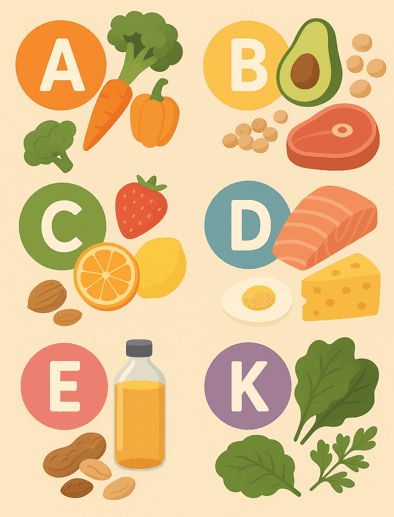
Generated with Artificial Intelligence.
Vitamin
Name(s) | Vitamin | ||||||||
|---|---|---|---|---|---|---|---|---|---|
Type(s) | Organic compound | ||||||||
Related Field(s) | Nutrition Health and Medicine Chemistry | ||||||||
Subgroups | Water-soluble vitamins Fat-soluble vitamins | ||||||||
Vitamins are organic compounds essential for maintaining physiological functions, normal growth, and development. They play a role in regulating biochemical reactions in the body. Some vitamins function as coenzymes while others exhibit hormone-like effects. Different vitamins occur naturally as components of various foods. Although they do not provide energy, they must be obtained from external sources to ensure optimal biological processes. Insufficient levels in the body disrupt biochemical reactions, leading to impairments in growth and bodily functions.
The discovery of vitamins was shaped by scientific studies conducted between the 18th and 20th centuries. Observations linking certain diseases to nutrition laid the groundwork for understanding the existence of vitamins. J. Lind (1747) reported that scurvy, a disease prevalent among sailors, could be prevented and treated with foods such as oranges and lemons. Lunin (1880) experimentally demonstrated that milk contained essential substances beyond fat, protein, carbohydrates, and minerals. Dr. Eijkman (1897) showed through experiments on chickens that beriberi could be treated with rice bran. Hopkins (1906–1912) proved the existence of certain molecules, in addition to proteins, fats, carbohydrates, and minerals, that are essential for growth. Funk (1912), noting the presence of an “amine” group in the molecule isolated from rice bran, named these vital substances “vitamines” (vital amines). Initially, it was determined that some of these unknown components were water-soluble while others were fat-soluble. Researchers such as McCollum and Davis (1913) identified a fat-soluble substance in butter and egg yolk (fat-soluble A) and a water-soluble substance (water-soluble B). These substances were later named after letters of the alphabet (A, B, C, D, E, etc.). In subsequent years (1932–1948), as their chemical structures were elucidated, chemical names began to be used.【1】
Vitamins are involved in regulating biochemical reactions essential for bodily function. Some act as coenzymes, while others display activities similar to hormones. Unlike other nutrient groups, vitamins do not provide structural functions or energy.
Their primary roles include supporting growth and development, promoting healthy reproductive function, contributing to the normal operation of the nervous and digestive systems, and enhancing defense mechanisms to protect against disease. When vitamins are not adequately obtained from dietary sources or are deficient in the body, these biochemical reactions are disrupted, leading to disturbances in growth, reproduction, and bodily functions. Only small amounts are required in the diet.

Some Foods Containing Vitamins (Pexels)
Vitamins are classified into two main categories based on solubility: fat-soluble and water-soluble vitamins.
Fat-soluble vitamins are absorbed with dietary fats and can be stored in the body. Like fats, they are transported and incorporated into cell membranes as integral components. This group includes vitamins A, D, E, and K. Each vitamin has distinct biological functions, sources, and presence in foods. Deficiencies in these vitamins can lead to various health problems.
Vitamin A plays a critical role in vision, gene expression, reproduction, embryonic development, growth, and immune function. Retinol is obtained from animal sources, while provitamin A carotenoids (beta-carotene, alpha-carotene, lycopene, lutein, beta-cryptoxanthin) come from plant sources. Retinol is efficiently absorbed in the intestines and contributes to the maintenance of epithelial tissues, mucus production, and cell differentiation. Vitamin A particularly regulates barrier functions in the intestine and plays a role in immune responses against pathogens. Carotenoids also possess antioxidant properties. Epidemiological studies have shown an inverse association between dietary carotenoid intake and cardiovascular disease, stroke, and mortality.
Food sources: Liver, milk, butter, cheese, egg yolk, fish oil, carrots, tomatoes, apricots, oranges, spinach, and other green and yellow vegetables and fruits
Vitamin D is a fat-soluble compound that also functions like a hormone. Sunlight is the primary source of vitamin D, but it can also be obtained from food. Vitamin D promotes calcium absorption in the intestines, contributing to bone development and maintenance. It also regulates intestinal homeostasis, preserves epithelial barrier integrity, and participates in immune system regulation. Deficiency in children causes rickets, and in adults, it leads to osteomalacia. Vitamin D deficiency is also associated with hypertension, cardiovascular disease, metabolic syndrome, and certain chronic conditions.
Food sources: Liver, fish, fish oil, milk, butter, margarine
Vitamin E, known as tocopherols, is a fat-soluble antioxidant that plays a vital role in protecting cell membranes from oxidative damage. Intestinal absorption of vitamin E depends on biliary and pancreatic secretions, micelle formation, enterocyte uptake, and chylomicron secretion. Vitamin E protects red blood cells against oxidative stress and enhances the antioxidant effect of vitamin A. Some studies suggest that vitamin E intake may positively influence blood glucose, lipid profiles, and oxidative stress markers in individuals with type 2 diabetes. Deficiency is rare because vitamin E is sufficiently present in daily foods.
Food sources: Green leafy vegetables, oils from oilseeds, cereals, legumes, pistachios, walnuts, hazelnuts
Vitamin K is a cofactor essential for blood clotting and plays a role in hemostatic mechanisms. It enables the liver to synthesize certain clotting factors and helps maintain vascular health by preventing vascular calcification. It also contributes to bone health. The gut microbiota can synthesize vitamin K in the form of menaquinone, which is important for maintaining vitamin K balance in the body. Since vitamin K deficiency is the primary cause of hemorrhagic disease in newborns, all infants must receive vitamin K after birth.
Food sources: Green leafy vegetables (spinach, broccoli...), dried legumes, fish, vegetable oils, fermented foods

Fat-Soluble Vitamins (Generated by Artificial Intelligence)
Water-soluble vitamins are organic compounds that are not significantly stored in the body and are excreted in urine when consumed in excess. Therefore, they must be regularly obtained through the diet. Water-soluble vitamins include the B-complex vitamins (B1, B2, B3, B5, B6, B7, B9, B12), vitamin C, and also essential metabolic compounds such as choline and carnitine. These vitamins play roles in numerous fundamental biological functions including growth, energy metabolism, nervous system health, blood formation, and immunity. They typically serve as coenzymes involved in metabolic reactions that carry chemical groups and electrons.
Vitamin C is a water-soluble vitamin involved in collagen synthesis, wound healing, and iron absorption. It acts as an antioxidant, protecting cells against free radicals. It is not stored in the body and therefore requires regular intake. Deficiency leads to scurvy, characterized by bleeding gums, fatigue, and delayed wound healing. It also influences immune system function.
Food sources: Citrus fruits, tomatoes, potatoes, green peppers, kiwi, grape leaves, turnip leaves, cauliflower, strawberries, peaches, spinach, liver, fresh beans
Thiamin functions as a coenzyme in carbohydrate metabolism and plays a vital role in energy production. Deficiency causes beriberi, characterized by disturbances in nerve and muscle function. Thiamin deficiency is also common in individuals with alcohol dependence. It is associated with Wernicke-Korsakoff syndrome.
Food sources: Yeast, potatoes, vegetables, liver, meat, whole grains, eggs, milk, hazelnuts, walnuts, seeds, legumes
Riboflavin is a component of coenzymes (FAD and FMN) involved in oxidation-reduction reactions and is essential for energy metabolism. It is sensitive to light; therefore, exposure of milk and similar sources to light causes vitamin loss. Deficiency results in ariboflavinosis, characterized by cracking at the corners of the mouth (angular stomatitis), tongue swelling and redness (glossitis), and eye fatigue and burning.
Food sources: Eggs, milk and dairy products, liver, meat, cheese, soybeans, peas, lentils, wheat, dark green leafy vegetables
Niacin is involved in the metabolism of proteins, carbohydrates, and fats. It regulates intestinal function and supports growth. Due to its cholesterol-lowering effects, it is also used therapeutically. Deficiency causes pellagra.
Food sources: Liver, wheat, yeast, meat, green vegetables, fish, legumes, whole grain bread, milk, eggs, peanuts
Pantothenic acid is essential for the metabolism of carbohydrates, proteins, and fats. It is a component of coenzyme A and plays a key role in energy metabolism.
Food sources: Liver, kidney, egg yolk, yeast, wheat bran, various vegetables
Vitamin B6 exists in three forms: pyridoxine, pyridoxal, and pyridoxamine. It serves as a coenzyme for many enzymes, particularly in amino acid metabolism. It is required for nervous system function and hemoglobin synthesis. Deficiency may lead to anemia, depression, irritability, skin inflammation, and weakened immunity. Long-term use of certain medications can also cause B6 deficiency.
Food sources: Liver, kidney, whole grains, legumes, meat, fish, green vegetables, potatoes, bulgur, rice, pistachios, bananas
Biotin acts as a helper enzyme in the metabolism of fatty acids, glucose, and amino acids. It is particularly essential for fat metabolism and can also be produced by intestinal bacteria.
Food sources: Liver, chocolate, egg yolk, soybeans, peanuts
Folic acid participates in DNA and RNA synthesis, conversion of certain amino acids, and production of blood cells. It influences red blood cell formation. Requirements increase during pregnancy, and deficiency during this period raises the risk of neural tube defects in the fetus. Deficiency leads to megaloblastic anemia.
Food sources: Liver, dark green leafy vegetables, kidney, grains, citrus fruits, walnuts, tomatoes, eggs, fish, legumes
Vitamin B12 is required for DNA synthesis and nervous system function. Deficiency causes pernicious anemia and neurological disorders. Its absorption requires intrinsic factor, secreted by the stomach mucosa. Deficiency may result in fatigue, neurological disturbances, and anemia. Vitamin B12 is found exclusively in animal sources.
Food sources: Liver, meat, fish, cheese, eggs, milk and dairy products
Choline is involved in the transport and metabolism of lipids. It protects the liver from fatty infiltration. It is a component of bile.
Food sources: Egg yolk, milk, organ meats, meat, grains, soybeans
Carnitine, also known as BT vitamin, is chemically beta-OH-gamma-trimethylaminobutyric acid. It is synthesized in the liver and kidneys of mammals from lysine and methionine. Its primary function is to transport fatty acids from the cytoplasm into mitochondria in the form of activated acyl-CoA for degradation via beta-oxidation to produce energy. Dietary carnitine is easily absorbed in the small intestine (54–87%). It is most abundant in muscle tissue.
Food sources: Meat is the primary dietary source. Beef contains the highest concentration at 62.9 mg per 100 grams.
After vitamins were isolated in pure form, their quantities in various foods were determined through laboratory measurements. Initially, units were based on growth and health indicators observed in laboratory animals, and later the International Unit (IU) was adopted. Over time, weight-based units (mg, mcg) replaced IU. Examples of IU measurements for some vitamins include:
Vitamin research examines biochemical changes and clinical symptoms resulting from vitamin deficiency. Once these changes are identified, supplementation with specific amounts of the vitamin is observed to correct the deficiency. These studies form the basis for establishing recommended intake standards. When determining consumption standards, individual differences, dietary habits, and availability are considered.
In nutrition science, reference dietary intake values are established to support the healthy life of individuals and populations. Two important reference values used by nutrition authorities are:
Population Reference Intakes (PRI): Recommended Daily Intake
Adequate Intake (AI): Sufficient Intake Level

【2】

Recommended Daily Sufficient Vitamin Intake Values for Women, Pregnant and Lactating Women(TÜBER, 2022)
【3】

Additional Explanations for Daily Vitamin Intake Tables(TÜBER, 2022)
Warning: The content in this article is provided solely for general encyclopedic information. The information here should not be used for diagnosis, treatment, or medical advice. Before making any decisions regarding health, always consult a physician or qualified healthcare professional. The author and KÜRE Encyclopedia assume no responsibility for any consequences arising from the use of this information for diagnostic or therapeutic purposes.
Karaağaç, Rabia Melda, and Pınarlı, Çağla. "Yağda Çözünen Vitaminler ve Bağırsak Mikrobiyotası Üzerine Etkileri." *Avrasya Sağlık Bilimleri Dergisi* 6, no. 3 (2023): 116–122. Accessed October 1, 2025. https://dergipark.org.tr/en/pub/avrasyasbd/article/1262072
Keyvan, Nilay. "Suda Çözünen Vitaminler ve Özellikleri." *Veteriner Hekimlik Biliminde Güncel Tartışmalar 2 içinde*, edited by Hikmet Yeter Çoğun, (2023): 163-173. Accessed October 1, 2025. https://www.bidgecongress.org/wp-content/uploads/2023/06/Veteriner-Hekimlik-Bilimlerinde-Guncel-Tartismalar-2-1.pdf#page=163
Ministry of Health of the Republic of Türkiye, General Directorate of Public Health. "Energy and Nutrient Reference Values for Türkiye." In *Türkiye Beslenme Rehberi (TÜBER)*, edited by Ayla Gülden Pekcan, Nevin Şanlıer, Murat Baş, Nilüfer Acar Tek, and Hülya Gökmen Özel, (2022): 1-430. Accessed October 1, 2025. https://hsgm.saglik.gov.tr/depo/birimler/saglikli-beslenme-ve-hareketli-hayat-db/Dokumanlar/Rehberler/Turkiye_Beslenme_Rehber_TUBER_2022_min.pdf
Pexels. "Plastik Tepsilerde Karışık Sebzeler." Accessed October 1, 2025. https://www.pexels.com/tr-tr/fotograf/plastik-tepsilerde-karisik-sebzeler-2955794/
Türker, Ali, and Yüksel, Oğuzhan. "Beslenmede Vitaminlerin Önemi." *Beslenme ve Obezite* (2020): 7-32. Accessed October 1, 2025. https://www.researchgate.net/profile/Ali-Turker-2/publication/345260286_BESLENMEDE_VITAMINLERIN_ONEMI/links/5fa1f0fa458515b7cfba421e/BESLENMEDE-VITAMINLERIN-OeNEMI.pdf
[1]
Ayşe, Baysal. “Vitaminler.” Beslenme. 17. baskı. Ankara: Hatiboğlu Yayınları, 2017, 157-159.
[2]
T.C. Sağlık Bakanlığı Halk Sağlığı Genel Müdürlüğü. "Türkiye İçin Enerji ve Besin Öğeleri Referans Değerleri." Türkiye Beslenme Rehberi (TÜBER) içinde Ed. Ayla Gülden Pekcan, Nevin Şanlıer, Murat Baş, Nilüfer Acar Tek, Hülya Gökmen Özel. (2022): 254. Erişim 1 Ekim 2025. https://hsgm.saglik.gov.tr/depo/birimler/saglikli-beslenme-ve-hareketli-hayat-db/Dokumanlar/Rehberler/Turkiye_Beslenme_Rehber_TUBER_2022_min.pdf
[3]
T.C. Sağlık Bakanlığı Halk Sağlığı Genel Müdürlüğü. "Türkiye İçin Enerji ve Besin Öğeleri Referans Değerleri." Türkiye Beslenme Rehberi (TÜBER) içinde Ed. Ayla Gülden Pekcan, Nevin Şanlıer, Murat Baş, Nilüfer Acar Tek, Hülya Gökmen Özel. (2022): 254. Erişim 1 Ekim 2025. https://hsgm.saglik.gov.tr/depo/birimler/saglikli-beslenme-ve-hareketli-hayat-db/Dokumanlar/Rehberler/Turkiye_Beslenme_Rehber_TUBER_2022_min.pdf

Generated with Artificial Intelligence.
Vitamin
Name(s) | Vitamin | ||||||||
|---|---|---|---|---|---|---|---|---|---|
Type(s) | Organic compound | ||||||||
Related Field(s) | Nutrition Health and Medicine Chemistry | ||||||||
Subgroups | Water-soluble vitamins Fat-soluble vitamins | ||||||||
History and Discovery
Functions in the Body
Chemical Structures and Classification
Fat-Soluble Vitamins
Vitamin A
Vitamin D
Vitamin E
Vitamin K
Water-Soluble Vitamins
Vitamin C (Ascorbic Acid)
Vitamin B1 (Thiamin)
Vitamin B2 (Riboflavin)
Vitamin B3 (Niacin)
Vitamin B5 (Pantothenic Acid)
Vitamin B6 (Pyridoxine and Derivatives)
Vitamin B7 (Biotin)
Vitamin B9 (Folic Acid)
Vitamin B12 (Cobalamin)
Choline
Carnitine
Units of Measurement and Research