



Elti Hatun Camii
Elti Hatun Camii is located in the very center of Mazgirt district, within Tunceli province in Türkiye’s Eastern Anatolia Region. The mosque is one of the most important historical structures in the district, situated among old stone houses and narrow streets, preserving traces of the past.
When Was It Built?
A stone inscription above the entrance of the mosque states that Elti Hatun Camii was constructed in 1252. This means the structure is approximately 770 years old. The mosque takes its name from Elti Hatun, a benevolent woman who commissioned it. Elti Hatun was the granddaughter of Süleyman Şah, one of the prominent leaders of the period.

Culture PortalGenerated from Inspiration by Photograph.
What Is Its Structure?
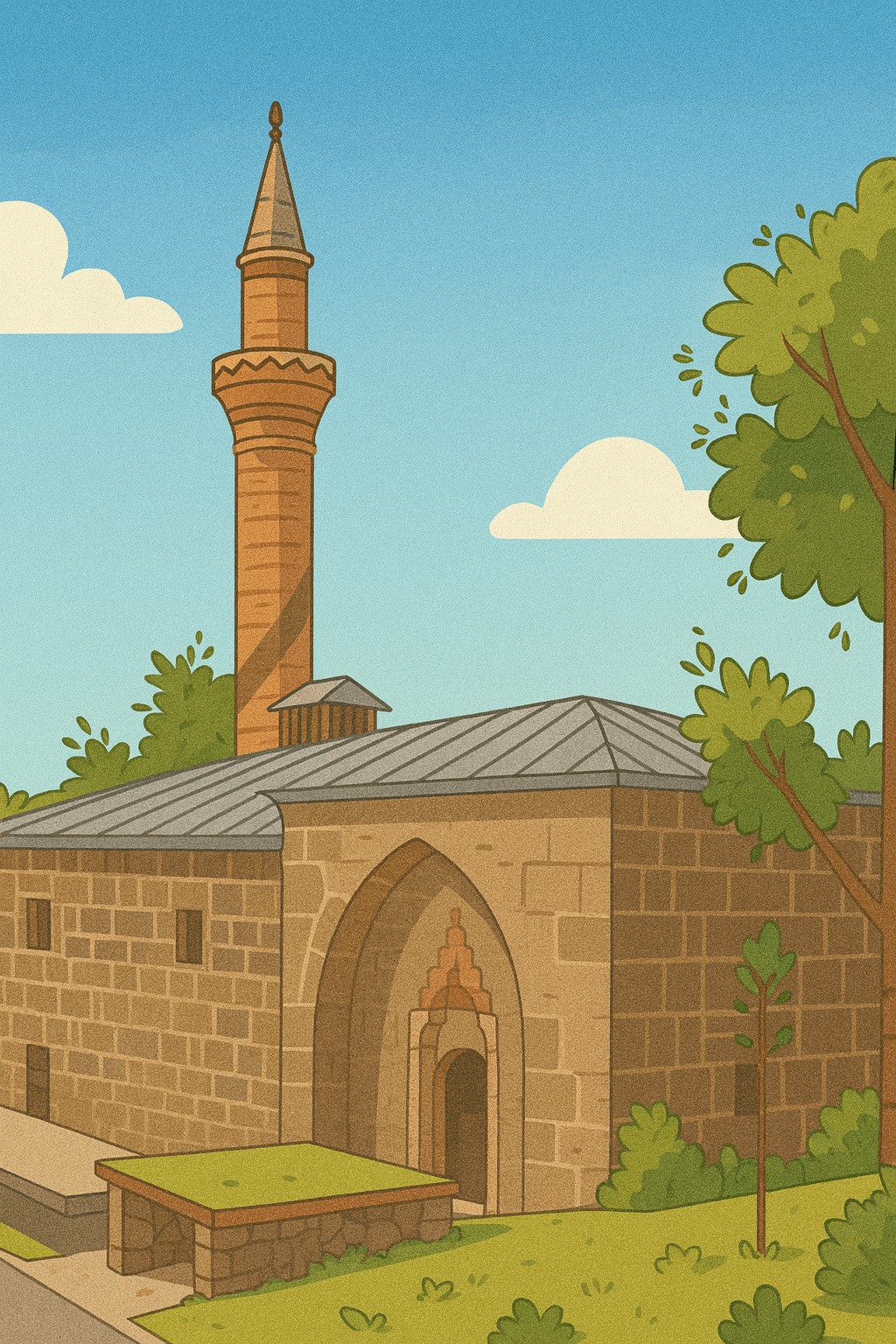
Elti Hatun Camii is constructed entirely of stone. Its walls are built from solid, thick, and precisely cut stones. The structure is covered by a lead-covered roof in gray. Inside, columns divide the interior into three sections. This arrangement strengthens the building and ensures that sound resonates beautifully within the space.
Decorations and Architectural Details
The mosque’s entrance is highly ornate. Above the door, stone carvings feature small triangular motifs (stalactites), a decorative element commonly used during the Seljuk period. The windows are framed by arches made of brick. Inside, green tiles and a mihrab shaped like a scallop shell stand out. These designs add both color and elegance to the mosque.

Culture PortalGenerated from Inspiration by Photograph.
Water Fountain and Minaret
To the north of the mosque stands an old fountain. Its decorations resemble those of the mosque. The water was provided for use by worshippers in the mosque and by residents of the neighborhood. A minaret was added to the mosque in 1952. Although this minaret was constructed later, it today lends the mosque an elegant appearance.

Culture PortalGenerated from Inspiration by Photograph.
Why Is It Important?
Elti Hatun Camii is a valuable example demonstrating that women in Anatolia also played leading roles in charitable endeavors. It also helps us understand Seljuk-era stonemasonry, architecture, and decorative arts. This mosque is a treasure of our history and culture that must be preserved.