

This article was automatically translated from the original Turkish version.
+2 More
Location | Çemişgezek district Tunceli | ||||||||
|---|---|---|---|---|---|---|---|---|---|
Construction Date(s) | 13th century | ||||||||
Patron | Elti Hatun (believed to be a member of the Mengücek Beylik dynasty) | ||||||||
Architectural Style(s) | Shows traces of Seljuk stone masonry | ||||||||
Construction Material | Cut stone | ||||||||
Plan Features | Rectangular plan, single-space, and covered by a barrel vault | ||||||||
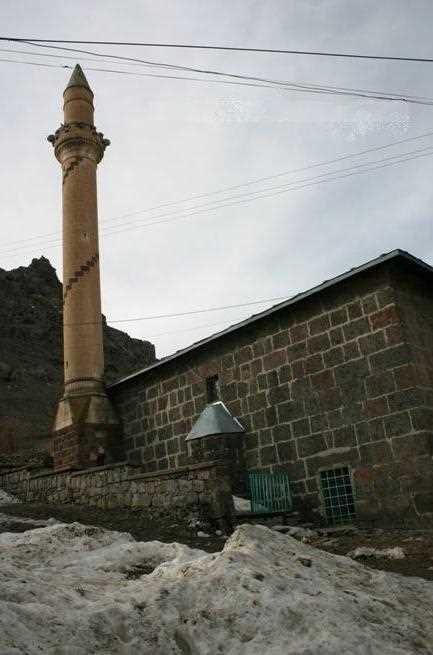
Minaret | Added later; stone base, brick body | ||||||||
Important Details | The mihrap located on the southern wall of the mosque is original and decorated | ||||||||
Registration Status | Registered by the General Directorate of Cultural Heritage and Museums | ||||||||
Elti Hatun Camii is located in the center of Mazgirt district, which is under the jurisdiction of Tunceli province. This structure, prominent within the historic fabric of the town, is an important mosque both for its architectural uniqueness and its historical background. Situated at the heart of the settlement, the mosque holds special significance due to its physical position within the neighborhood and its spatial relationship with other historic structures in its vicinity.
According to the inscription on the mosque’s entrance façade, Elti Hatun Camii was constructed in Hijri 650 (Gregorian 1252). The inscription identifies the patron as Elti Hatun, described as “a benefactor of religion and the world.” Elti Hatun was the granddaughter of Süleyman Şah, one of the prominent figures of the period. This information is valuable as it confirms that the mosque was commissioned by a female benefactor and provides insights into the social structure of the era.

Elti Hatun Camii (Culture Portal)
The mosque is constructed entirely of cut stone. Its floor plan consists of a rectangular prayer hall. The roof, covered with a lead-clad broken roof, was built using materials and techniques appropriate to its period. Inside, two rows of two piers each arranged in parallel create a tripartite spatial organization. This structural arrangement enhances the building’s load-bearing capacity while establishing a symmetrical harmony within the interior space.
The main entrance façade is highly distinctive. A pointed arch framed niche containing a crowned portal presents a simple yet effective visual character consistent with the architectural style of the period. Above the inner doorway is a stalactite-decorated niche. Such ornamental elements were commonly used during the Seljuk period. The stonework in the entrance arrangement is particularly notable. Additionally, a secondary entrance has been added later to the northwest corner, indicating interventions from subsequent periods.

Elti Hatun Camii (Culture Portal)
To provide natural illumination, the mosque features brick-arched window openings. The combined use of brick and stone adds aesthetic value through material diversity. The windows not only facilitate daylighting of the interior space but also contribute to a symmetrical appearance on the exterior façade.
The mihrab is projected outward from the structure, forming a distinct protrusion clearly visible from the exterior. The mihrab niche is decorated inside with shell motifs. Additionally, green tiles surround the mihrab. These tiles introduce movement and vibrancy to the interior space through their color and pattern, enriching the building’s decorative repertoire. The minbar, by contrast, is kept very simple, in harmony with the overall architectural ethos of the structure.
A fountain is attached to the northern façade of the mosque. Its niche, like the crowned portal, features a stalactite (muqarnas) design. The inscription above the fountain reveals that the structure served an additional function and was designed with social purposes in mind. Beyond meeting the mosque’s water needs, it functioned as a public facility accessible to the local community.
A minaret was added to the southwest corner of the building in 1952. Although not part of the original plan, this addition reflects the mosque’s evolving functional requirements over time. While this modification alters the historical character of the structure, it should be understood in the context of contemporary usage needs.
Elti Hatun Camii reflects the architectural features of the Seljuk period through its Seljuk stone masonry, decorative program, and spatial organization. In particular, the shell motifs in the mihrab niche, the stalactite details of the crowned portal, and the brick-arched windows resemble common examples found in Seljuk and Beylikler period architecture in Anatolia. Moreover, its commissioning by a female benefactor holds significance within the context of the tradition of female endowments in Anatolia.

Elti Hatun Camii (Culture Portal)
Ministry of Culture and Tourism of the Republic of Türkiye. "Elti Hatun Camii." *Kültür Portalı*. Accessed July 15, 2025. https://www.kulturportali.gov.tr/turkiye/tunceli/gezilecekyer/elti-hatun-camii
T.C.Tunceli İl Directorate of Culture and Tourism. "Elti Hatun Camii." Accessed July 15, 2025. https://tunceli.ktb.gov.tr/TR-57301/elti-hatun-camii.html

Location | Çemişgezek district Tunceli | ||||||||
|---|---|---|---|---|---|---|---|---|---|
Construction Date(s) | 13th century | ||||||||
Patron | Elti Hatun (believed to be a member of the Mengücek Beylik dynasty) | ||||||||
Architectural Style(s) | Shows traces of Seljuk stone masonry | ||||||||
Construction Material | Cut stone | ||||||||
Plan Features | Rectangular plan, single-space, and covered by a barrel vault | ||||||||
Minaret | Added later; stone base, brick body | ||||||||
Important Details | The mihrap located on the southern wall of the mosque is original and decorated | ||||||||
Registration Status | Registered by the General Directorate of Cultural Heritage and Museums | ||||||||
Historical Background and Construction Details
Construction Materials and General Plan Features
Entrance and Exterior Facade Design
Window System and Lighting
Mihrab, Minbar, and Interior Decorations
Fountain and Ancillary Structures
Minaret and Later Interventions
Architectural Style and Period Characteristics