


This article was automatically translated from the original Turkish version.
+1 More
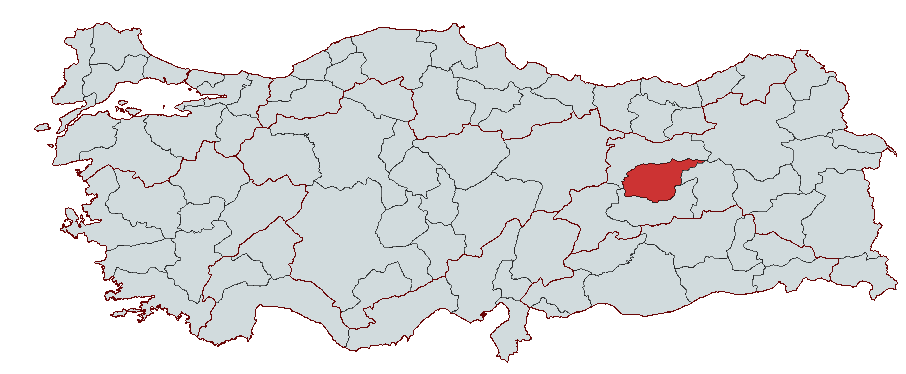
Tunceli
Country | Türkiye | ||||||||
|---|---|---|---|---|---|---|---|---|---|
Region(s) | Eastern Anatolia Region | ||||||||
Population | 86.612 | ||||||||
Area(s) | 7.583 km² | ||||||||
Climate(s) | Continental Climate | ||||||||
Important Structure(s) | Munzur Baba Türbesi Sungur Bey Camii Çemişgezek Kalesi Pertek Kalesi Mazgirt Elti Hatun Camii ve Türbesi | ||||||||
Governor(s) | Bülent Tekbıyıkoğlu | ||||||||
Mayor(s) | Bülent Tekbıyıkoğlu (Vekil) | ||||||||
Area Code(s) | 428 | ||||||||
License Plate Code | 62 | ||||||||
Tunceli is a province located in the Eastern Anatolia Region of Türkiye, within the Upper Euphrates Section. Surrounded by the Munzur Mountains to the north and west, the Bingöl Mountains and Peri River to the east, and the Keban Dam Lake to the south, Tunceli stands out for its rich historical heritage and unique geographical structure. Settlement in the region dates back to the Chalcolithic period and throughout history it has been under the rule of numerous civilizations including the Hittites, Urartians, Persians, Romans, Byzantines, Arabs, Kurds and Ottomans. During the Republican era, the name Dersim was changed to Tunceli on 25 December 1935 and the provincial capital was relocated to its current location on 30 December 1946. Due to its geographical structure, Tunceli experiences a harsh continental climate and is notable for its Munzur Valley National Park and historic fortresses.
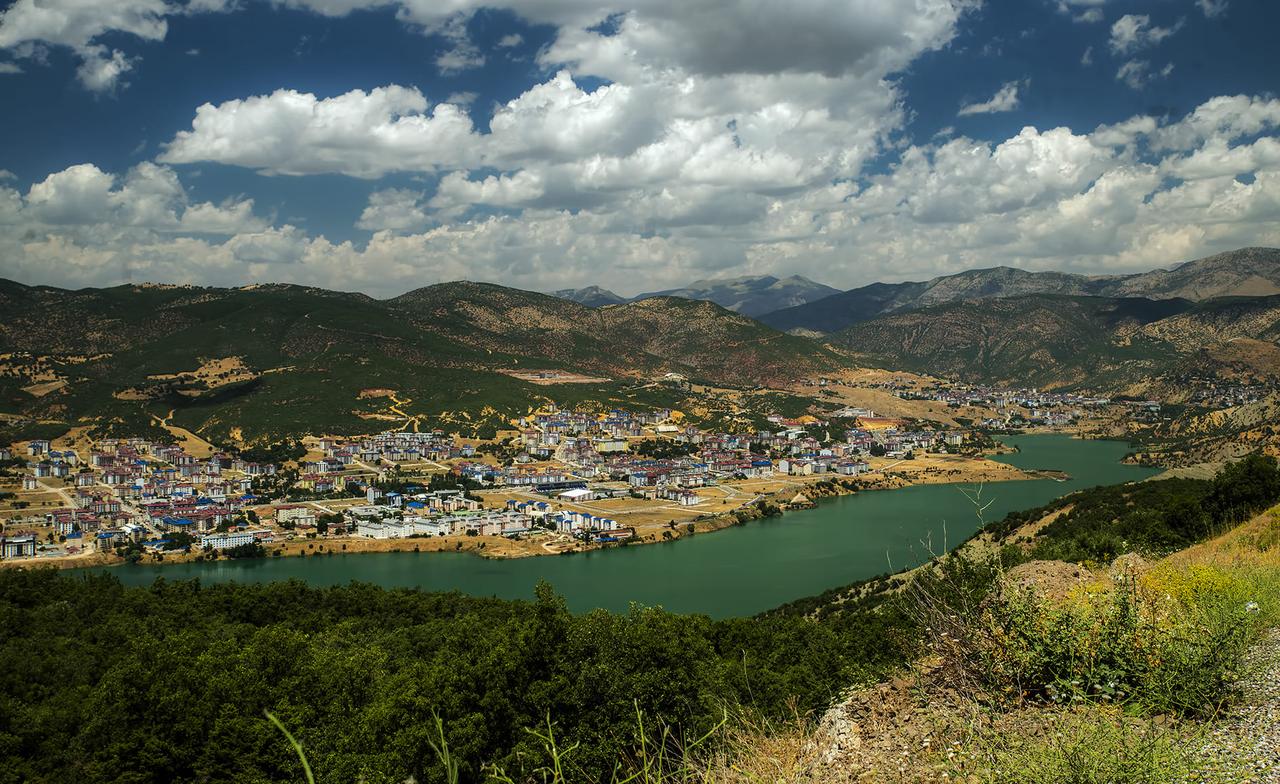
Tunceli City Center
Tunceli is one of the oldest settlement areas in Anatolia with a history extending back to the Chalcolithic period (5500–3500 BCE). Excavations at the Pulur (Sakyol) Mound, now submerged under the waters of the Keban Dam Lake in the southern part of Çemişgezek district, have revealed that the region was inhabited during this period and that houses with a distinctive appearance, hearths, grinding stones, bronze needles and other metal artifacts were in use.
In terms of written history, the earliest records about the region date back to around 2200 BCE when it was known as Ishuwa the Hurri-Mitanni Kingdom. The Hittites are known to have dominated the region in the 13th century BCE and after them it came under the control of civilizations such as the Hurrians, Babylonians and Assyrians. The Urartians gained control of the region in the 12th century BCE and constructed structures such as the Mazgirt, Bağın and Kaleköyü Fortresses. Later, in the 7th century BCE, the region passed under Median control and subsequently came under Persian rule.
The region was governed by the Roman Empire and later the Byzantine Empire, during which time it changed hands between the Sassanids and Byzantines. In 639 CE, following the Arab conquest, the region came under Islamic rule for a period and remained under Byzantine control until 972 CE. After the Battle of Manzikert in 1071, the Seljuks of Anatolia conquered Tunceli in 1087 and incorporated it into their domain.
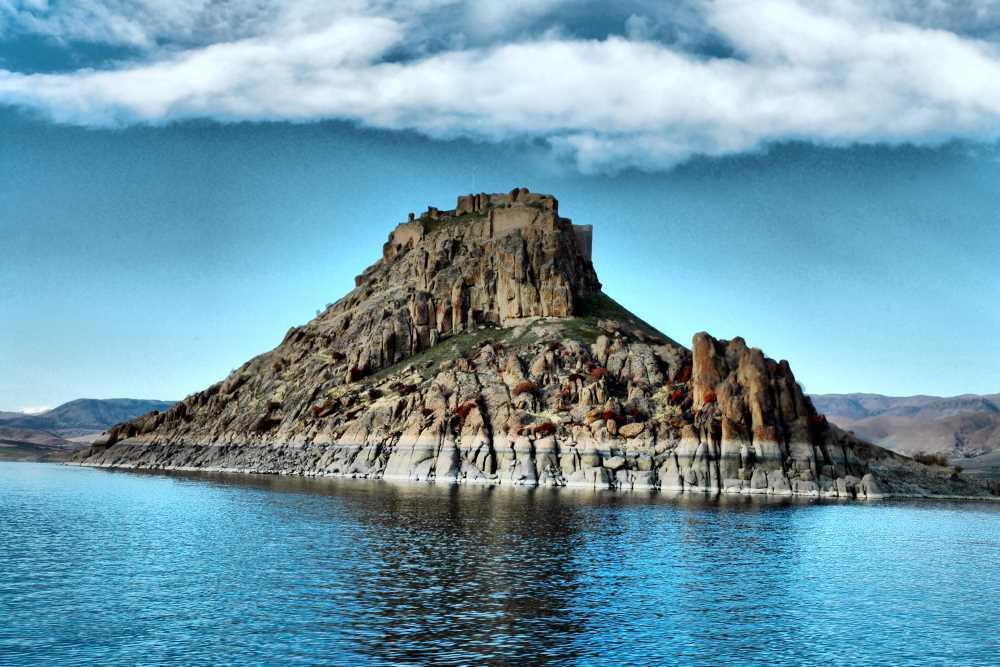
Pertek Fortress
Following the Seljuks, Tunceli came under the rule of various states including the Mengujekids, Ilkhanids, Jalayirids, Timurids, Kara Koyunlu and Ak Koyunlu. After the Battle of Otlukbeli in 1473, it was incorporated into Ottoman territory. However, during the Ottoman period, due largely to its geographical structure, the region never fully came under central authority and remained an area dominated by local tribes. In the 19th century, the Ottoman administration attached the region as the Dersim Sanjak and later included it within the Mamuretülaziz (Elazığ) Vilayet.
With the proclamation of the Republic, on 25 December 1935 Law No. 2884 changed the name Dersim to Tunceli and established it as a new province. Initially Elazığ served as the temporary provincial capital but on 30 December 1946 the capital was moved to the town of Kalan, its present location.
Tunceli is located in the Eastern Anatolia Region of Türkiye, within the Upper Euphrates Section. It is bordered by the Munzur Mountains to the north and west, the Bingöl Mountains and Peri River to the east, and the Keban Dam Lake to the south. With a total area of 7,583 km², Tunceli is largely mountainous and rugged terrain.
The most significant geographical features shaping the region are the Munzur, Mercan and Bağırpaşa Mountains. These mountain ranges, with average elevations exceeding 3,000 meters, directly influence the region’s climate and accessibility. Akbaba Hill at 3,463 meters is the highest point in the Munzur Mountains.
Among the plateaus of Tunceli, Mercan Plateau and Kepir Plateau stand out. The Yeşilyazı Plain and Zeranik Plain around the district of Ovacık constitute the main flat areas in the region.
The region is rich in water resources. Its most important rivers are the Munzur River, Pülümür Stream, Peri River and Mercan Creek, all of which flow into the Euphrates River. Although there are no large natural lakes within the provincial boundaries, glacial lakes such as Karagöl, Koçgölü, Mercan Lakes and Katır Lakes are found in the mountainous areas. Additionally, the water mass formed by the Keban Dam Lake to the south defines the southern borders of the province.
Tunceli is under the influence of a harsh continental climate with hot and dry summers and cold and snowy winters. Temperatures in winter months can drop as low as -20°C while in summer months they can reach 35–40°C.
Tunceli is connected by road to the provinces of Elazığ, Erzincan and Bingöl. The nearest airport is approximately 120 kilometers away in Erzincan. Internal transportation is primarily provided by the Erzincan-Tunceli-Elazığ highway running north-south. Due to the Keban Dam Lake, ferry services connect the districts of Pertek and Çemişgezek to Elazığ.

Munzur Valley
Due to this geographical structure, Tunceli attracts attention for its natural areas, biodiversity and wildlife, particularly the Munzur Valley National Park. Especially the spotted trout found in the Munzur River, mountain goats, brown bears, lynxes and wolves form the region’s unique ecosystem.
As of 2023, Tunceli has a population of 86,612. The distribution by district is as follows:
Tunceli is one of the least densely populated provinces in Türkiye with approximately 12 people per square kilometer. A significant portion of the population is concentrated in the provincial center and districts such as Pertek, Çemişgezek and Mazgirt, while rural areas are sparsely populated. Due largely to seasonal migration and economic conditions, a large portion of the population has migrated primarily to Istanbul, İzmir and Ankara and other west provinces.
Tunceli’s economy is largely based on agriculture and animal husbandry. Industrial activities are very limited and government expenditures play a significant role in the provincial economic structure. Agricultural activities include cereal production, fruit cultivation and beekeeping. In particular, honey production holds an important place in Tunceli’s economic activities and honey produced in the Munzur Valley and surrounding areas serves as a livelihood source for the local population.
Animal husbandry is one of Tunceli’s traditional economic activities. Small livestock farming is predominant with sheep and goat rearing being the main focus. Large livestock farming is mostly carried out by family enterprises. Migratory communities belonging to the Şavak tribe play a significant role in sheep breeding.
Industry has not developed in Tunceli and there are no large-scale industrial facilities in the province. Small workshops, food processing plants and local craft enterprises exist. The local economy is largely based on agriculture and animal husbandry.
Tunceli is a province with tourism potential due to its natural beauty, historical structures and cultural fabric, particularly excelling in nature tourism. The Munzur Valley National Park is one of the province’s most important natural areas and is an ideal destination for hiking, camping and photography thanks to its endemic species, rich wildlife and valleys along the Munzur River.
In addition, Tunceli has numerous historical monuments. The Mazgirt Elti Mosque and Tomb, Pertek Fortress, Çemişgezek Fortress and Atik Valide Sultan Külliyesi are among the significant works reflecting the province’s historical heritage. Moreover, the hot springs in Ovacık and Pülümür attract attention in terms of health tourism.
The annual Munzur Festival and Nature Festival held in Tunceli is one of the important events reflecting the province’s cultural identity. This festival attracts the interest of both local residents and visitors through traditional music, folk dances and various artistic activities.
In recent years, ecotourism projects have been developed in Tunceli to promote nature tourism and highlight the province’s natural beauties. Particularly outdoor sports such as rafting and mountaineering have contributed to greater recognition of the region in terms of tourism.
Kara, Bünyamin. "Tunceli." *TDV İslâm Ansiklopedisi.* Accessed February 14, 2025. https://islamansiklopedisi.org.tr/tunceli#2-mimari.
Ministry of Culture and Tourism. "Tunceli Genel Bilgiler." *Culture Portal*. Accessed February 14, 2025. https://www.kulturportali.gov.tr/turkiye/tunceli/genelbilgiler.
Tuncel, Metin. "Tunceli." *TDV İslâm Ansiklopedisi.* Accessed February 14, 2025. https://islamansiklopedisi.org.tr/tunceli#1.
Tunceli Belediyesi. "Ana Sayfa." Accessed February 14, 2025. https://www.tunceli.bel.tr/#.
Tunceli Valiliği. "Şehrimiz." Accessed February 14, 2025. http://www.tunceli.gov.tr/sehrimiz.
Türkiye İstatistik Kurumu. "Adrese Dayalı Nüfus Kayıt Sistemi Sonuçları 2024." Accessed February 14, 2025. https://data.tuik.gov.tr/Bulten/Index?p=Adrese-Dayali-Nufus-Kayit-Sistemi-Sonuclari-2024-53783.

Tunceli
Country | Türkiye | ||||||||
|---|---|---|---|---|---|---|---|---|---|
Region(s) | Eastern Anatolia Region | ||||||||
Population | 86.612 | ||||||||
Area(s) | 7.583 km² | ||||||||
Climate(s) | Continental Climate | ||||||||
Important Structure(s) | Munzur Baba Türbesi Sungur Bey Camii Çemişgezek Kalesi Pertek Kalesi Mazgirt Elti Hatun Camii ve Türbesi | ||||||||
Governor(s) | Bülent Tekbıyıkoğlu | ||||||||
Mayor(s) | Bülent Tekbıyıkoğlu (Vekil) | ||||||||
Area Code(s) | 428 | ||||||||
License Plate Code | 62 | ||||||||
History
Geography
Population
Economy
Tourism