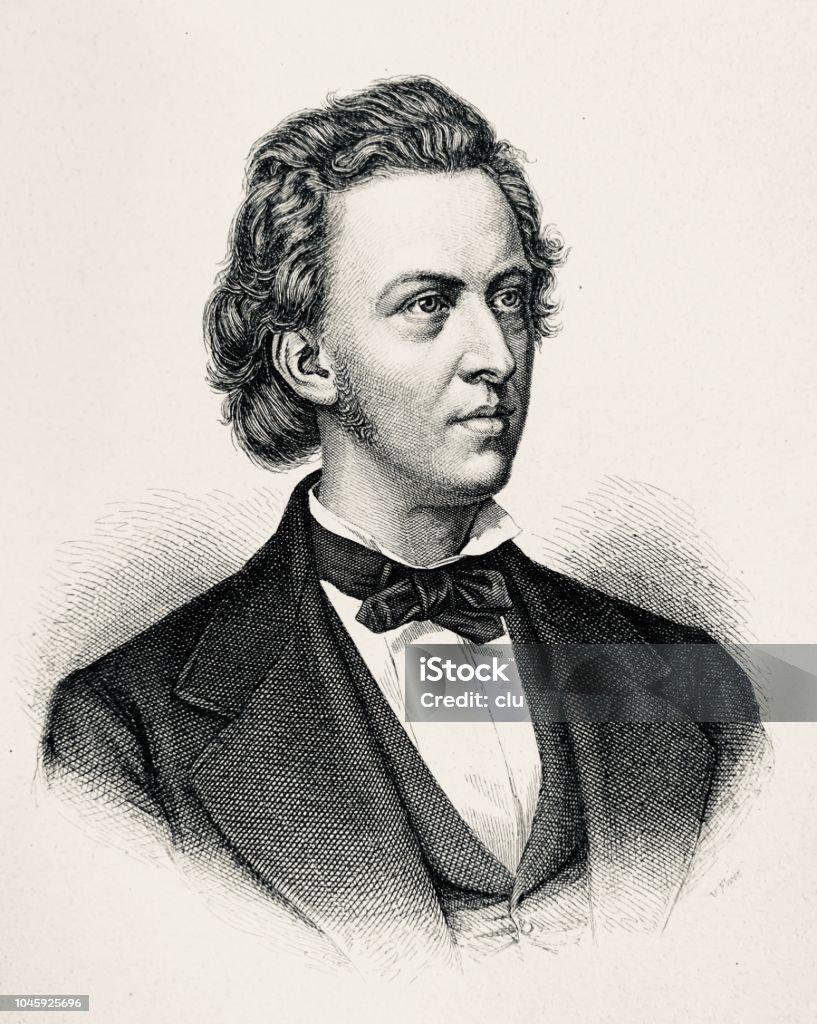




Frédéric Chopin
Imagine a child: with every touch of the piano keys, emotion speaks—sometimes sorrow, sometimes joy, sometimes a distant longing. Frédéric Chopin was such a child. He chose to express his feelings not through words but through music. This journey, which he began at a young age, made him one of the most renowned composers in the world. Let us now explore his story together!
👶🏻Birth and Childhood
Frédéric Chopin was born on 1 March 1810 in Żelazowa Wola, a small village in Poland. His father, Nicolas Chopin, was French and his mother, Justyna Krzyżanowska, was Polish. The family soon moved to Warsaw, where Chopin grew up.

Young Chopin listening to his mother play the piano (Image generated by artificial intelligence).
Both French and Polish were spoken in the household. His mother had a deep affection for music and played the piano with great enjoyment. Even at the age of four, young Chopin would sit beside her, touching the keys and trying to discover his own melodies.
🎼Interest in Music
Chopin’s passion for music began at an early age. He first took lessons from his mother and later from the renowned music teacher Wojciech Żywny. Through this, he learned classical music without ever neglecting folk music. During summer holidays, he listened to the melodies sung by villagers and adapted them to his piano. Thus, his music became a fusion of emotional depth and folk traditions.

Young Chopin playing the piano (Image generated by artificial intelligence).
🎹Instruments of Interest
Chopin’s closest companion was always the piano. Although he was familiar with other instruments, he said he could express his soul only through the piano. For most of his life, he composed exclusively for the piano. After moving to Paris, he particularly favored Pleyel pianos. For him, the piano was not merely an instrument but almost a friend.
🎓Education
Chopin received his education in Warsaw. After taking lessons at the school where his father worked, he enrolled at the Warsaw Conservatory. There, he studied music theory, composition, and harmony.

Chopin taking lessons at the conservatory (Image generated by artificial intelligence).
His teacher, Józef Elsner, immediately recognized Chopin’s extraordinary talent. He helped refine Chopin’s technical skills and encouraged him to develop his own unique style. While still a student, Chopin gave small concerts and composed new works.
📖Compositions
Most of Chopin’s compositions are written solely for the piano. Among his most famous musical forms are mazurkas, polonaises, nocturnes, études, preludes, and waltzes. His music combines the vitality of Polish folk melodies with emotional elegance. Some of his pieces are joyful and rhythmic like dances, while others carry a profound sense of melancholy. In this way, Chopin is known as a “poet of music,” capable of expressing emotions through the language of the piano.
🌟Popular Works
🌠Nocturnes: Poetic pieces that convey the moods of night.
🌠Études: Technical studies for pianists that also carry deep musical meaning.
🌠Polonaises and Mazurkas: Inspired by Polish folk dances.
🌠Waltzes: Known for their graceful, flowing, and melodic structures.
🌠Preludes: Short pieces with intense emotional depth.
Chopin - Nocturne in C Sharp Minor (YouTube)
🎧His Place Today
Today, Chopin is remembered in the world of classical music as the “poet of the piano.” His works are loved and listened to by people of all ages. In Poland, museums have been established in his honor, and the International Chopin Piano Competition, held every five years, inspires young pianists. Chopin’s compositions are still taught with great care in music schools worldwide.