



Hattuşa – The Capital of the Hittites
The City of a Thousand Gods
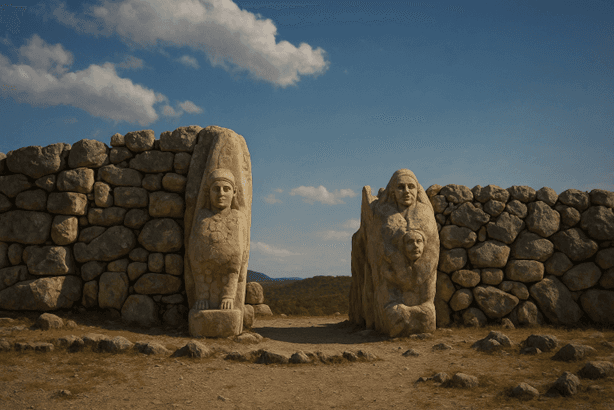
Located in the Boğazkale district of Çorum, Hattuşa was the capital of the Hittite Empire thousands of years ago. This ancient city, inscribed on the UNESCO World Heritage List in 1986, is renowned as one of history’s most important centers due to its magnificent structures and mysterious clay tablets. Have you ever imagined walking through gates built thousands of years ago?

(Generated by Artificial Intelligence)
Discovery and History
Hattuşa was discovered in 1834 by the French traveler Charles Texier. Excavations beginning in 1906 revealed that the site had been the center of a major civilization as early as the second millennium BCE. Originally, the settlement was called Hattuş by its earliest inhabitants, the Hattians. It was later destroyed by King Anitta of Kuşşara but rebuilt by Hattuşili I and served as the capital of the Hittites for 400 years.
Magnificent Structures of the City
In antiquity, the city was surrounded by walls stretching six kilometers in length. Monumental gateways such as the Lion Gate, the Kings Gate, and the Sphinx Gate marked its entrances. The Büyükkale Palace Complex, where the kings resided, along with massive temples and enormous grain storage facilities, have survived to the present day. The most famous temple is the Great Temple, dedicated to the Storm God Tešup and the Sun Goddess Arinna.
Tablets and Secrets
Thousands of cuneiform tablets found at Hattuşa are listed on the UNESCO Memory of the World Register. These tablets refer to Hattuşa as the “City of a Thousand Gods.” The inscriptions describe the achievements of kings, treaties, and daily life. The longest Hittite hieroglyphic inscription is found on the Nişantepe Inscription.

(Generated by Artificial Intelligence)