



Hydrothermal Vents
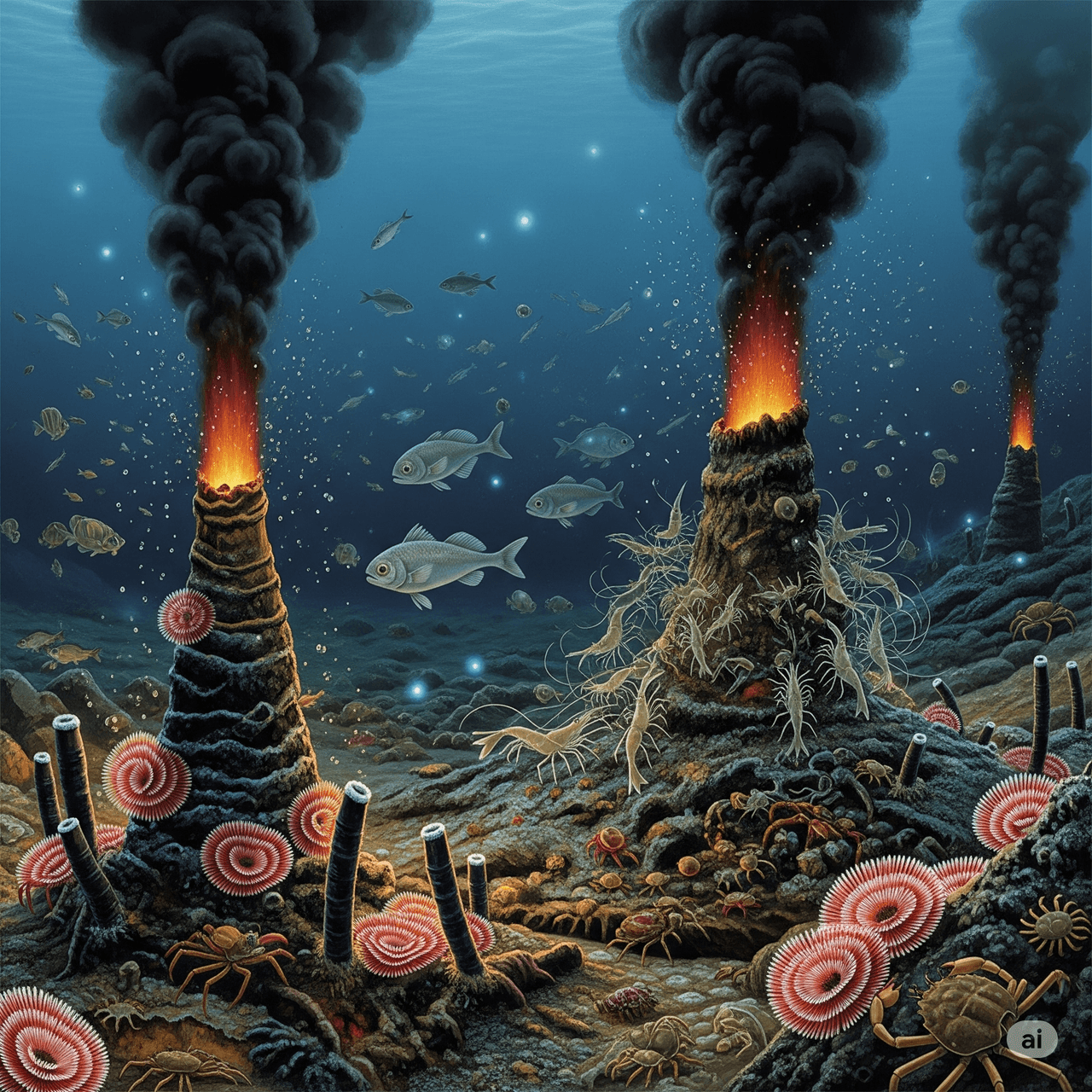
Hydrothermal vents are hot water sources found in the deepest parts of the oceans. These vents form where extremely hot water emerging from cracks in the seafloor mixes with seawater. The water spewing from the vents can reach temperatures of up to 400°C! Yet despite this heat, life exists in these regions!

(Generated by Artificial Intelligence.)
How Do They Form?
In the deep ocean, cracks form in the Earth’s crust. Seawater seeps into these cracks and comes into contact with hot rocks beneath the seafloor. The water heats up, becomes enriched with minerals, and rises back upward. This hot, mineral-rich water erupts from the vents. Over time, minerals accumulate around the vents, forming chimney-like structures. These vents are also called “black smokers” because the water they emit appears smoky due to suspended particles.
Where Are Hydrothermal Vents Found?
Hydrothermal vents are located in the deep regions of the ocean floor. They are most commonly found in volcanic zones along mid-ocean ridges. These vents can be found in various oceans across the globe.
Do Organisms Live There?
Yes, and they are highly specialized organisms! In these depths, there is no sunlight, yet bacteria produce energy even here. These bacteria use chemicals emitted by the vents to create food. This process is called chemosynthesis.
These bacteria serve as a food source for certain specialized worms, crabs, shrimp, and sea snails. These organisms have adapted to survive in extreme conditions of high temperature, darkness, and high pressure.
Life Without Sunlight
Hydrothermal vents are located in deep ocean regions where sunlight does not reach. In these areas, there is no light, but specialized bacteria generate energy using chemical compounds, enabling life to persist.

(Generated by Artificial Intelligence.)
Bacteria and Chemical Energy
Bacteria living at hydrothermal vents derive energy through chemical reactions. They sustain life by utilizing chemicals in seawater and provide a food source for other organisms.
Temperature and Heat of the Vents
The hot water inside hydrothermal vents can exceed 100°C. This temperature is far higher than the normal seawater temperature at the ocean floor. The hot water nourishes the inner structure of the vents by depositing minerals.
The Ecosystem of Hydrothermal Vents
The ecosystem surrounding hydrothermal vents has evolved under unique conditions. Life here does not depend on sunlight but is entirely fueled by chemical energy. This ecosystem is of great interest to scientists.

(Generated by Artificial Intelligence.)
Scientific Research
Scientists study hydrothermal vents to understand how life on Earth may have originated and whether life could exist on other planets. These vents provide crucial insights into how life can thrive in dark, high-temperature environments.
Why Are They Important?
These vents may help us identify where the earliest signs of life on Earth began. Scientists investigating the potential for life on other planets examine environments similar to hydrothermal vents.