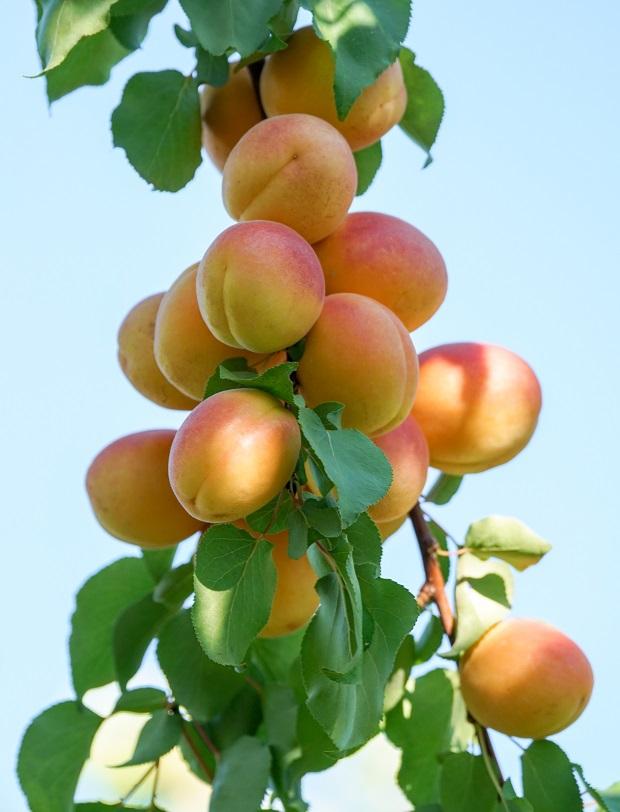




Malatya Apricot
📍 Where Does It Grow?
The Malatya apricot is cultivated in the province of Malatya in Türkiye and in certain districts surrounding it. These areas include the district of Baskil in Elazığ, the district of Gürün in Sivas, the district of Gölbaşı in Adıyaman, and the district of Elbistan in Kahramanmaraş.

Apricot Tree in Bloom (Generated by Artificial Intelligence.)
Cultural and Historical Significance
The Malatya apricot is a fruit long cultivated by the local population and recognized both in Türkiye and internationally. It has been officially registered as a geographical indication by the Turkish Patent and Trademark Office. This registration confirms that all stages of cultivation and processing occur within the designated geographical region. It was also registered by the European Union on 11 July 2017. The registration helps preserve the product’s quality and enhances its recognition.
Characteristics
The Malatya apricot includes varieties such as Hacıhaliloğlu, Hasanbey, Kabaaşı, Soğancı, Çataloğlu and Çöloğlu.
The fruits are yellow in color and sweet.
It thrives in hot sunny summers and cold winters.
It grows well in nutrient-rich, calcareous soils.
It requires 1000–1600 chilling hours.
The fruits can be consumed fresh or dried for storage.

(Generated by Artificial Intelligence.)
Varieties
Fresh Apricot: Yellow in color and sweet.
Sulfured Dried Apricot: Dried using sulfur after harvest; retains a yellow color.
Sun-Dried Apricot: Dried naturally without sulfur; has a brown color.
Nutritional Value
One hundred grams of dried apricot contains energy, protein, carbohydrates, dietary fiber, vitamins A, C and E, and minerals such as potassium, calcium, magnesium and iron.
Harvesting and Production Method
Mature apricots are harvested. For drying, they are either sulfur-treated or dried naturally under the sun.

(Generated by Artificial Intelligence.)
When Is It Eaten?
We eat the fresh variety in summer and the dried variety in winter; it is also used in desserts and dishes.
Today
Türkiye is the world’s largest producer of fresh apricots, with the majority of this production occurring in Malatya. Malatya apricots are sold both domestically and internationally and contribute significantly to the national economy.