




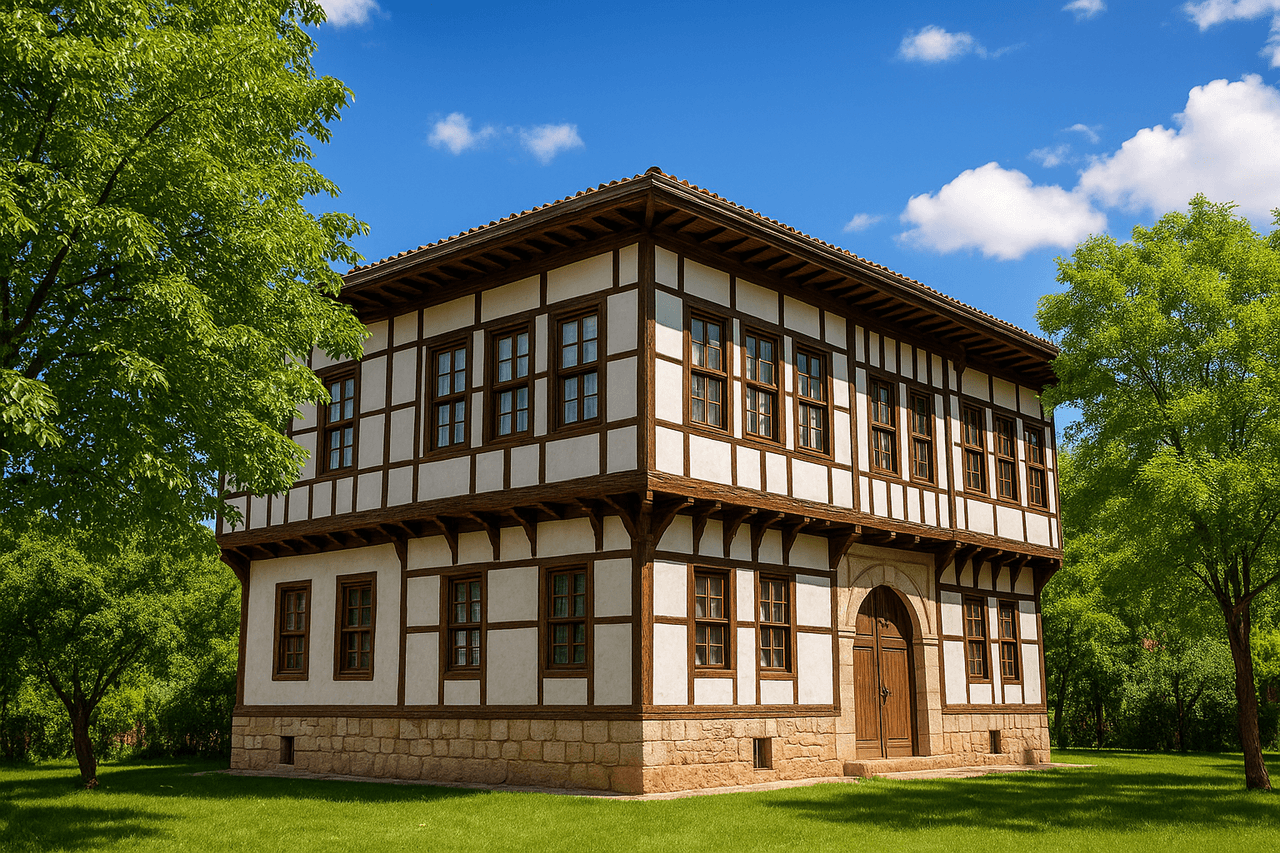
Mihrali Bey Mansion
The Mihrali Bey Mansion derives its name from Mihrali Bey, who displayed heroism during the 1877 Ottoman–Russian War. Mihrali Bey earned great respect among the public due to his bravery in battle. After the war, he and his family were settled in Sivas. Built in 1889, this mansion is an important structure that served both as his residence and as a symbol of his esteemed position in society. Mihrali Bey later fell in battle while fighting in Yemen, and his name became the subject of folk songs passed down by the people.
History and Location
Although the exact neighborhood where the mansion is located is not definitively known, it is confirmed to be situated in the center of Sivas city. The Mihrali Bey Mansion is a fine example of traditional Turkish houses still visible in Sivas. Along with neighboring homes, it enriches the historical fabric of the city and holds a special place in Sivas’s cultural memory.
Architectural Features
The Mihrali Bey Mansion is a two-story building.
- The ground floor contains a kitchen (aşhane), pantry, storage rooms, and four chambers. This level was typically used for daily tasks and storage.
- The upper floor houses the family living areas. At its center is a large reception room known as a sofa, surrounded by four rooms and four eyvans (seating alcoves).
- The wooden decorations on the ceiling of the sofa are among the most striking features of the mansion. These decorations reflect both the craftsmanship of the period and its artistic sensibilities.

Culture PortalGenerated from the photograph using artificial intelligence
Materials Used
The lower floor of the mansion is constructed with stone walls, while the upper floor is built using a mixture of wood and rammed earth. This combination gives the structure both strength and a warm appearance. This construction method is fully consistent with the traditional Anatolian house-building style.
Restoration and Conservation Efforts
Mihrali Bey’s family lived in the mansion until 1995. After they moved to Istanbul, the building was left vacant. In 2004, the Sivas Governorship and the Ministry of Culture began restoration work on the mansion. The exterior façade and roof were repaired in 2006, and a second major restoration took place between 2014 and 2015.
During restoration, the building was preserved in strict accordance with its original state, and traditional materials were used. Today, the Mihrali Bey Mansion stands as an exemplary structure that has successfully maintained its historical and architectural value.
Cultural Significance
The Mihrali Bey Mansion is more than just a house; it is also a symbol that keeps alive the memory of a hero. While Mihrali Bey’s courage continues to live in the public memory, the preservation of the mansion serves as a beautiful example of carrying our history into the future.