

This article was automatically translated from the original Turkish version.
+1 More
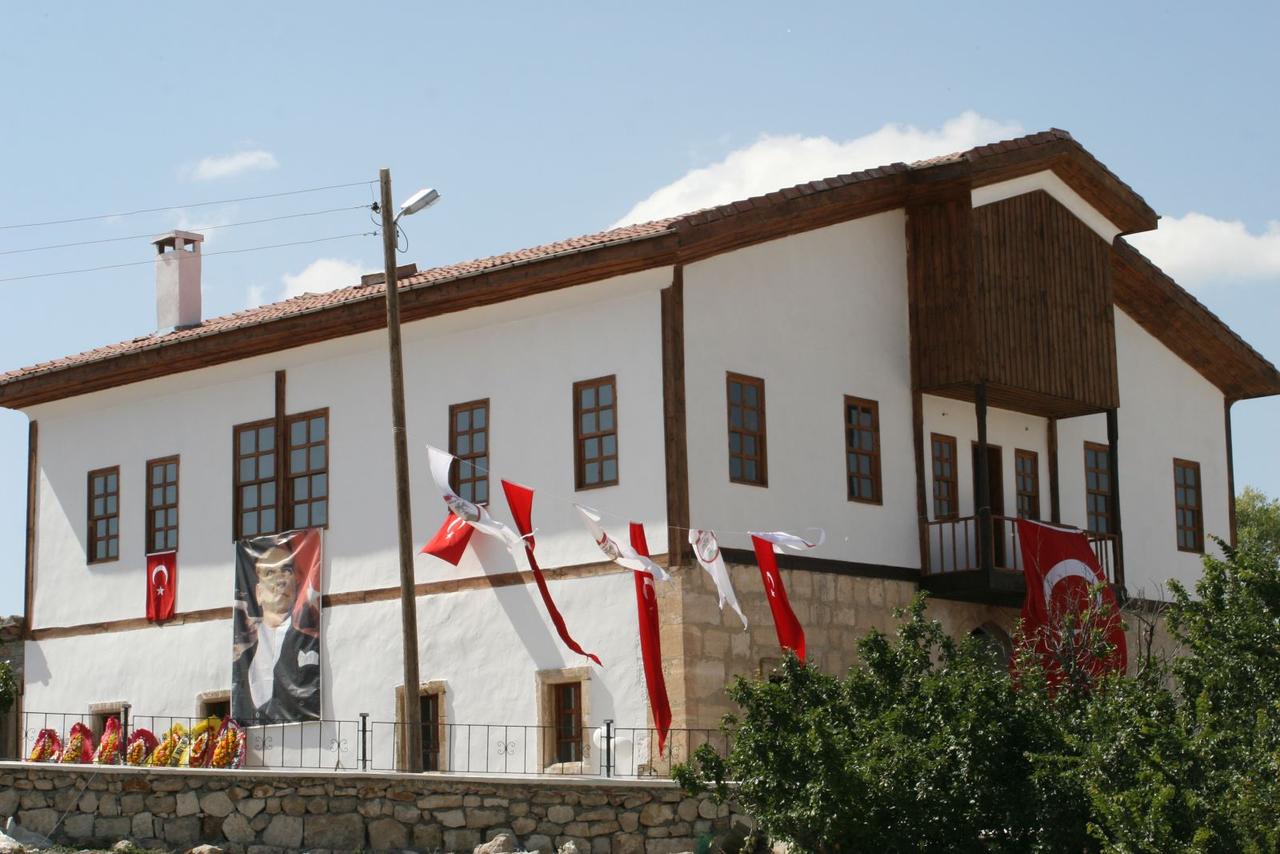
Mihrali Bey Konağı derives its name from Mihrali Bey, a folk hero of Kara Papak origin renowned for his contributions during the 1877 Ottoman–Russian War. Following the war, Mihrali Bey and his family were resettled in Sivas by the Ottoman State. Built in 1889, the mansion served both as Mihrali Bey’s private residence and as a symbol of his social standing. Mihrali Bey was later sent to Yemen where he was martyred. His name subsequently became the subject of folk songs passed down among the people. His family lived in the mansion until 1995, after which they relocated to Istanbul and the building was left vacant. Since then, the mansion has undergone various restoration efforts during different periods.
Although the name of the neighborhood where the mansion is located is not clearly specified in sources, the building is situated within the city center of Sivas. As one of the representative examples of traditional Turkish houses, Mihrali Bey Konağı holds a significant place in Sivas’s urban memory alongside similar civil architectural specimens in its surroundings. The immediate vicinity of the building is a historic area that exhibits the traditional Sivas residential fabric.

Mihrali Bey Konağı (Culture Portal)
Mihrali Bey Konağı is a two-storey building. The ground floor contains service areas such as storage rooms, a pantry, a kitchen, food storage chambers, and auxiliary spaces. This level also includes four rooms and an arrangement centered around an inner sofa.
The first floor was used as the living area. At its center is a large sofa, surrounded by four rooms and four eyvans. The ceiling of the sofa features ornamental wooden carvings, which are among the key architectural elements enhancing the mansion’s aesthetic value.
The walls of the ground floor are built on a cut-stone foundation using rubble stone masonry. The load-bearing structure of the first floor is wooden, with the spaces between the timbers filled with sun-dried mud bricks. Thus, traditional materials—stone, wood, and kerpiç—are combined to create a structure consistent with the domestic architecture of Anatolia during that period.

Mihrali Bey Konağı (Culture Portal)
After being left vacant in 1995, plans were made in 2002 to relocate and repurpose the building. A protocol signed in 2004 between the Sivas Governorship and the Ministry of Culture initiated the restoration process. The first phase of restoration was completed in 2006, during which the roof and exterior façade were repaired. However, inspections conducted in 2009 and 2010 revealed deterioration in the flooring, interior plastering, and exterior façade. Consequently, a second comprehensive restoration was carried out in 2014 and 2015. Throughout the restoration, efforts were made to remain faithful to original details, with preference given to authentic materials and traditional techniques. Today, the building is regarded as an example that has successfully preserved both its physical integrity and historical context.

Mihrali Bey Konağı (Culture Portal)
Mihrali Bey Konağı holds significance not only through its architectural features but also through its historical and cultural meaning. The folkloric status of its owner, Mihrali Bey, and the building’s status as one of the traditional examples of Anatolian Turkish domestic architecture render it a valuable cultural heritage asset.
The wooden ceiling decorations above the sofa reflect the aesthetic sensibilities of the period, while the building’s layout was designed in accordance with the conventions of traditional family life. Preserving the mansion and transmitting it to future generations is essential for maintaining the continuity of collective memory.
Accessed November 26, 2025.
Accessed November 26, 2025.
Accessed November 26, 2025.
Kemikli, Salime Bera. "Mihrali Bey Konağı." İstem 44 (2024): 391–414. Accessed July 20, 2025.
Kemikli, Salime Bera. “Mihrali Bey Konağı.” İstem 44 (2024): 391–414. Erişim 20 Temmuz 2025.
Ministry of Culture and Tourism. "Mihrali Bey Konağı." Kültür Portalı – Gezilecek Yerler, Accessed July 20, 2025.
Ministry of Culture and Tourism. "Mihrali Bey Konağı." Kültür Portalı – Kültür Envanteri, Accessed July 20, 2025.

No Discussion Added Yet
Start discussion for "Mihrali Bey Mansion" article
Location and Urban Context
Architectural Features
Plan and Spaces
Materials and Construction Techniques
Restoration Processes
Cultural and Artistic Value