



Nevşehir Kaymaklı Underground City
Kaymaklı Underground City is a vast settlement carved into soft volcanic rock (tuff). In the Cappadocia region, it resembles a hidden labyrinth beneath the earth. This was a secret city built hundreds of years ago by people seeking protection from attacks and the ability to sustain long-term life underground.
This underground city is an important structure that demonstrates how people devised solutions to remain safe during difficult times. Thanks to the rooms, tunnels, and ventilation system beneath the surface, residents could live for weeks without ever emerging above ground.

Nevşehir Kaymaklı Underground City (Culture Portal)
Time Travel
The earliest sections of Kaymaklı Underground City are believed to have been constructed approximately 5,000 years ago, around the 3000s BCE. This corresponds to the era when the ancient civilization known as the Hittites inhabited Anatolia.
The city was further expanded in later periods, particularly during the Roman and Byzantine Empires. People enlarged the city by carving additional rooms, churches, storage areas, and living quarters underground. This expansion enabled the city to shelter a greater number of people as a refuge.

Nevşehir Kaymaklı Underground City (Culture Portal)
What Kind of Place Is the Underground City?
Kaymaklı Underground City consists of interconnected tunnels and rooms designed for various purposes. Although its structure appears complex, every element was built according to a deliberate plan.
Tunnels and Doors
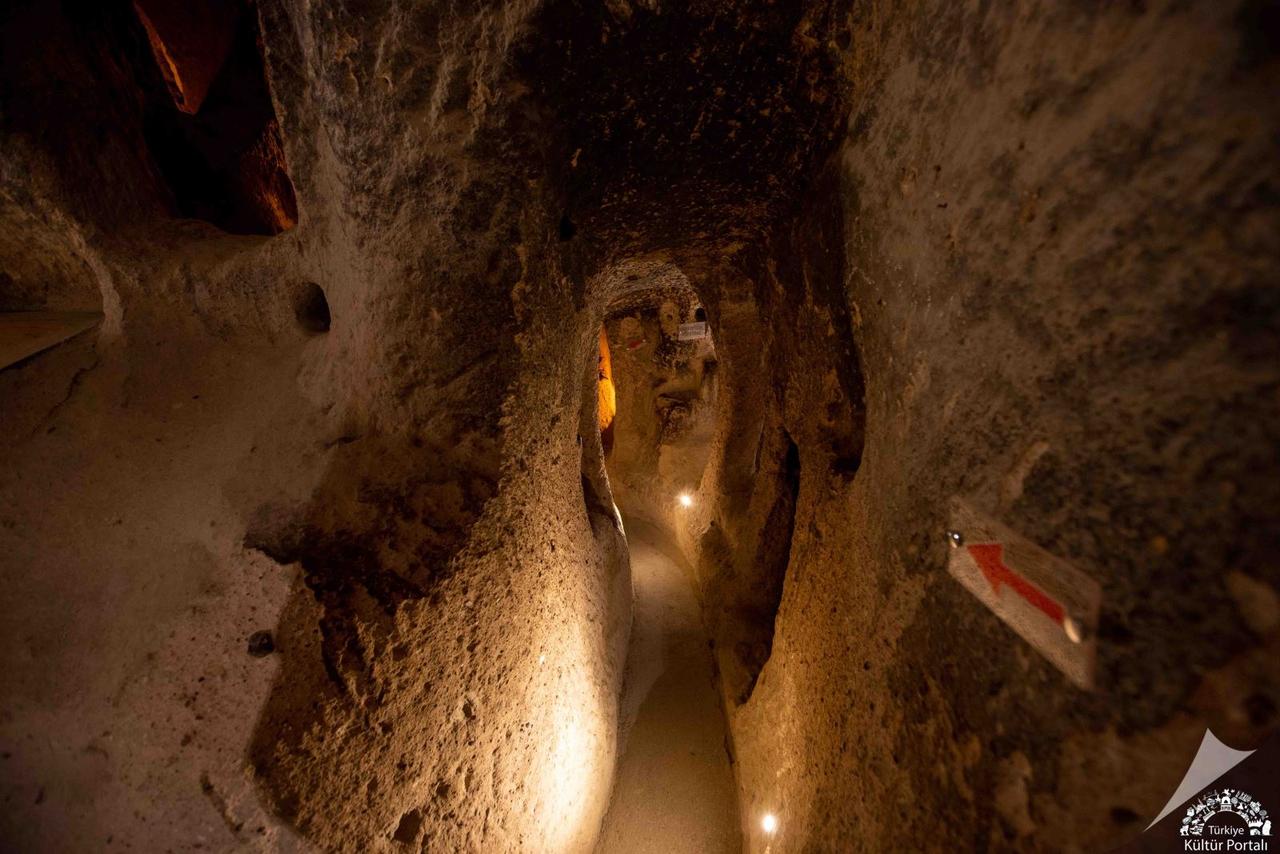
The tunnels of the underground city are typically narrow, low, and sloped. This design was intended to slow down and hinder intruders attempting to enter. Large circular stone doors, known as rolling stones, were used to seal the entrances and exits of the tunnels. These heavy stones, which had a central hole, could only be moved from the inside.

Nevşehir Kaymaklı Underground City (Culture Portal)
Living Quarters and Rooms
The city is composed of multiple levels descending beneath the surface. Currently, four levels are open to visitors.
- Level 1 (Entrance Level): This level housed stables and living areas for people. The proximity of the stables to the entrance allowed for easy access and movement of animals.
- Level 2 (Worship and Living): This level contains a church with two apses (semi-circular sections). Adjacent to the church are burial areas and seating spaces.
- Level 3 (Production and Storage): This is one of the most important sections of the city. It includes storage rooms for food, kitchens, and wine or grape molasses production facilities known as şıra houses. A special stone block, believed to have been used as a copper-working workshop, is also located on this level.
- Level 4 (Storage and Kitchen): This level also contains essential living units such as şıra houses, kitchens, and storage rooms.
How Does Air Enter?
This city, located tens of meters below ground, has a unique system for supplying air. Rooms on each level are arranged around vertical ventilation shafts that extend upward. These shafts ensured that fresh air reached even the deepest levels of the city.