



Seljuk Kubbeh and Seljuk Cemetery - Kars
Have you ever heard of the Ani Archaeological Site, located in Kars and listed on UNESCO’s World Heritage List? This is an ancient and unique place that bears traces of various civilizations. The Ani Archaeological Site was conquered in the year 1064 by the Seljuks, the powerful state of that era. The Seljuk Kümbeti and the Seljuk Cemetery are among the most significant structures that emerged immediately after this conquest and carry the earliest traces of Turkish-Islamic history in Anatolia. These ancient tombs and monuments tell the story of a new way of life established on these lands nearly a thousand years ago. Let us examine this historical treasure more closely!
Who Were the Seljuks? 🇹🇷
To better understand the monuments in Ani, let us first briefly learn who the Seljuks were. The Seljuks were Turkic tribes who arrived from Central Asia around 1,000 years ago and settled in Anatolia. They are known for their powerful armies and distinctive architecture. The kümbet (a type of monumental tomb) and mosques are important examples of their architectural style. By making Anatolia their homeland, the Seljuks helped establish a new culture and way of life in the region.

Seljuk Kümbeti and Seljuk Cemetery (Culture Portal)
What Is a Kümbet? ⚰️
Have you ever seen strong, solid tombs made of stone or brick that appear as if they will never collapse? A kümbet is precisely such a monumental tomb. These structures were typically built for important individuals, state officials, or scholars. A kümbet usually has two levels: the upper level is sometimes used for worship or commemoration, while the actual burial chamber, known as the cenazelik, is located on the lower level. Kümbets are among the most well-known and impressive structures of Seljuk architecture. The kümbets found in Ani were constructed on a square base with an octagonal body.
Where Is the Seljuk Cemetery in Ani and Why Is It Important? 📍
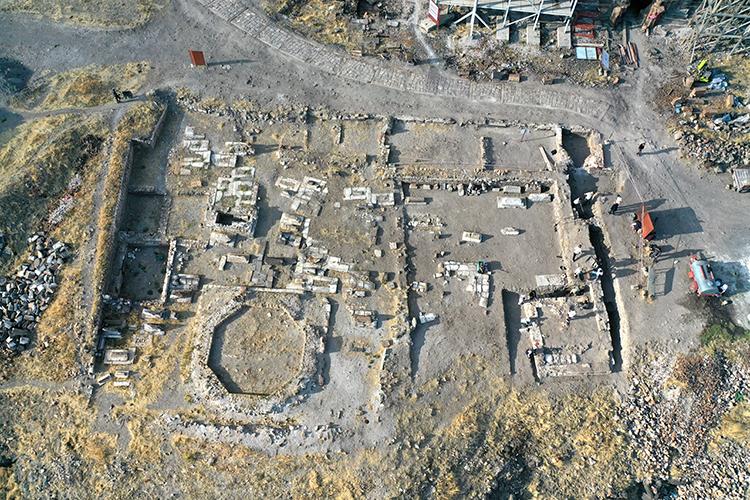
The Seljuk Cemetery and kümbet are located within the Ani Archaeological Site, right next to the Fethiye Camii, which was originally a cathedral, and near the Arpaçay River.
This cemetery is of great importance because it is considered one of the earliest Turkish-Islamic cemeteries established in Anatolia. The tombs of Seljuk beys and other prominent figures of the period are located here. Excavations have uncovered various types of graves, including stone sarcophagi (taş lahitler) and underground chamber-style graves known as akıt tipi mezarlar. These findings demonstrate that the Seljuks brought their Central Asian burial traditions with them to Anatolia.

Seljuk Kümbeti and Seljuk Cemetery (Culture Portal)
A Journey Through Time ⏳
Exactly 961 years ago, in the year 1064, Seljuk Sultan Alp Arslan conquered Ani, turning these lands into one of the first Turkish settlements in Anatolia. It is believed that the Seljuk Cemetery was established shortly after this conquest. Thus, these structures have stood in place for nearly a thousand years. Consider this: so much has changed since then, yet these stone buildings still stand!