



Turkish Lokum
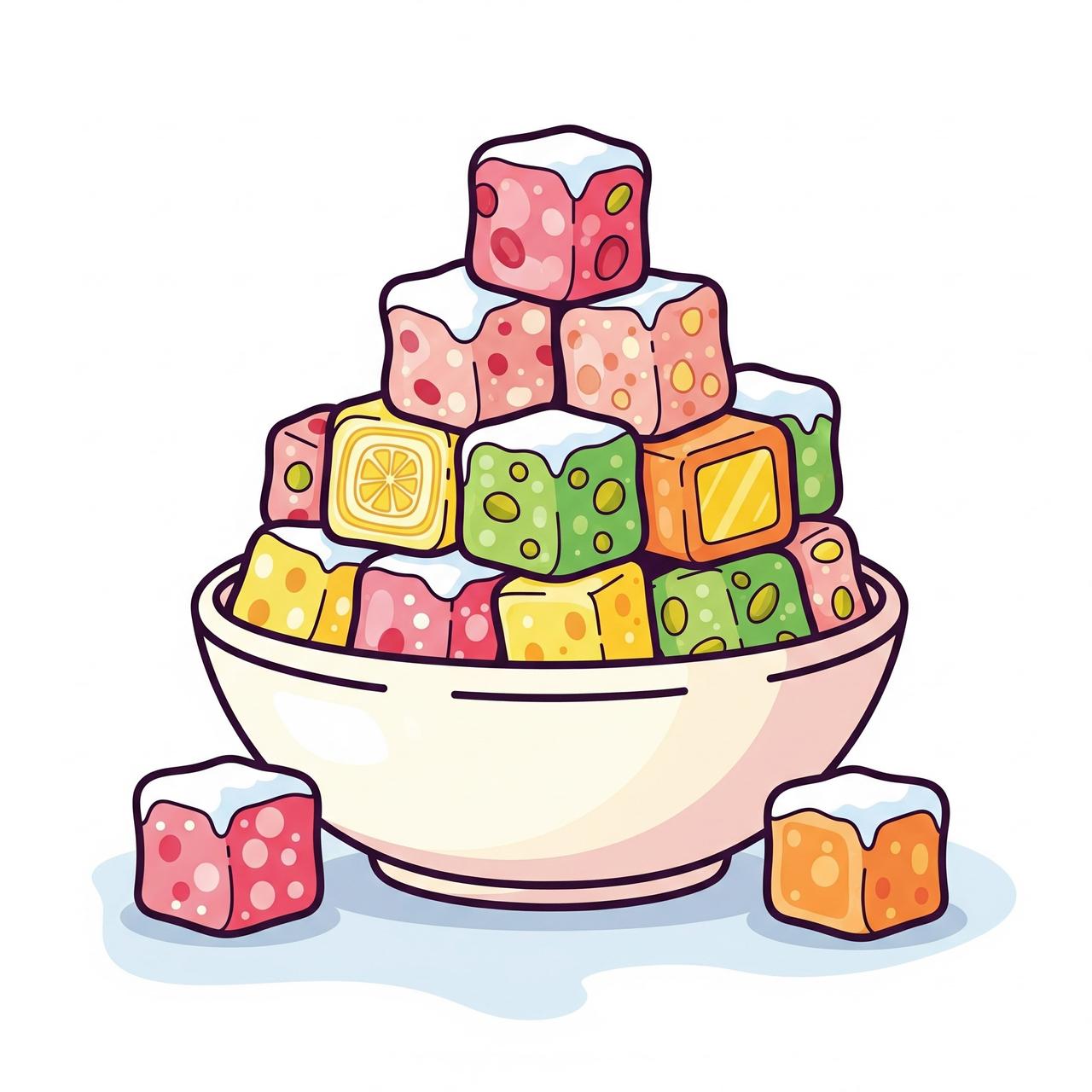
Think of something sweet, soft, and colorful! This treat, dusted with powdered sugar and often filled with surprises like pistachios or rose scent, is called lokum!
Turkish Delight
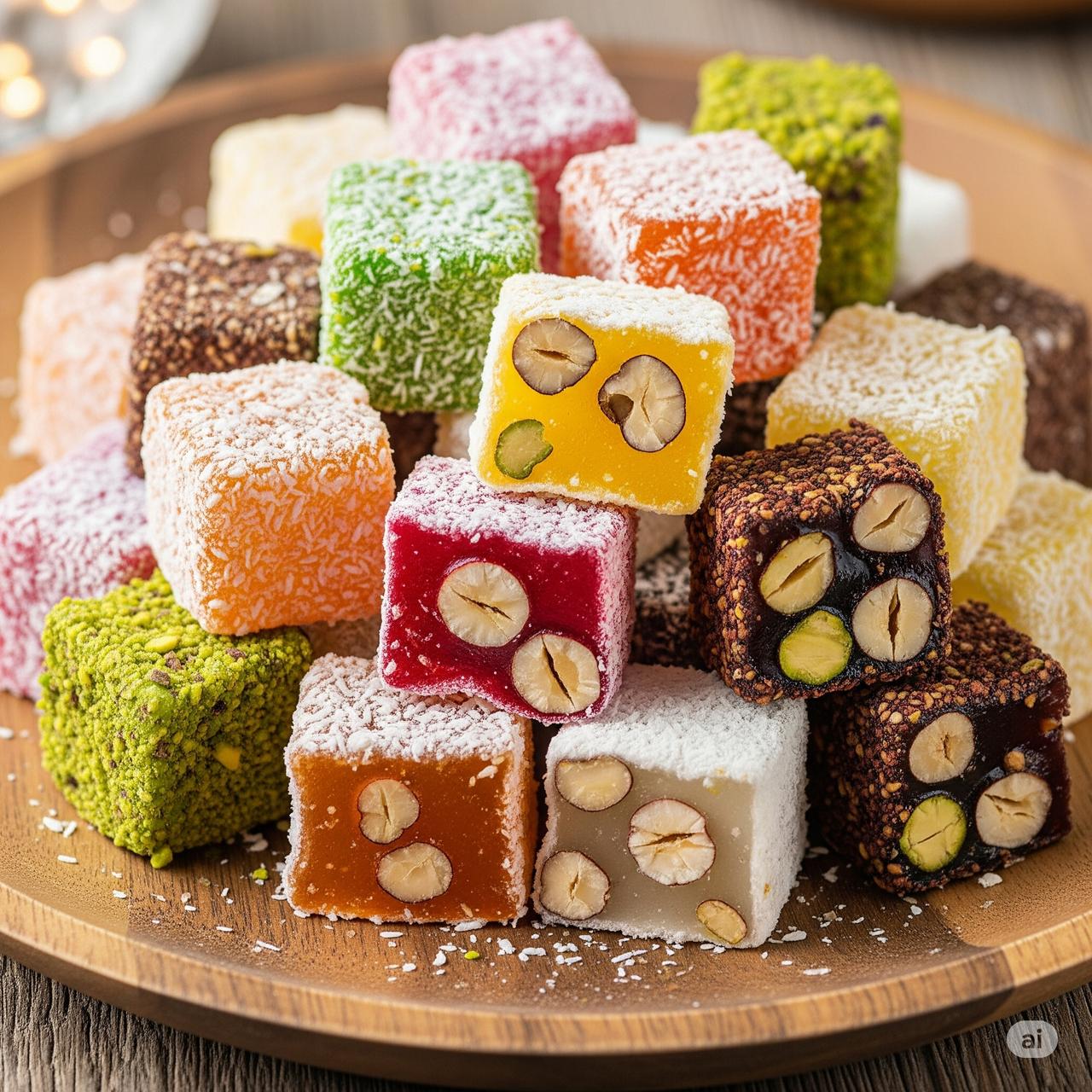
Think of something sweet, soft, and colorful! This treat, dusted with powdered sugar and sometimes containing pistachios or rose fragrance, is called lokum. This world-famous Turkish confection has been delighting palates for hundreds of years. Lokum is not just a dessert—it is also a delicious part of our culture!

Turkish Delight (generated with AI assistance.)
How Did Lokum Originate?
The history of lokum dates back to ancient times. The earliest sweets similar to lokum were first made in Anatolia during the 15th century. These sweets, initially prepared with grape molasses and flour, gradually evolved over time. In the 18th century, a confectioner named Hacı Bekir began making lokum in Istanbul in its modern form. So popular did it become that the Ottoman sultan appointed him as the imperial chief confectioner!
What Is in Lokum?
Making lokum requires very few ingredients: sugar, water, starch, and a small amount of acid such as citric acid. This mixture is boiled for a long time until it slowly solidifies. After cooling, variations with hazelnuts, pistachios, or fruit can be added. The surface is then dusted with powdered sugar and cut into small cubes.

Making Lokum (generated with AI assistance.)
Where in Türkiye Is Lokum Famous?
Lokum is made in many parts of Türkiye, but some cities are especially renowned for theirs. Safranbolu Lokum is known for its saffron content and has received geographical indication status. Afyon Lokum is famous for its soft texture and varieties topped with clotted cream. Each region’s lokum has its own unique flavor!
How Did Lokum Spread Around the World?
In the 18th century, European travelers who visited the Ottoman Empire discovered lokum. They loved it so much that they took it back to their own countries. Thus, lokum became known in England as “Turkish Delight.” Today, many people around the world associate lokum with Türkiye whenever they hear its name.
The Cultural Significance of Lokum
In Türkiye, lokum is not merely a dessert—it is also a tradition of hospitality. It is offered during holidays, when guests arrive, or when good news is shared. In fact, serving lokum alongside coffee at engagement ceremonies is an age-old custom.

Lokum in Our Culture (generated with AI assistance.)