




What Is a Fuel Cell?
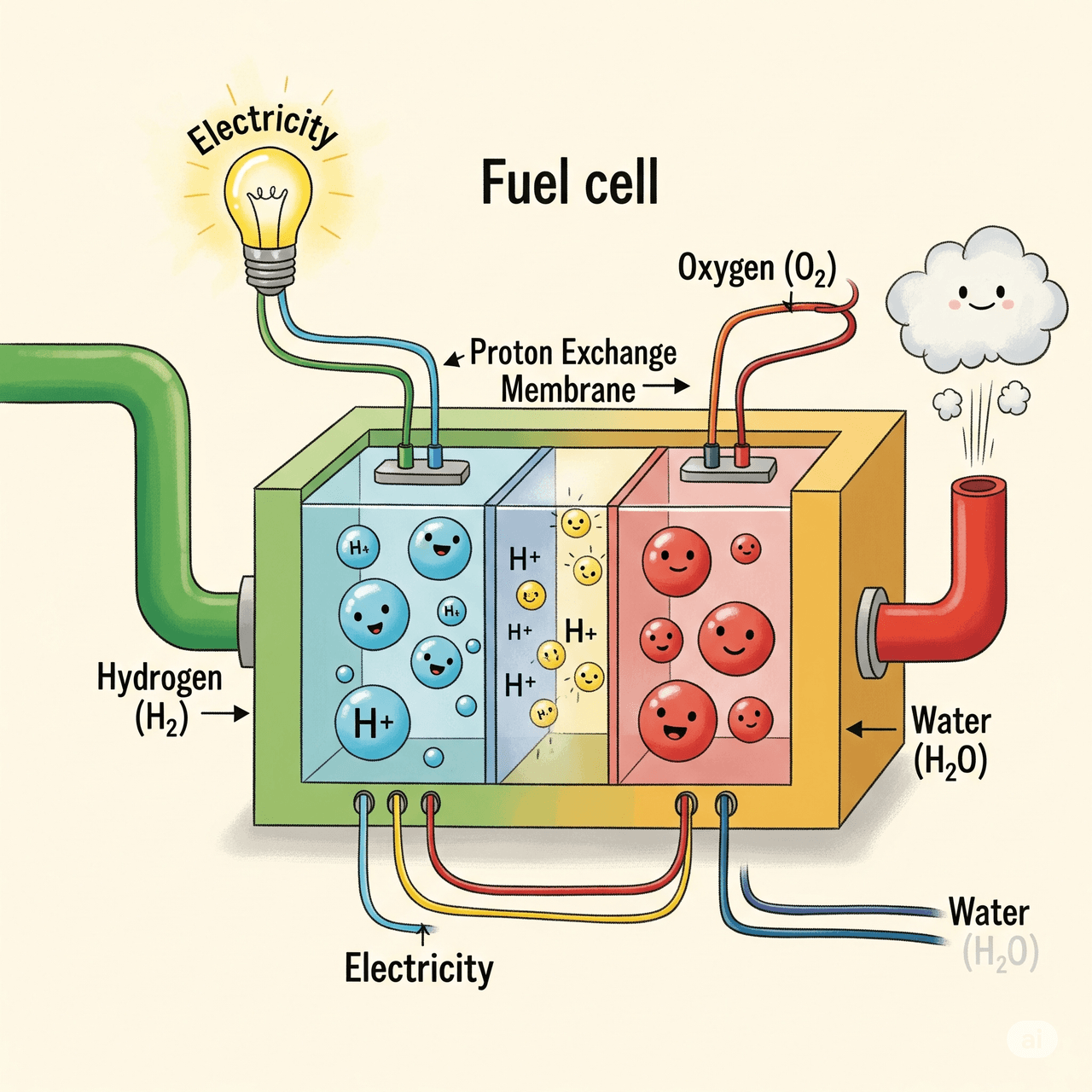
A fuel cell is a specialized energy source that generates electricity, water, and heat using hydrogen gas. This system produces energy through chemical reactions rather than by directly burning the fuel. As such, it operates both cleanly and quietly. Fuel cells generate electricity like batteries but can operate for longer durations. They use only hydrogen and oxygen to produce electricity, making them harmless to the environment. They produce no waste other than water vapor and are environmentally friendly.
(Generated by Artificial Intelligence.)
How Does a Fuel Cell Work?
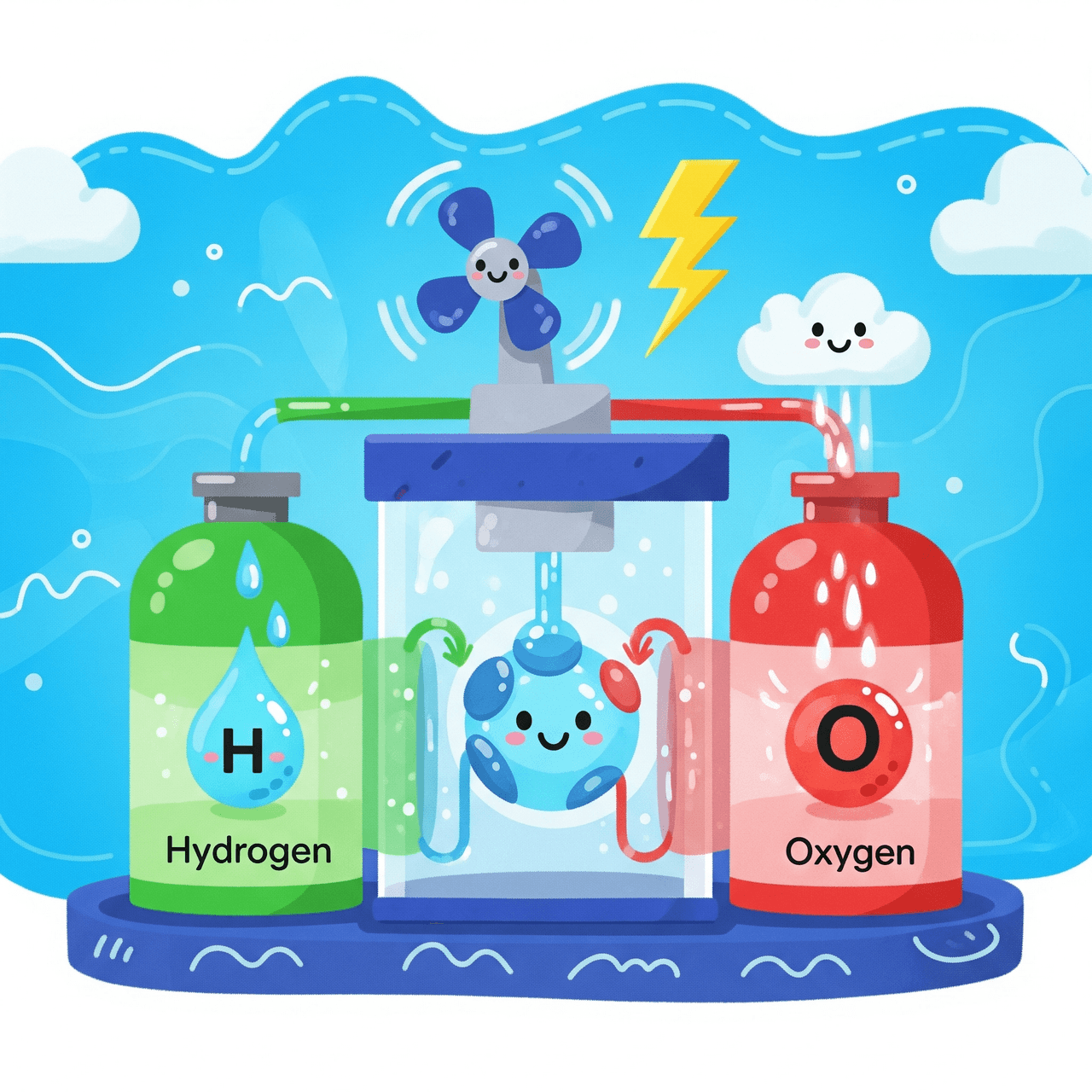
A fuel cell contains three main components: the anode, the cathode, and the electrolyte. Hydrogen gas is first split into electrons and protons at the anode. The electrons travel through an external circuit, creating an electric current. Meanwhile, the protons pass through the electrolyte to reach the cathode. At the cathode, they combine with oxygen to form water. These processes ensure a continuous flow of electricity. The entire process is silent and involves no combustion.
Why Is It Important?
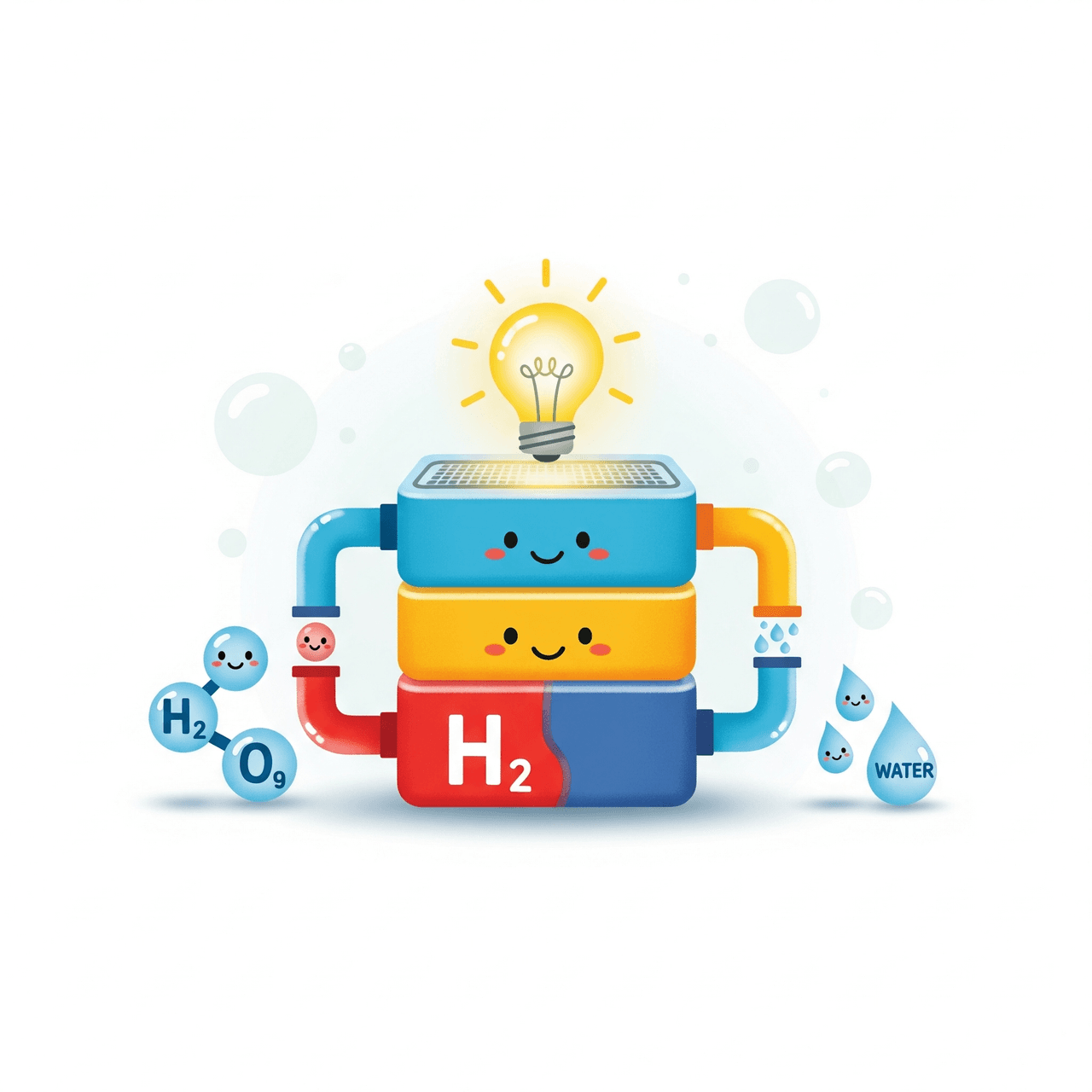
Fuel cells are an energy source that does not harm the environment. Because they do not emit carbon like fossil fuels, they are safe for nature. As energy demand increases today, clean energy solutions are becoming increasingly important. Fuel cells operate both safely and efficiently. These systems are among sustainable energy sources and are expected to be used in even more areas in the future.
(Generated by Artificial Intelligence.)
Where Are They Used?
Fuel cells can be used in a wide variety of fields. They are particularly preferred as an energy source in vehicles such as cars and buses. They are also used to generate electricity in some homes and factories. Fuel cell systems have been used in spacecraft for many years. Due to their quiet and efficient operation, they can be integrated into many different technologies. In the future, their use in trains and ships is expected to become more widespread.
What Do We Learn from Fuel Cells?
Through fuel cells, children can better understand energy conversion. Learning how hydrogen is used as a fuel helps develop scientific thinking skills. It also enables an understanding of the importance of clean energy sources. This technology demonstrates that electricity generation is not limited to fossil fuels. Fuel cells can serve as an example of one way to protect the environment. This system also helps in understanding the impact of science on everyday life.