



What Is Desertification?
Desertification is the process by which fertile soil becomes damaged and gradually turns into a dry, uninhabitable desert-like state. In this condition, the soil can no longer retain water, plants wither, and agriculture becomes difficult. Desertification is not merely an increase in sand, but the loss of the soil’s productivity. In arid or semi-arid countries such as Türkiye, desertification poses a major problem.

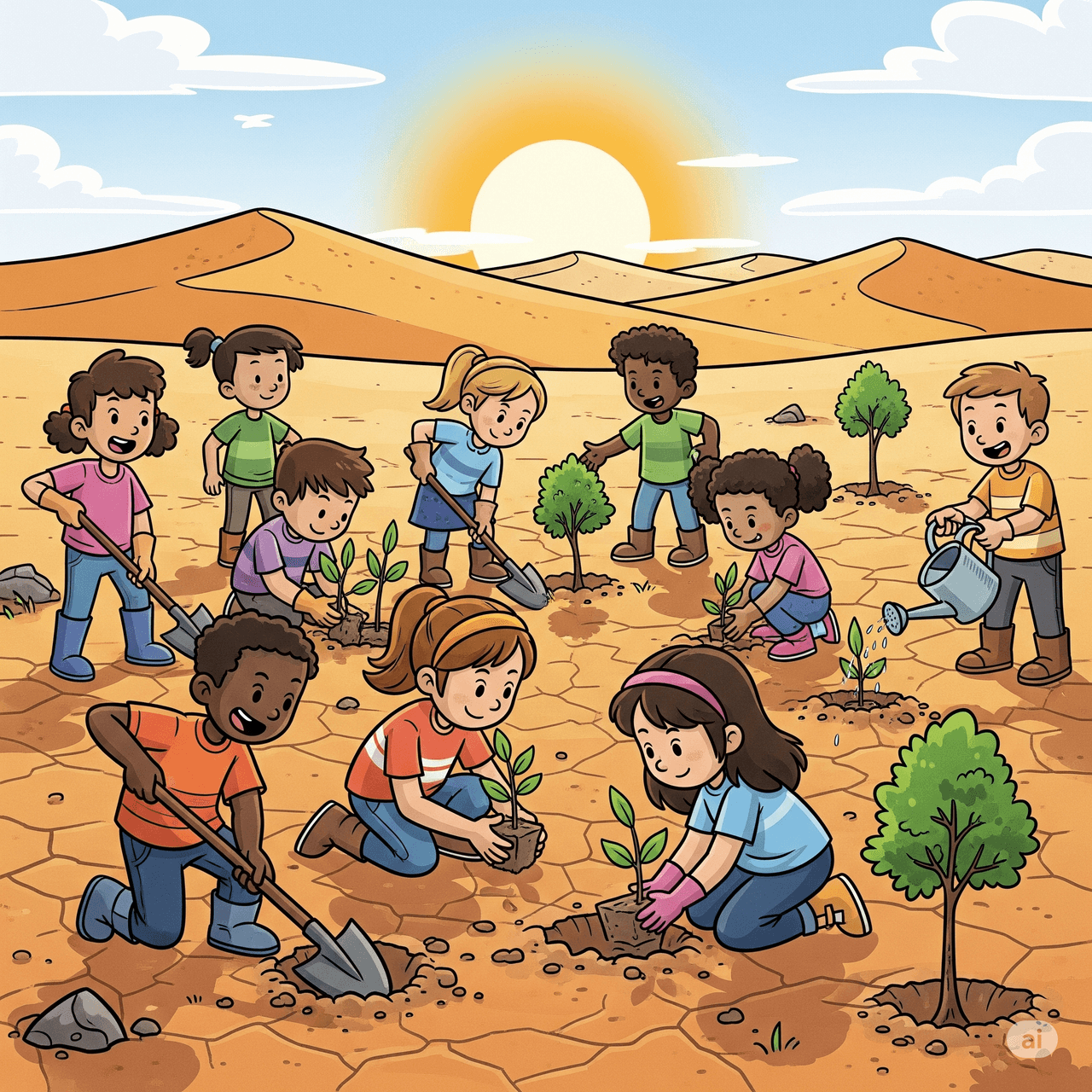
(Generated by Artificial Intelligence.)
What Causes Desertification?
The primary causes of desertification are human activities. Unnecessary tree cutting, excessive tillage of soil, continuous cultivation without allowing land to rest, and improper water use all degrade the soil. Additionally, climate change reduces rainfall, leading to soil drying. This leaves the top layer of soil vulnerable, making it easy for wind or water to erode and carry it away.
Effects of Desertification
Desertification makes farming more difficult and reduces crop yields. People and animals struggle to find water. Living conditions deteriorate and many organisms suffer harm. Moreover, desertified areas create conditions conducive to air pollution and dust storms.
Consequences of Desertification
Desertification harms not only the environment but also human populations. When soil becomes unproductive, farmers can no longer grow crops, leading to food shortages. Water sources diminish, lakes and rivers dry up, and plants and animals lose their habitats. People may be forced to relocate to new areas. Thus, desertification is a major problem for both nature and humanity.
Desertification in Türkiye
Türkiye is vulnerable to desertification due to its semi-arid climate. Particularly the Central Anatolia, Southeastern Anatolia, and some regions of the Mediterranean are at risk. The Ministry of Environment, Urbanization and Climate Change has identified hazardous areas using the “Türkiye Desertification Model and Sensitivity Map.” This enables better planning to prevent desertification.
Why Must We Stop Desertification?
If desertification continues, people will have less access to food and water. Our natural environment will be damaged and animals will lose their habitats. To ensure that all of us can live in a healthy and beautiful world, we must be vigilant against desertification.

(Generated by Artificial Intelligence.)
What Can We Do to Stop Desertification?
Desertification can be halted, but it requires collective effort from everyone. Forests must be protected and new trees planted. Soil must be cultivated using natural and proper methods. Water must be used efficiently and not wasted. People must become informed about desertification and avoid harming the environment. Even planting a single tree can change the world!
Why Is Desertification Important?
If desertification is not stopped, we risk losing our soils, forests and water resources, making life more difficult. To live in a healthy environment, we must protect our soils. The small environmentally friendly actions we take today can prevent major problems tomorrow. Fighting desertification is not about preserving nature—it is about safeguarding our future.