



What is Helium?
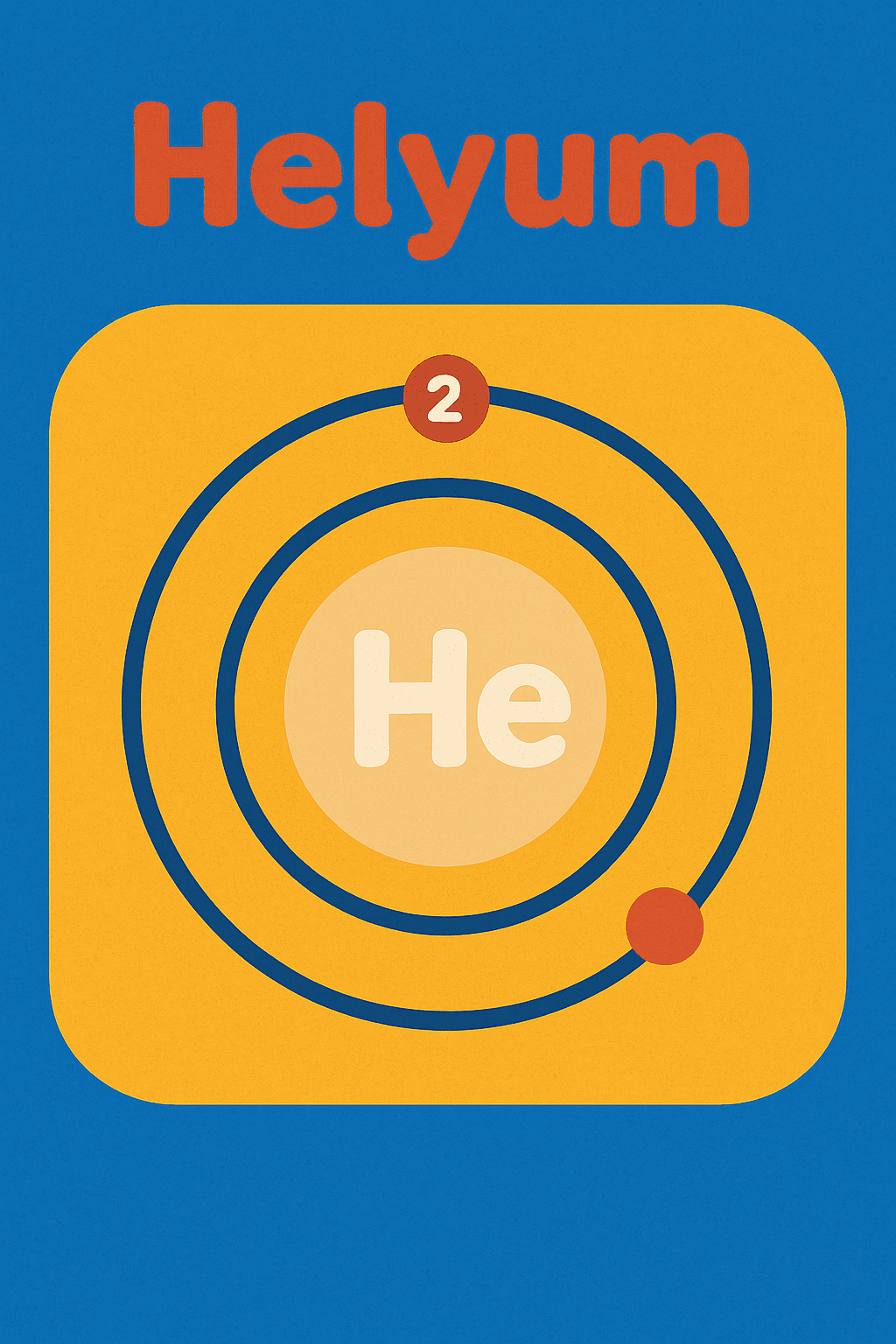
Helium is a very light and colorless gas. This special gas, which causes balloons to float, is also the second most abundant element in the universe. It is represented by the symbol “He” on the periodic table and has an atomic number of 2.
Have you ever seen a floating balloon? The gas inside such balloons is usually helium. Because helium is lighter than air, it rises upward.

Representative Image of a Helium Balloon (Generated by Artificial Intelligence.)
How is it formed?
Helium is formed inside very hot and dense stars. In this environment, hydrogen atoms combine to form helium. This process is called nuclear fusion. Fusion provides energy to stars and enables them to emit light.
On Earth, helium is found in underground natural gas deposits. Some radioactive substances decay over time and release helium. This gas becomes trapped underground and is extracted using specialized methods.
📦 Time Travel
Helium was discovered in 1868 by Pierre Janssen. He detected its presence through observations made during a solar eclipse. At that time, helium was discovered not on Earth but first in the Sun.

Helium Element (Generated by Artificial Intelligence.)
Where is it used?
🎈 Balloons and airships: Because helium is light, it lifts balloons. Hydrogen is also light but flammable. Helium is safe.
🧲 MRI machines: Helium can become extremely cold. This property makes it ideal for cooling MRI machines in hospitals.
🔬 Scientific research: Helium is used in laboratory experiments because it is a very stable gas and does not easily react with other substances.
🚗 Automotive airbags: Due to its ability to expand rapidly, helium is used to inflate airbags in vehicles.
What are its properties?
It is colorless, odorless, and tasteless.
It is very light, so it rises easily through air.
It remains gaseous even at extremely low temperatures.
It is non-flammable and non-toxic.
It does not easily combine with other substances, which is why it is called a “noble gas.”