



What Is Hygiene?
Hygiene refers to maintaining cleanliness of the body, food, living environment, and personal belongings to enable people to stay healthy. Through cleanliness, germs are removed and infectious diseases are prevented.

(Generated with Artificial Intelligence.)
Primary Objectives of Hygiene
- Preventing diseases
- Stopping the spread of germs
- Creating a healthy and safe living environment
- Protecting personal and environmental health
Personal Hygiene
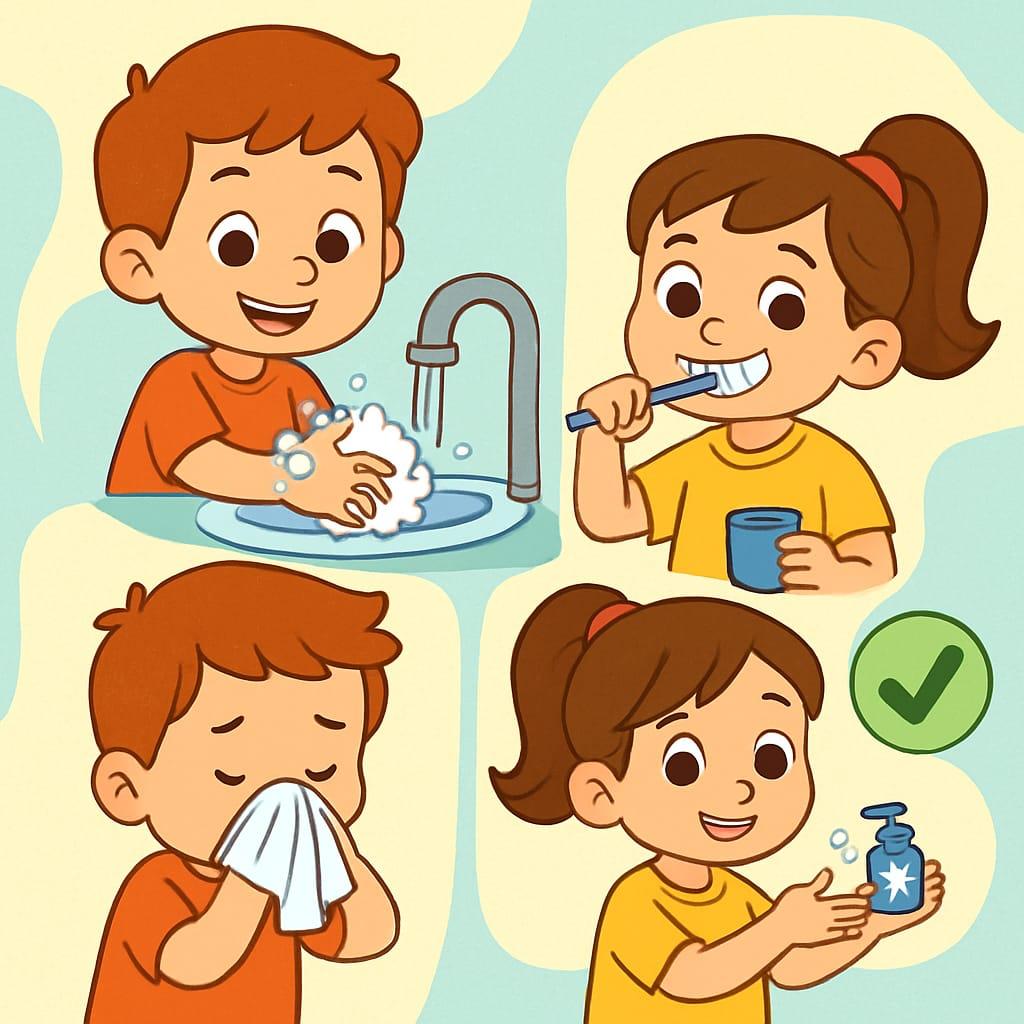
Body cleanliness must be maintained regularly. Washing hands and face daily, combing hair, brushing teeth, and trimming nails are essential components of personal hygiene. Hands are especially the most common carriers of germs.
The Importance of Handwashing
Hands are the body parts that carry the most germs. Washing them with soap and water significantly prevents the spread of infectious diseases. Hands must always be washed before eating, after using the toilet, and upon returning from outside.
Mouth and Dental Care
Teeth should be brushed twice a day. If oral hygiene is neglected, cavities and bad breath will develop. Healthy teeth are necessary for strong chewing and clear speech.

(Generated with Artificial Intelligence.)
Hair and Body Cleanliness
Hair must be kept clean and washed at regular intervals. Failure to maintain body cleanliness can lead to skin diseases and unpleasant odors. A clean body promotes a sense of well-being.
Nail Hygiene and Trimming
Nails should be kept short and clean. Dirt and germs accumulate under long nails. Nail hygiene is also part of hand hygiene.
Clothing Hygiene
Dirty clothing can carry germs. Underwear and socks must be changed daily, and clean garments should always be worn. Prolonged use of sweaty clothing should be avoided.

(Generated with Artificial Intelligence.)
Toilet Hygiene
Hands must always be washed with soap after using the toilet. In public restrooms, special attention should be paid to the flush mechanism and door handles. Toilet cleaning is one of the most important steps in maintaining hygiene.
Hygiene in Schools
Classrooms, toilets, and corridors must be cleaned regularly. Soap and paper towels must be available at sinks. Students should not share personal items. A clean school environment facilitates learning.

(Generated with Artificial Intelligence.)
Food Hygiene
Hands must be washed before preparing food. Fruits and vegetables should be thoroughly rinsed with water, and spoiled products must not be used. Food sold openly should be avoided. Water must always be consumed from clean sources.
Food Storage Guidelines
Food must be stored in sealed containers at appropriate temperatures. Spoiled or expired food must never be consumed. Refrigerators must be cleaned regularly.
Hygiene During Disasters
In disasters such as earthquakes, access to clean water may become difficult. Hands must be disinfected, food must be stored in sealed containers, and toilets must be used with care. Outbreaks after disasters often result from poor hygiene.
Germs and Diseases
Germs are living organisms invisible to the naked eye. If hygiene rules are not followed, they can cause infectious diseases. Germs are most commonly transmitted through hands, food, dirty surfaces, and shared items.