



What Is Jet Stream?
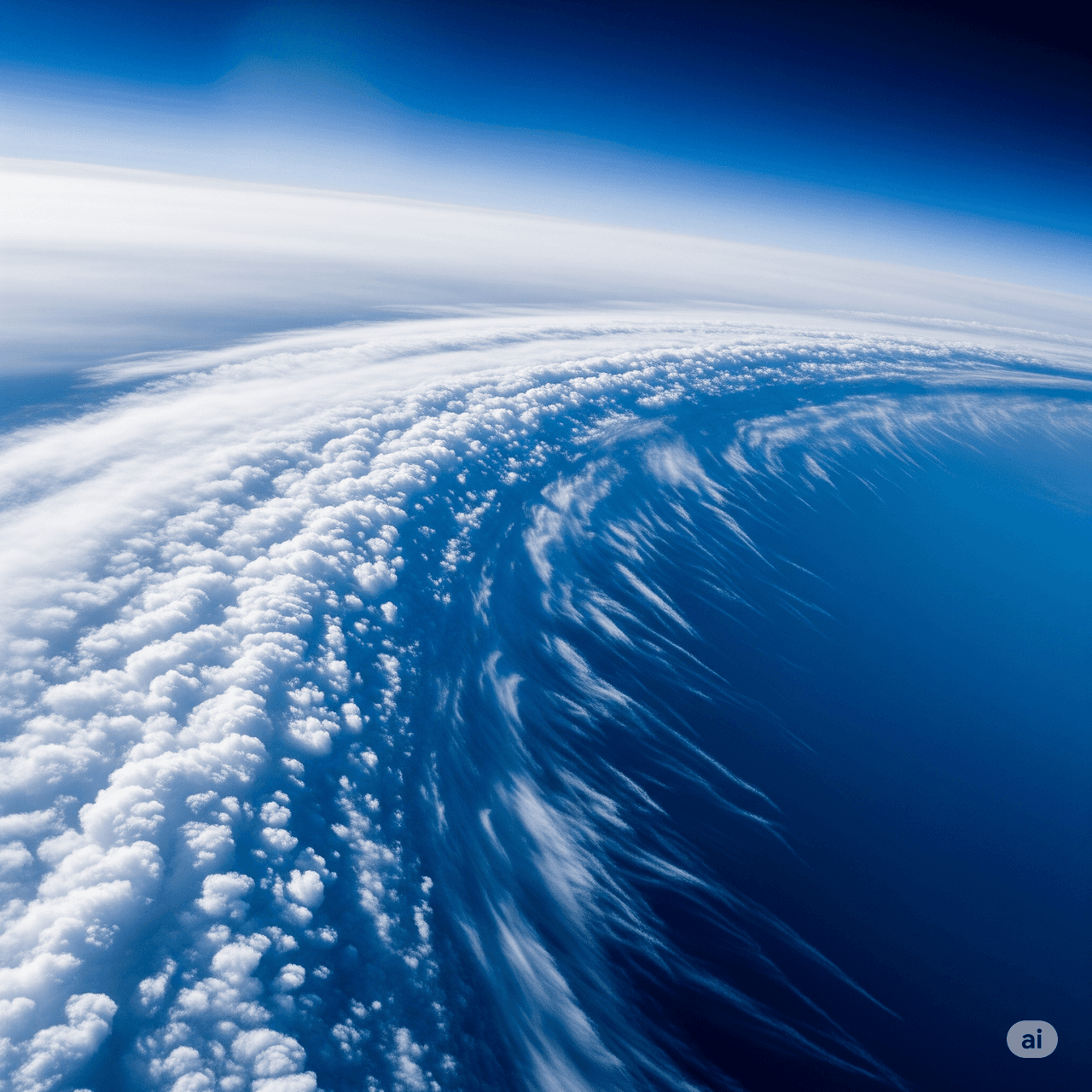
Jet stream is the term used for very fast air currents that flow at high altitudes, even above the regions where airplanes fly. These winds generally blow from west to east and can be thought of as long, narrow rivers of air encircling the Earth.

(Generated by Artificial Intelligence.)
Where Do They Form?
Jet streams form in the upper part of the troposphere, the lowest layer of the atmosphere, at altitudes of approximately 10 to 15 kilometers. They are typically found in the mid-latitudes of both the Northern and Southern Hemispheres and in subtropical regions.
Why Do They Form?
The most important cause of jet stream formation is temperature differences across the Earth’s surface. For example, there is a significant temperature difference between the poles and the equator. This difference causes air to move, and the Earth’s rotation forces these winds to flow faster and in more defined directions.
How Fast Are They?
Jet streams are very fast. Some reach speeds of up to 160 kilometers per hour, and in certain conditions, their speed can exceed 400 kilometers per hour. This high velocity makes them highly significant for aircraft.
What Are Jet Streams Used For?
Jet streams guide weather systems. For instance, storms or rain systems change direction or accelerate due to the influence of jet streams. For this reason, meteorologists closely monitor jet streams when making weather forecasts.

(Generated by Artificial Intelligence.)
How Do They Affect Airplanes?
When airplanes fly from west to east, they can benefit from tailwinds provided by the jet stream, allowing them to travel faster and use less fuel. However, when flying from east to west, the jet stream blows against them and can slow the aircraft down. As a result, pilots take jet streams into account when planning flight routes.
Does Global Warming Affect Jet Streams?
Yes, according to scientists, climate change can alter the direction and strength of jet streams. This may lead to more frequent and sudden changes in weather patterns.