



What is the Turkish Triangle?
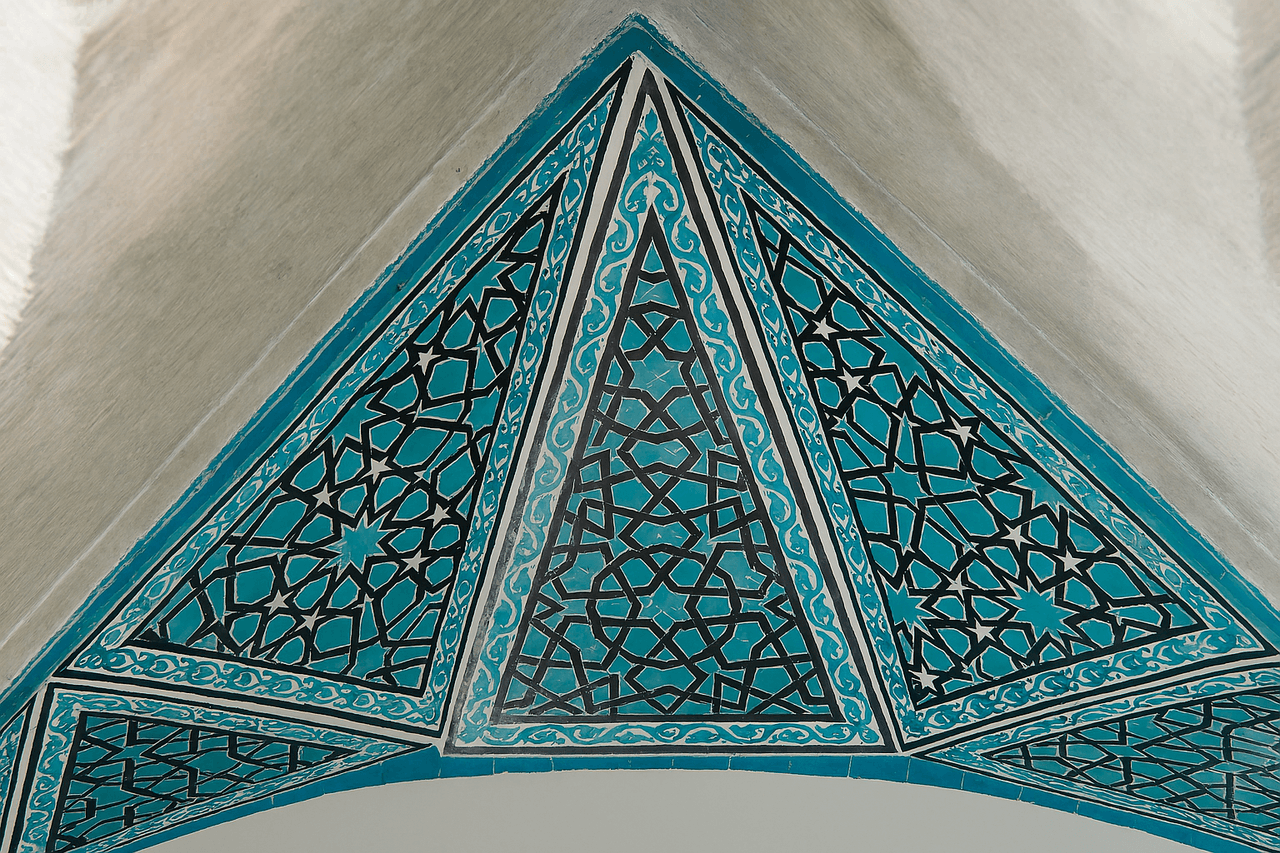
The Turkish triangle is a specialized architectural element used to support domes commonly seen on the roofs of old mosques and tombs. It is employed when a circular or octagonal dome is to be placed above a square room.
It functions like a kind of “transition bridge”: the difference between the square or rectangular base and the circular dome is bridged by flat, sloping triangular surfaces. These triangular elements are known as “Turkish triangles”!
(Generated by Artificial Intelligence.)
How Does It Work?
-The Turkish triangle is placed at each of the four corners of the room.
-These triangular surfaces, narrowing upward, transfer the weight of the dome to the side walls.
-This allows the dome to stand in balanced equilibrium.

(Generated by Artificial Intelligence.)
Where Was It Used?
-It was widely used in Seljuk, Beylik, and early Ottoman mosques in Anatolia.
-It can be seen in structures such as the Green Mosque in Bursa, the Nilüfer Hatun Imaret in Iznik, and the Emir Sultan Mosque.
Why Is It Special?
-It is both a structurally strong and visually elegant transitional form.
-It reflects light and enhances acoustics beautifully.
-It creates a sense of upward movement within the space, producing a calming effect appropriate for places of worship such as mosques.
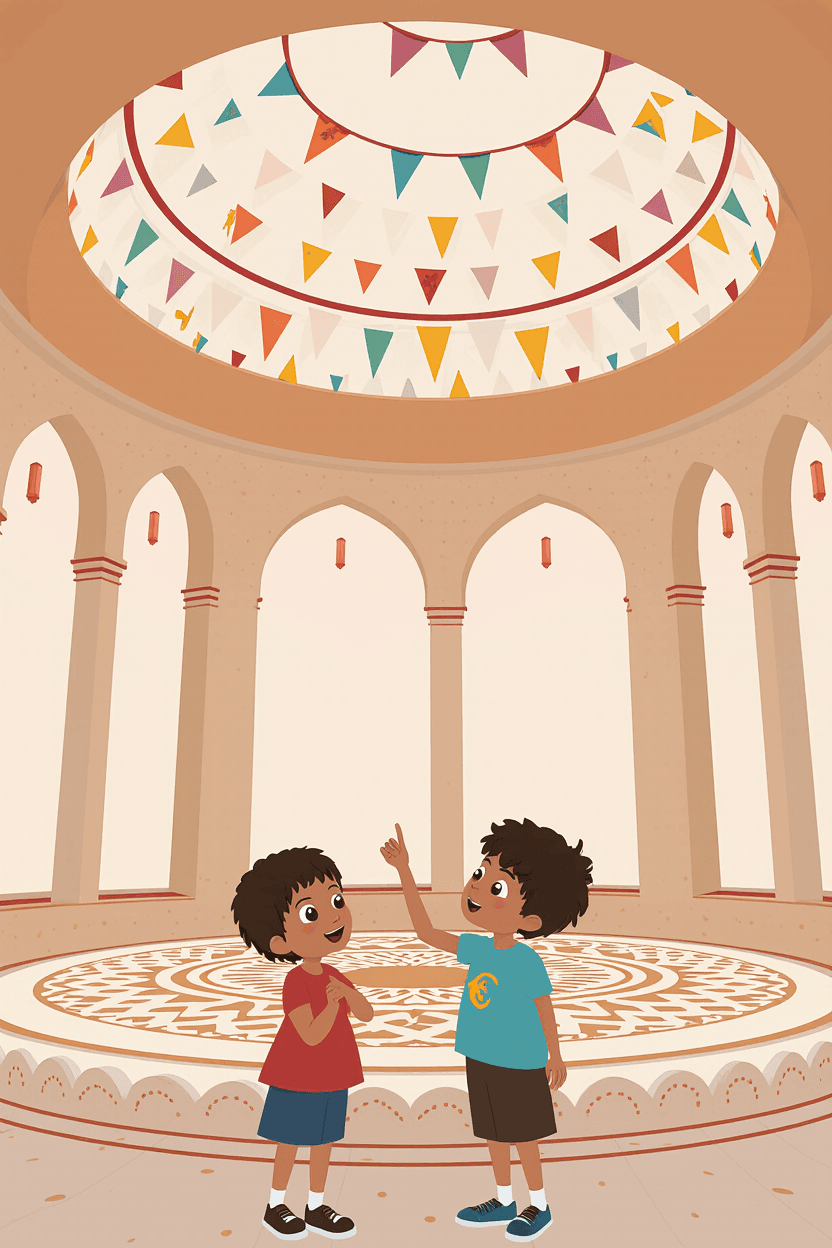
(Generated by Artificial Intelligence.)
How Does It Differ From Other Systems?
-In another system known as the “pendentive,” the transition surfaces are curved inward, whereas the Turkish triangle features flat, sloping surfaces.
-The Turkish triangle enables the dome to sit more securely and broadly on the supporting structure.