This article was automatically translated from the original Turkish version.
+2 More
Location | Tokat city center Behzat Neighborhood | ||||||||
|---|---|---|---|---|---|---|---|---|---|
Period(s) | Late 14th century – Ilkhanid period | ||||||||
Identity | Believed to belong to Burgaç Hatun, associated with the Ilkhanid dynasty | ||||||||
Architectural Feature(s) | pointed-arch niches are located on the facades covered by a dome cut stone and brick materials are used together Octagonal-plan tomb | ||||||||
Status | The structure has been largely preserved it is registered as cultural heritage | ||||||||
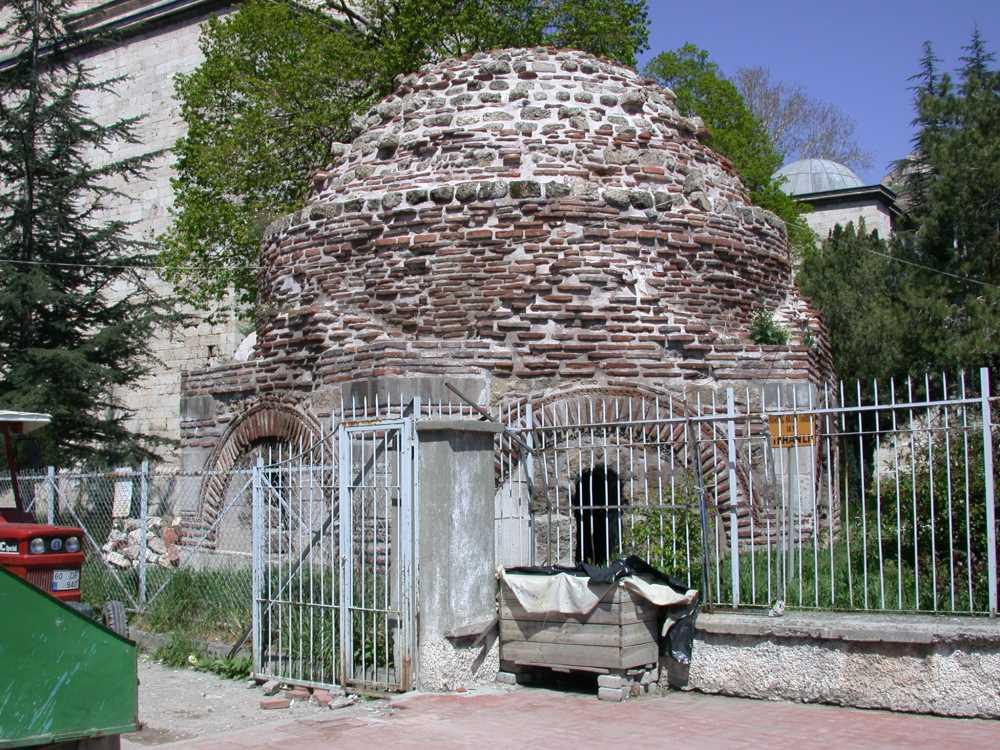
Burgaç Hatun Türbesi is a historical structure located in the center of Tokat province, regarded as one of the examples of Turkish-Islamic monumental tomb architecture in Anatolia. The structure derives its name from Burgaç (or Bulgac) Hatun, who was buried within it, and holds both religious and cultural significance due to its architectural form and its place in the urban memory.
The tomb is situated in the center of Tokat province, within a settlement fabric characterized by a dense concentration of historical mosques, madrasas, and tekkes. The tradition of tomb construction in Anatolia developed particularly during the Seljuk and Beylik periods and continued to expand in both architectural and functional terms during the Ottoman era. Within this context, Burgaç Hatun Türbesi serves as a monumental tomb associated with a prominent figure of the period or an important woman connected to the Sufi circles of the region.
Although the exact construction date of the tomb is not specified in historical sources, its architectural details exhibit features characteristic of the post-Seljuk and early Ottoman periods. According to records from the Tokat Culture and Tourism Provincial Directorate, the tomb is likely to have been built in the 13th or 14th century. While detailed historical information regarding Burgaç Hatun’s identity is lacking, her name’s association with a waqf structure is plausible.
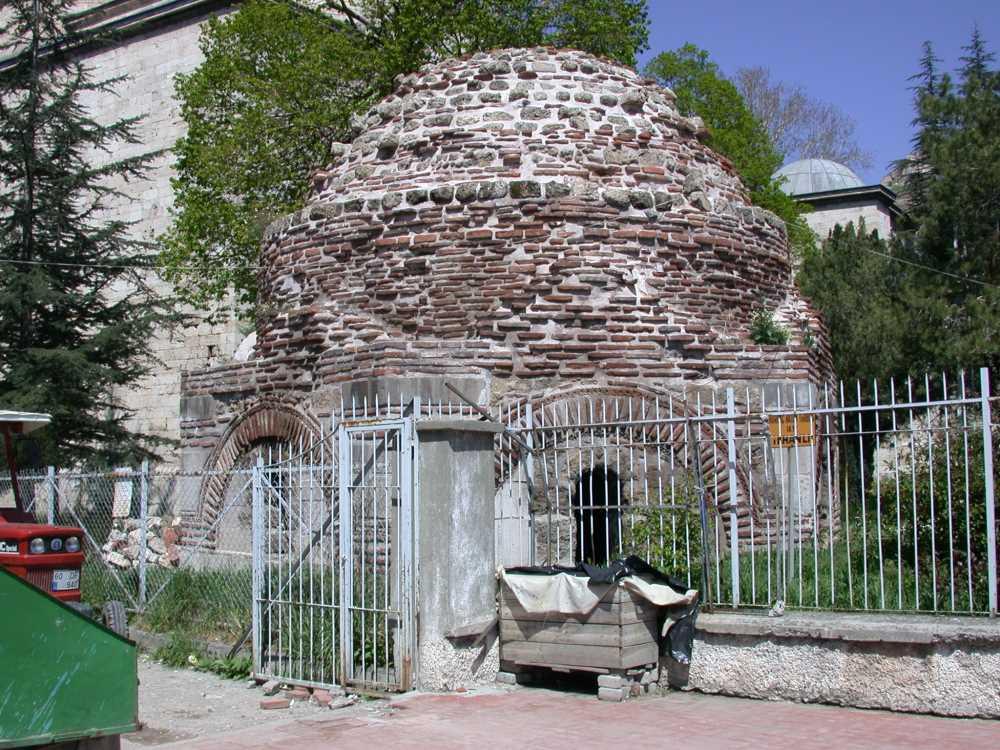
Burgaç Hatun Türbesi (Culture Portal)
The tomb is one of the classic examples of Anatolian tomb architecture, featuring an octagonal body and a conical dome roof. The structure was built using stone and brick. The stonework on the exterior façade reflects the characteristic simplicity of the period’s architecture. It is well known that octagonal tombs were a preferred form in Seljuk and early Ottoman architecture, particularly in Central Anatolia.
The entrance door is centrally positioned on the façade and is distinguished by its arch and lintel details. Inside, a sarcophagus is embedded into the tomb floor, and decorative elements are very limited. This indicates that the structure was designed with a primarily functional and minimalist architectural approach.
Burgaç Hatun Türbesi, together with other tombs in the center of Tokat, forms an inseparable part of the city’s historical and cultural fabric. It is officially protected as a registered cultural asset by the Ministry of Culture and Tourism of the Republic of Türkiye. The structure is open to visitors and attracts increased attention during special occasions such as religious holidays and kandil nights.
The architectural simplicity of the tomb also holds significance in providing insight into provincial tomb architecture of its era. Today, this historical structure draws attention from both the local population and visitors to Tokat and is recognized as an important stop on cultural tourism routes.
Ministry of Culture and Tourism of the Republic of Turkey. "Bulgac (Burgaç) Hatun Türbesi." Türkiye Kültür Portalı. Accessed July 17, 2025. https://www.kulturportali.gov.tr/turkiye/tokat/kulturenvanteri/bulgac-burgac-hatun-turbesi
Ministry of Culture and Tourism of the Republic of Türkiye. "Burgaç Hatun Türbesi." Türkiye Kültür Portalı. Accessed July 17, 2025. https://www.kulturportali.gov.tr/turkiye/tokat/gezilecekyer/burgac-hatun-bb-hatun-turbes
Tokat İl Directorate of Culture and Tourism. "Tekke, Zaviye ve Türbeler." tokat.ktb.gov.tr. Accessed July 17, 2025. https://tokat.ktb.gov.tr/TR-231637/tekke-zaviye-ve-turbeler.html

Location | Tokat city center Behzat Neighborhood | ||||||||
|---|---|---|---|---|---|---|---|---|---|
Period(s) | Late 14th century – Ilkhanid period | ||||||||
Identity | Believed to belong to Burgaç Hatun, associated with the Ilkhanid dynasty | ||||||||
Architectural Feature(s) | pointed-arch niches are located on the facades covered by a dome cut stone and brick materials are used together Octagonal-plan tomb | ||||||||
Status | The structure has been largely preserved it is registered as cultural heritage | ||||||||
No Discussion Added Yet
Start discussion for "Tomb of Burgaç Hatun" article
Location and Historical Context
Architectural Features
Cultural Value and Conservation Status