


This article was automatically translated from the original Turkish version.
+2 More
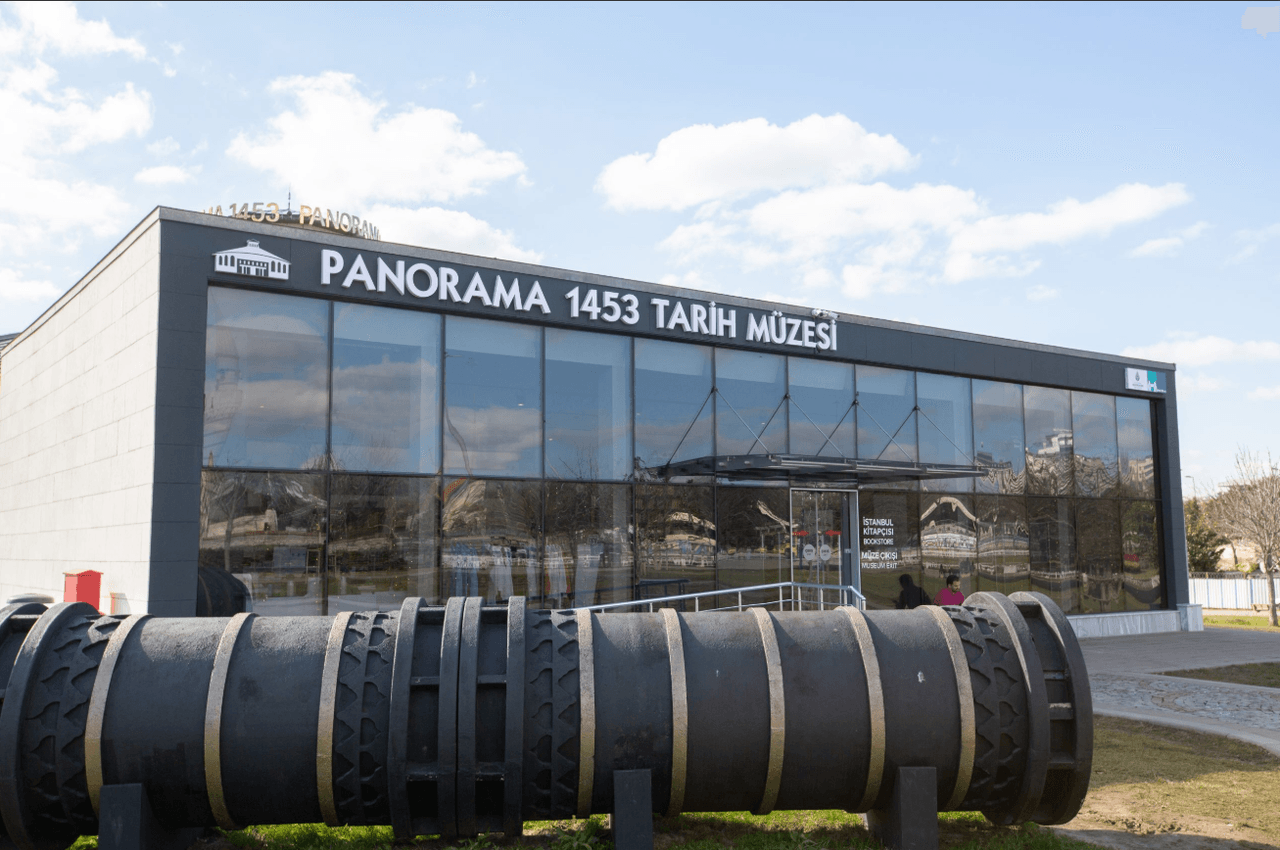
1453 Panorama Museum is Türkiye’s first and only full panorama museum, presenting the Ottoman conquest of Istanbul through an artistic and historical reconstruction. Designed to convey the symbolic significance of Istanbul’s conquest to both local and international visitors, it is a cultural institution aimed at strengthening historical memory. The building housing the exhibit recreates a precise visual slice of the morning of May 29, 1453, in both architectural form and content.

1453 Panorama Museum Entrance(Culture.Istanbul)
Efforts to establish the 1453 Panorama Museum were initiated in 2005 by Istanbul Metropolitan Municipality Culture Inc. and the museum opened to the public in 2009. The creation of the museum was planned to coincide with the 550th anniversary of Istanbul’s conquest by the Ottomans, with the goal of representing this historic event visually and spatially within public memory. The museum building is situated near the land walls of Istanbul, adjacent to Topkapı Cemetery. The location was chosen to reflect the geographical context of the conquest event.
The project was carried out with the participation of experts from various disciplines including historians, art historians, architects, urban planners, painters, and graphic artists. Research was based on both Byzantine and Ottoman sources; military scenes, topographical structures, and period-specific equipment were designed according to these historical records.
The artistic coordination of the main panoramic work was entrusted to a team of eight painters led by Hüseyin Yanar. Over a period of approximately three years, more than 10,000 figures were depicted within a specific perspective framework, and the panoramic composition was arranged to fit the interior circumference of the building.
During the installation phase, archival reviews and content verification processes were conducted with the assistance of various academic advisors to ensure the historical accuracy of the representations. The museum was officially opened to the public on January 31, 2009.
The 1453 Panorama Museum is constructed on a circular plan and features a domed exhibition space surrounding a central observation platform. The interior space housing the panoramic artwork is designed as a perfect circle, enabling visitors to view the entire scene from a 360-degree angle without any obstructions or visual interruptions.
The displayed panoramic painting has the following dimensions:
As a panoramic structure, this work belongs to the category of “full panorama” (cyclorama). In such structures, the painting is applied onto a circular surface to create a sense of immersion for the viewer. In the 1453 Panorama Museum, this surface is realized as the building’s inner dome, with the viewer’s point of perspective positioned on an elevated platform placed at the geometric center of the structure.
The panorama is not limited to the painted surface alone. Around the observation platform at the lower level, transitional elements connect the painted scene with physical objects such as earth, stone, representations of military equipment, and remnants of tents. The three-dimensional models and objects used in these intermediary zones serve as spatial bridges between the painting and the visitor, creating a sense of unity between the visual and physical environments and giving visitors the impression of being inside the scene.
The lighting system is designed to avoid direct contact with the panoramic painting and provides uniform, soft illumination from above. This technique prevents shadows and reflection distortions, ensuring equal visibility across all sections of the artwork.
A direct relationship has been established between the building’s architecture and its content design. The dome-shaped form of the structure directly determines the narrative style of the content, enabling the historical event to be spatially rendered within its temporal and geographical context.
The main artistic work displayed in the 1453 Panorama Museum depicts a historical scene from the morning of May 29, 1453. The panoramic painting illustrates the siege of Istanbul by the Ottoman army and the final assault on the city’s land walls. The composition is structured as a spatial and figurative representation of the intense fighting concentrated around Topkapı.
The visual elements presented reflect the military structure of the period, the urban topography, and the conditions of the siege. The major scene and figure groupings identifiable in the work include:
In addition to the visual composition, auditory elements accompanying the panorama have been integrated as an essential part of the visitor experience. Through a multi-channel sound system, sounds such as cannon fire, armor clashes, sword strikes, takbir chants, and mehter music are played simultaneously. This auditory structure is synchronized with the painting and carefully timed to align with the historical narrative of time and space.
The density of figures and level of detail in the work provide a comprehensive narrative encompassing multiple dimensions of the historical event. The spatial arrangement enables visitors to perceive the layered aspects of the scene by looking in different directions.

Interior of the 1453 Panorama Museum (Photograph: Elyesa Köseoğlu)
The 1453 Panorama Museum is not merely a venue for visual art display; it is also structured as a learning environment supporting historical education. The spatial layout is designed to enable multi-layered knowledge transmission, allowing visitors to understand the historical context not only through the painting but also through written and audiovisual materials.
Fixed information panels located in the entrance and exhibition areas present explanatory texts on the historical background of the events depicted in the panorama. These panels are thematically organized under headings such as the political situation before the conquest of Istanbul, Ottoman and Byzantine military structures, siege strategies, and administrative arrangements following the conquest. Digital animations, timelines, and reconstructions related to the conquest are visualized through multimedia screens. These screens also include map-based explanations and route diagrams as visual aids. The language of the digital content has been simplified and presented in multiple language options.
The historical documents section on the lower floor is dedicated to information presented through written sources. This area includes:
These documents are presented both in their original languages and with annotated translations.
A section of the space also displays short historical films. These films chronologically reconstruct events such as the siege of Istanbul, battle scenes, diplomatic processes, and the fall of the city. Screenings are presented on fixed screens in quiet areas in a continuous loop, with visitors free to choose their viewing duration.
The museum also offers guided tours for student groups, delivering content tailored to different age groups. Educational tours are organized along predefined routes that include both the panorama and the documentary sections.
All these elements form a conceptual framework that extends the museum’s content presentation beyond aesthetic representation, ensuring that historical knowledge is conveyed through documented, multimedia-supported, and age-appropriate methods.

Interior of the 1453 Panorama Museum (Panoramikmuze)
The 1453 Panorama Museum operates under Istanbul Metropolitan Municipality Culture Inc. and is open to the public seven days a week throughout the year. Opening hours vary slightly by season but are generally set between 09:00 and 17:00. Special announcements are made for official holidays and special days.
Admission fees are determined by the Istanbul Metropolitan Municipality and different pricing categories apply for general visitors, students, teachers, individuals aged 65 and over, and visitors with disabilities. Tickets can be purchased at the museum box office as well as through the online platforms of Istanbul Metropolitan Municipality Culture Inc. Presentation of identification or documentation is mandatory to qualify for discounted rates.
The museum is located within the boundaries of Istanbul’s Fatih district, between Topkapı Cemetery and the land walls. It is accessible via the city’s public transportation network. The nearest public transport stops are:
In addition, paid parking areas are available around the museum for visitors arriving by private vehicle. Access routes to the museum include the E-5 highway and arterial roads within the historic peninsula. Public transportation is recommended due to potential traffic congestion in the area on weekends.

No Discussion Added Yet
Start discussion for "1453 Panorama Museum" article
History
Architectural and Technical Features
Content and Representation of the Panorama
Cultural and Pedagogical Function
Visitation and Access Information
Transportation Information