
This article was automatically translated from the original Turkish version.
+2 More
The 1979 Grand Mosque Seizure was the armed occupation of the Masjid al-Haram in Mecca, Saudi Arabia, on 20 November 1979. The Masjid al-Haram is Islam’s holiest site. The event began when approximately two hundred militants, led by Juhayman al-Utaybi, seized the Kaaba and announced the arrival of Muhammad al-Qahtani, whom they had declared to be the Mahdi.
The approximately two-week siege ended with the intervention of Saudi security forces and specialized units supported by foreign assistance, resulting in the deaths of hundreds of people. The seizure triggered lasting political, religious and social changes within Saudi Arabia and provoked deep reactions across the Islamic world.
The leader of the seizure, Juhayman al-Utaybi, was born in the Najd region in the 1930s, served in the Saudi military, and later developed a religious discourse opposing modernization. Al-Utaybi traced his lineage to his family’s involvement in the 1927 Ikhwan revolt and viewed himself as part of a continuous historical struggle.
By his side was Muhammad bin Abdullah al-Qahtani, a young religious scholar with formal Islamic education. Although initially hesitant, al-Qahtani accepted the role of Mahdi under the persuasion of his followers. He was also al-Utaybi’s brother-in-law. Both men had meticulously planned their actions months in advance, combining religious motivation with political objectives.
Documentary on the Kaaba Seizure (Anadolu Agency)
In the late 1970s, Saudi Arabia had grown economically powerful due to rapidly increasing oil revenues, but its social structure was caught in tension between modernization and conservatism. Urbanization, changing consumption habits, and close ties with Western countries generated unease among traditional circles. In this environment, radical fundamentalist ideas began to gain traction, especially among the youth.
At the center of these ideological currents was Juhayman al-Utaybi, a former soldier from the Najd region. After serving 18 years in the Saudi Royal Guard, he resigned from the military to criticize the Kingdom’s relations with the West and its social transformation. In Medina, he established an organization called al-Jamaa al-Salafiyya al-Muhtasiba (JSM), which called for a return to the earliest understanding of Islam and accused the Saudi regime of deviating from the essence of the faith.
Al-Utaybi and his followers argued that salvation from religious corruption could only come with the appearance of the Mahdi. By 1979, this idea had evolved into a small but organized movement, particularly in the Hejaz region. The insurgents had planned their operation for months. Weapons and ammunition were smuggled into tunnels around the Kaaba hidden inside coffins and concealed beneath water pipes.
The armed confrontation phase of the 1979 Kaaba Seizure began with a sudden occupation on the morning of 20 November and culminated in a complex military operation lasting two weeks within and around the sacred site. The event began on 20 November 1979 because it coincided with the first day of the Islamic year 1400. The initial phase commenced immediately after morning prayers, when a group of 200 to 250 armed militants led by Juhayman al-Utaybi launched a coordinated attack. Approximately 50,000 pilgrims were present in the Masjid al-Haram that day. As soon as prayers ended, al-Utaybi and his men pushed aside Imam Muhammad bin Abdullah al-Sebil, seized the microphone, and read a declaration proclaiming Muhammad al-Qahtani as the Mahdi. At the same time, automatic weapons, ammunition and hand grenades were extracted from coffins standing in the courtyard.
The militants quickly sealed all entrances and exits to the Masjid al-Haram and positioned snipers on elevated points of the minarets. As gunfire erupted, thousands of pilgrims panicked. Most rushed toward the exits, but finding them blocked, they remained trapped inside. The first shots were fired when a Saudi police officer approaching the mosque was killed, marking the beginning of intense combat. Subsequently, mutual fire broke out between the besieging security forces and the occupiers. In clashes extending from the mosque’s outer courtyard to its minarets, eight police officers were killed on the first day and more than thirty security personnel were wounded.
During the initial hours, Saudi security forces were unable to respond effectively. The royal government, failing to grasp the scale of the crisis, attempted to manage the operation at a local level. However, the architectural layout of the Masjid al-Haram—with its narrow corridors and numerous underground tunnels—provided the attackers with a significant advantage. The insurgents used pre-prepared tunnel maps to shift positions and blocked access points with explosives to hinder the advance of security forces.
By the third day of the siege, the Saudi army had evacuated surrounding neighborhoods and fully encircled the Masjid al-Haram. The royal family hesitated to authorize direct military intervention because using weapons inside the Masjid al-Haram was an extremely sensitive religious matter. Therefore, a fatwa was sought from the High Council of Ulema, which was issued on 22 November. The Ulema ruled that suppressing the armed rebellion and killing the insurgents was legitimate. With this ruling, the scope of the military operation was expanded.
The first major phase of the operation began from the direction of the Mawāfī Gate. Snipers stationed on Abu Qubays Mountain, one of Mecca’s highest points, monitored movements around the mosque, while armored units attempted to enter from the northern flank. However, the militants inside the mosque opened fire from the minarets, halting the advance and inflicting heavy casualties on Saudi forces. The fighting continued for days in close-quarters combat. To maintain their positions in the tunnels, the insurgents flooded some sections with water and set traps with explosives at other entrances.
By the end of the fifth day, Saudi forces had largely secured control of the outer courtyard of the Masjid al-Haram but were unable to advance into the interior. At this stage, military advisory support was requested from Pakistan, but the operation still failed to achieve its objectives. Subsequently, a specialized anti-terrorism unit from France, the GIGN, was summoned. Because non-Muslims were forbidden from entering Mecca, it was reported that French officers symbolically recited the Shahada before entering.
The new plan, developed on the advice of French consultants, involved pumping tons of water into the underground tunnels and injecting chemical gas. Chemical agents were mixed into Mecca’s water supply to be directed into the passages where the militants were hiding. As a result of the gas, many insurgents were either suffocated or rendered unconscious. Electricity was then restored to certain areas and water pressure was increased, completely breaking the resistance. This tactic proved especially effective in the extensive tunnel network beneath the Kaaba, forcing the remaining militants to surrender.

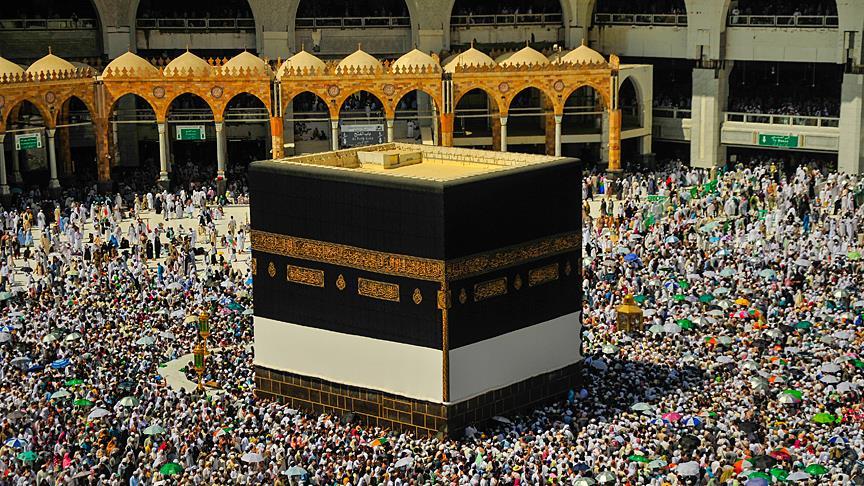
The Kaaba (Anadolu Agency)
When the fighting ended on 4 December 1979, the Masjid al-Haram was significantly damaged, with visible fire marks on parts of the structure. All surviving insurgents surrendered.
According to official statements, 127 Saudi soldiers, 117 insurgents and 26 civilians present during the incident were killed, totaling 270 deaths, with 450 others wounded. However, some international sources suggest the death toll may have approached one thousand. Among the dead were insurgents, security personnel and civilian pilgrims.
During the final days of the conflict, the fates of Juhayman al-Utaybi and Muhammad al-Qahtani were determined. Al-Qahtani was killed during one of the final assaults; al-Utaybi was captured wounded. Al-Utaybi and the captured insurgents were taken to Riyadh, tried by a military court, and on 9 January 1980, 63 individuals were executed in eight cities across Saudi Arabia. The executions were publicly announced as the end of the “fitna” (disorder).
After the suppression of the seizure, the Masjid al-Haram was reopened, but the area remained closed to worship for two weeks. This period marked one of the rare times in history that the Kaaba had been closed. In the aftermath, extraordinary security measures were implemented in Mecca and other major cities, and state control was tightened. Thus, after fifteen days of fighting, the Kaaba Seizure ended, leaving behind a crisis in Saudi history that remains unparalleled in both religious and military terms.
In the aftermath of the Kaaba Seizure, the Saudi regime strengthened its alliance with the Ulema. Conservative policies became prominent in education, media and social life. Women’s role in public life was restricted, and the religious police (Mutaween) regained their authority. The movement known as the “Islamic Awakening” decisively shaped the social landscape during this period. Academic studies now regard the event as an ideological precursor to the radical organizations that emerged in the 1980s.
The 1979 Kaaba Seizure stands as one of the most critical security and legitimacy crises in modern Saudi history. It exemplifies a political uprising rooted in religious rhetoric directly confronting state authority. Although officially downplayed in Saudi Arabia today, the event retains its historical significance as a foundational moment that shaped the country’s political culture and state-society relations.

Main Figures
Historical Background
Course of the Seizure
Outcomes and Executions
Long-Term Effects