


This article was automatically translated from the original Turkish version.
+2 More
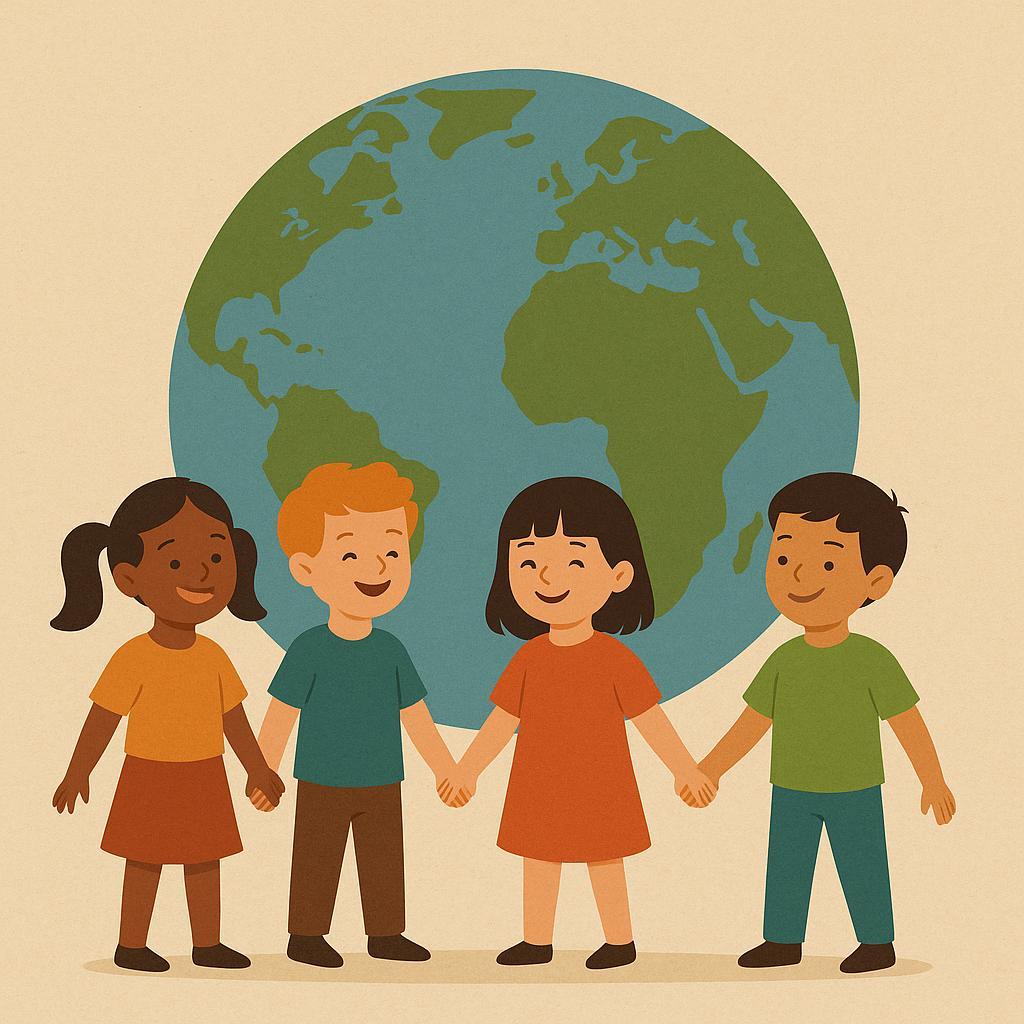
November 20 is Children's Rights Day (Generated by Artificial Intelligence.)
History | 20 November | ||||||||
|---|---|---|---|---|---|---|---|---|---|
International Status | On 20 November 1989, the UN declared it as World Children's Day | ||||||||
First Celebration | It was celebrated in 1954 under the name Universal Children's Day | ||||||||
Warning and Notification Line | Alo 183 | ||||||||
Basic Principles (CHB and CHDS) | Protection against discrimination Special care for children without families Full and harmonious development of personality Fundamental right to life | ||||||||
20 November: World Children’s Rights Day is an international day of awareness established by the United Nations and observed annually to promote the recognition, protection and advancement of children’s rights worldwide. This date is significant because it marks the adoption of two foundational documents on children’s rights:
The CRC is one of the most rapidly ratified international human rights treaties in history and was the first to recognize children universally as “rights-holding individuals.” Türkiye signed and ratified this convention in 1990.

Representative Image (Generated by Artificial Intelligence)
The four fundamental principles adopted by the CRC form the central axis of all children’s rights work:
The primary goals of 20 November can be summarized under the following international and national objectives:
Today, the protection of children’s rights is not only a matter of legal and social policy but is also directly linked to cultural domains such as children’s literature, media, digital content and publishing.
Children’s books are not merely an aesthetic literary form but also vital tools for developing children’s critical thinking, imagination, emotional resilience and awareness of values and rights. High-quality literary works convey values such as equality, justice, freedom of expression, participation and peace indirectly, thereby supporting the child’s development as an autonomous subject.
With the proliferation of digital platforms, the quality of content children encounter has become a central issue in the context of children’s rights:
These criteria have become central to contemporary discussions on children’s rights.
The impact of visual elements on children is of critical importance in the context of children’s rights. In publishing targeted at children, international standards have established the following principles:
In Türkiye, government institutions, universities, civil society organizations and foundations active in the field of children’s rights organize various awareness activities on 20 November:
In addition, UNICEF Türkiye, TÜİK, the Ministry of Family and Social Services, and NGOs working in the field of children’s rights publish comprehensive evaluations annually.

Representative Image (Generated by Artificial Intelligence)
As in the rest of the world, Türkiye faces several challenges in implementing children’s rights:
These challenges necessitate interdisciplinary collaboration in children’s rights work: law, psychology, sociology, educational sciences, health sciences and media studies converge on a common platform.
20 November, World Children’s Rights Day, is a global milestone that reminds us that children are not merely passive beings in need of protection but rights-holding subjects. This day represents a holistic approach aimed at strengthening the child’s best interests, developmental needs, right to participation, right to safe physical and digital environments, and right to access high-quality cultural production.
The implementation of children’s rights is a shared responsibility of families, states, educational institutions, media, publishers, digital platforms and all members of society. Long-term impact and sustainability must be foundational principles in all social, cultural and digital productions directed at children.
AÇEV. "20 Kasım Dünya Çocuk Hakları Günü." Anne Çocuk Eğitim Vakfı. Accessed November 19, 2025. https://www.acev.org/haber/20-kasim-dunya-cocuk-haklari-gunu/
Mavi Misket. "20 Kasım Dünya Çocuk Hakları Günü." YouTube. Accessed November 19, 2025. https://youtu.be/eFSyc2eN3hM
T.C. Ministry of Family and Social Services. "20 Kasım Dünya Çocuk Hakları Günü." Edirne İl Müdürlüğü. Accessed November 19, 2025. https://www.aile.gov.tr/edirne/haberler/20-kasim-dunya-cocuk-haklari-gunu-2021
TİHEK. "20 Kasım Dünya Çocuk Hakları Gününe İlişkin Basın Açıklaması." Türkiye İnsan Hakları ve Eşitlik Kurumu. Accessed November 19, 2025. https://www.tihek.gov.tr/20-kasim-dunya-cocuk-haklari-gunune-iliskin-basin-aciklamasi
UNICEF Türkiye. “UNICEF Türkiye 20 Kasım Dünya Çocuk Günü’nü Kutluyor.” unicef.org. Accessed November 19, 2025.
Çocuk Vakfı. "20 Kasım 2024 Dünya Çocuk Hakları Günü Türkiye Bildirisi." cocukvakfi.org.tr. Accessed November 19, 2025. https://cocukvakfi.org.tr/20-kasim-2024-dunya-cocuk-haklari-gunu-turkiye-bildirisi/

November 20 is Children's Rights Day (Generated by Artificial Intelligence.)
History | 20 November | ||||||||
|---|---|---|---|---|---|---|---|---|---|
International Status | On 20 November 1989, the UN declared it as World Children's Day | ||||||||
First Celebration | It was celebrated in 1954 under the name Universal Children's Day | ||||||||
Warning and Notification Line | Alo 183 | ||||||||
Basic Principles (CHB and CHDS) | Protection against discrimination Special care for children without families Full and harmonious development of personality Fundamental right to life | ||||||||
No Discussion Added Yet
Start discussion for "20 November is Children's Rights Day" article
Core Principles of Children’s Rights
Objectives of Children’s Rights Day
Children’s Rights and the Relationship with Publishing and Media
The Role of Children’s Literature in the Context of Rights
Digital Content and Children’s Rights
Media and Visual Culture
Children’s Rights Day Activities in Türkiye
Current Challenges and Development Areas
The Universal Nature of Children’s Rights