

This article was automatically translated from the original Turkish version.
+1 More
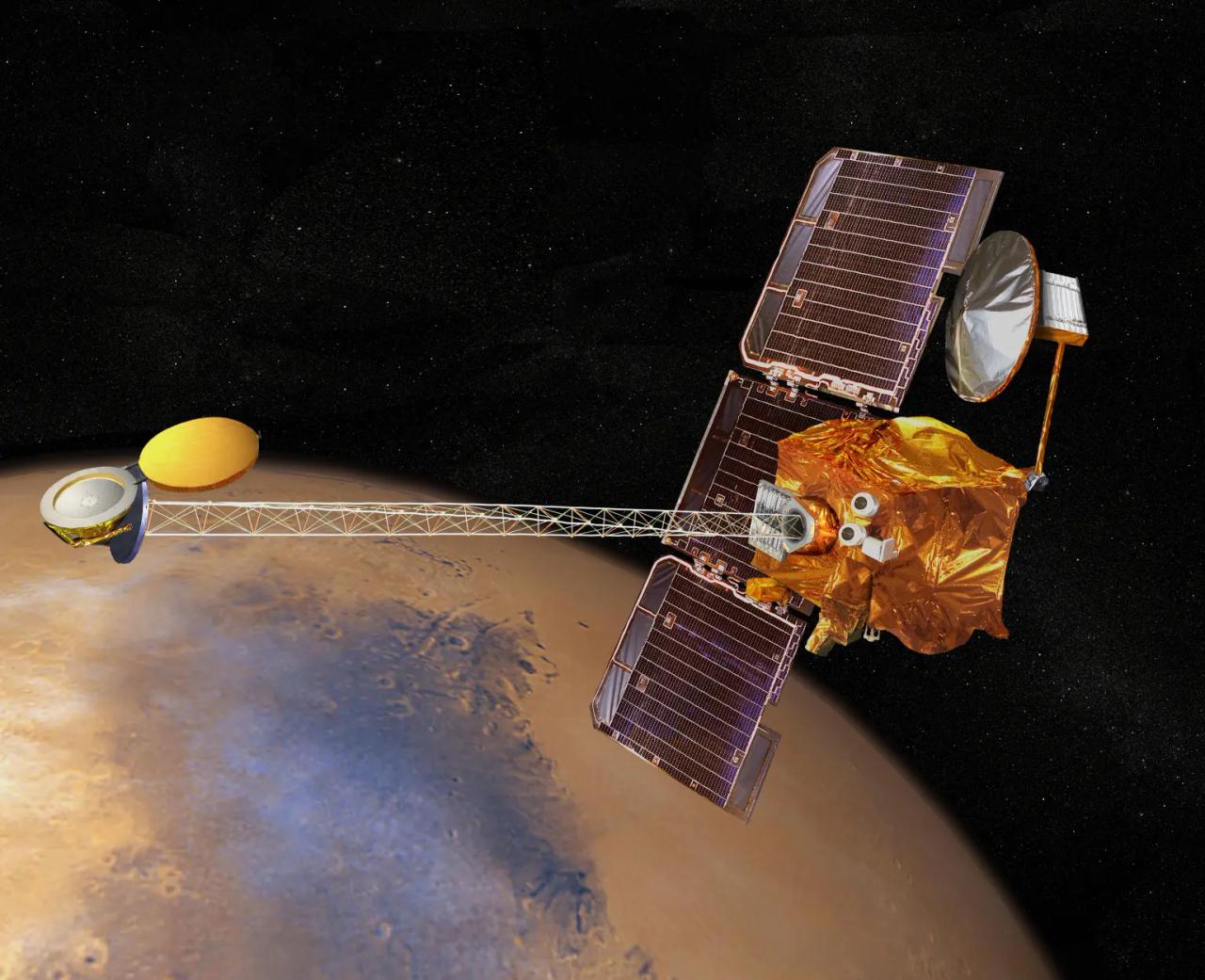
Mars Odyssey Exploration Vehicle
Mission Type | Orbital Vehicle | ||||||||
|---|---|---|---|---|---|---|---|---|---|
Launch Date | 7 April 2001 | ||||||||
Entry into Mars Orbit | 24 October 2001 | ||||||||
NASA’s 2001 Mars Odyssey mission played a key role in advancing our understanding of Mars by providing comprehensive data on the planet’s surface composition, the presence of water and its radiation environment. As the longest-operating spacecraft in Mars orbit, it has supported both scientific research and communication for other Mars missions.
The 2001 Mars Odyssey was launched on 7 April 2001 and successfully entered Mars orbit on 24 October 2001. Its primary objectives were to map the chemical elements and minerals on the Martian surface investigate the presence of water and measure radiation levels.
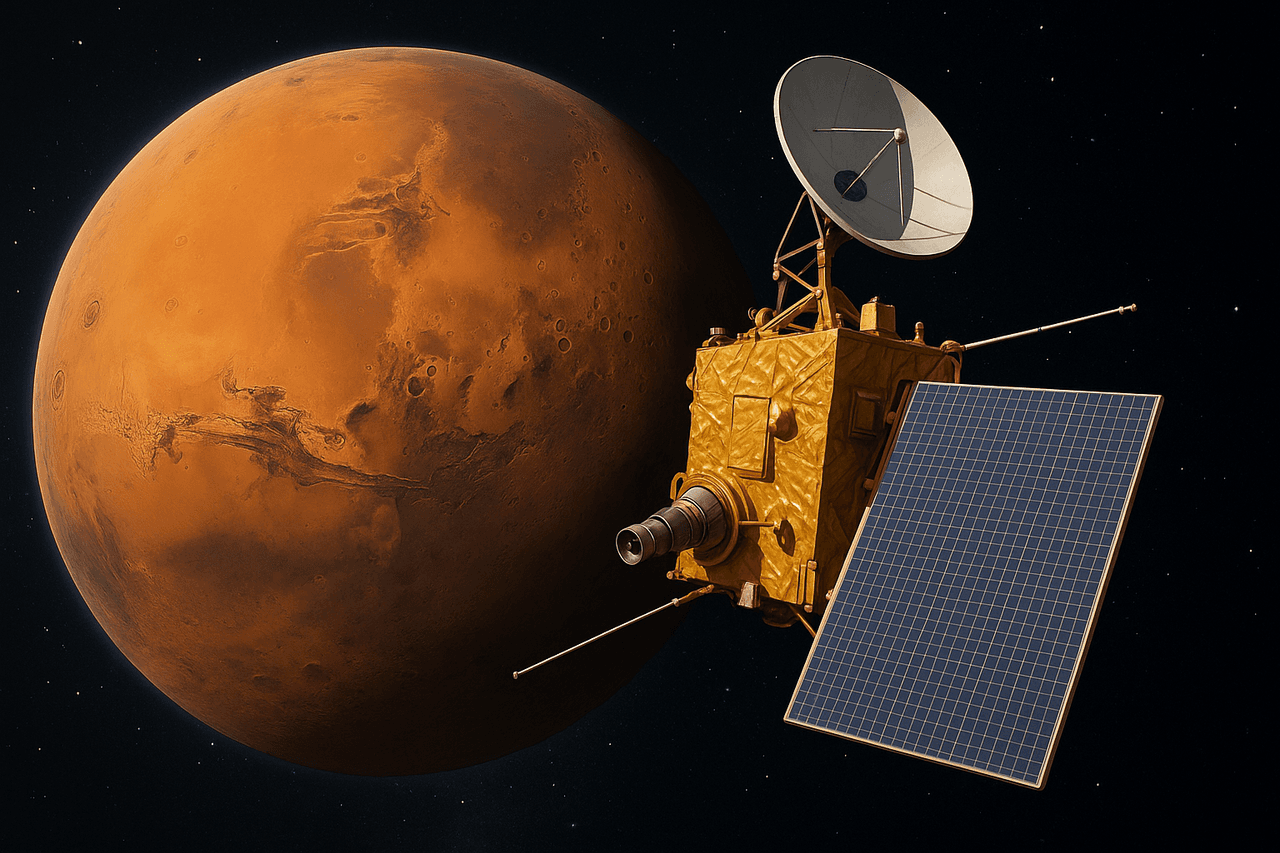
Artificial Intelligence Generated Mars Odyssey Spacecraft.
The spacecraft measures 2.2 meters in length 1.7 meters in height and 2.6 meters in width with a total mass of 725 kilograms. Its power system weighs 86 kilograms and uses hydrazine propellant for propulsion. The communication system operates in X-band with Earth and in UHF frequencies with surface vehicles on Mars.
One of Mars Odyssey’s most significant discoveries was the detection of hydrogen just beneath the Martian surface. This finding confirmed the presence of water ice deposits in the planet’s polar regions.
This discovery was corroborated in 2008 by the Phoenix Mars Lander. Additionally the radiation data provided by Odyssey played a vital role in evaluating potential health hazards for humans on the Martian surface.
As the longest-operating spacecraft in Mars orbit the 2001 Mars Odyssey continues to support scientific research and provide communication relay services for other Mars missions. The THEMIS instrument continues to observe clouds fog and frost events on the Martian surface.
NASA Jet Propulsion Laboratory. “Mars Odyssey.” *NASA JPL Missions*. Accessed May 5, 2025. https://www.jpl.nasa.gov/missions/mars-odyssey/.
NASA. “Mars Odyssey Science Highlights.” *NASA Science*. Accessed May 5, 2025. https://science.nasa.gov/mission/odyssey/science-highlights/.
NASA. “Mars Odyssey.” *NASA Science*. Accessed May 5, 2025. https://science.nasa.gov/mission/odyssey/.

Mars Odyssey Exploration Vehicle
Mission Type | Orbital Vehicle | ||||||||
|---|---|---|---|---|---|---|---|---|---|
Launch Date | 7 April 2001 | ||||||||
Entry into Mars Orbit | 24 October 2001 | ||||||||
Mission Objectives and Technical Specifications
Scientific Instruments and Findings
Key Discoveries and Impacts
Current Status