
This article was automatically translated from the original Turkish version.
History | Around 22:29 on 10 December 2016 | ||||||||
|---|---|---|---|---|---|---|---|---|---|
Location | Istanbul Türkiye – Vodafone Park area (Beleştepe) and Maçka Park Beşiktaş | ||||||||
Attack Type | Bomb-laden vehicle attack and suicide attack (two-stage coordinated attack) | ||||||||
Terrorist Organization | TAK (Liberation Falcons of Kurdistan), linked to the PKK | ||||||||
Number of Martyrs | 47 martyrs | ||||||||
Number of Killed Terrorists | 2 (the person who used the bomb-laden vehicle and the suicide attacker in Maçka Park) | ||||||||
Number of Injured | Over 240 injured (mostly security personnel) | ||||||||
Prominent Perpetrators | Kadri Kılınç (the terrorist who used the bomb-laden vehicle, registered in Mardin/Kızıltepe) and the identified suicide bomber in Maçka Park, reported to be a member of the organization with the code name "Tolhildan" | ||||||||
On December 10, 2016, two coordinated bomb attacks carried out around Vodafone Park Stadium and Maçka Park in Istanbul’s Beşiktaş district were recorded as one of the deadliest terrorist acts in Türkiye in recent years. The Süper Lig match between Beşiktaş and Bursaspor ended at approximately 22:29, and the explosions occurred shortly after most fans had left the stadium area. The attacks directly targeted the mobile police units providing security and the personnel on duty, while civilians in the vicinity became indirect victims. Initial reports stated that 46 people had been killed, including 39 security personnel and 7 civilians, and that both terrorists responsible for the attack had also died. It was later recorded that the number of injured exceeded 240, and the total death toll rose to 47 when those who died in hospitals were included.
Following the explosions, security units shared information about the scope of the incident and the initial evidence with the public. The blast effects seriously damaged not only the security forces stationed around the stadium but also nearby vehicles and buildings. Parts of the Gümüşsuyu slope and surrounding public transport infrastructure became unusable, and numerous windows in businesses and residences were shattered with structural damage occurring across the area. The vicinity of the incident site was quickly enclosed within a broad security perimeter, and Meclis-i Mebusan and Dolmabahçe avenues were temporarily closed to traffic. Temporary restrictions were imposed on radio and television broadcasts to ensure that information flow remained limited to official statements.

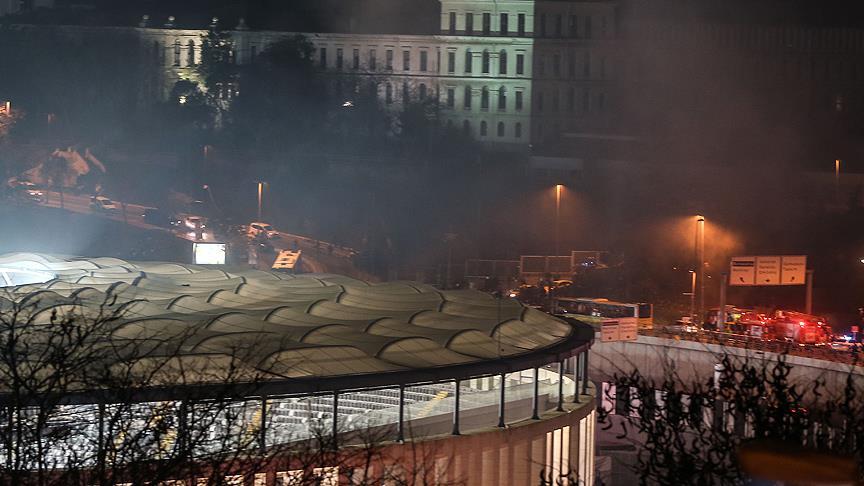
The attack occurred near Vodafone Park Stadium (Anadolu Ajansı)
Immediately after the attack, a national day of mourning was declared across Türkiye and the Turkish Republic of Northern Cyprus, and flags were lowered to half-mast. Within hours, areas around the stadium and other parts of the city became sites of spontaneous memorials where carnations were laid and candles were lit in honor of the victims. State institutions, security units, and health organizations coordinated their efforts to simultaneously manage the evacuation of the injured and collect evidence. National and local media reported on the development and consequences of the attack based on official briefings. The incident drew widespread attention both domestically and internationally and remained on the public agenda for an extended period.
The attacks in Beşiktaş became part of a broader period during 2015 and 2016 when terrorist organizations intensified their operations targeting security forces in Türkiye’s major cities. During this time, bomb-laden vehicle and suicide attacks occurred in Ankara, Istanbul, and other cities, with particular focus on security units and crowded areas. Vodafone Park was considered a potential target due to its symbolic status as one of Istanbul’s key sports venues and the heavy security measures in place on match days. The timing of the attacks—coinciding with the departure of most fans from the stadium while mobile police units remained concentrated in the area—revealed the deliberate nature of the planning. This choice indicated that the primary objective of the attackers was to inflict heavy casualties on security forces.
Investigative findings revealed that the explosives and ammunition used in the attacks showed technical similarities to materials previously seized in other cities. Searches in a barn and surrounding land in Diyarbakır uncovered rocket launchers, bomb casings, and heavy weapons; forensic analysis confirmed that these materials were from the same batch and shared identical characteristics with those used in the Beşiktaş attack. The prosecution, based on these findings, submitted its indictment to the Istanbul Chief Public Prosecutor’s Office due to the location of the incident. Investigations concluded that the bombs had been transported from Diyarbakır to Istanbul concealed inside trucks carrying sacrificial animals and onions. This discovery demonstrated that the attack was not an isolated act but the result of a well-organized plan with a strong logistical infrastructure.
Security camera footage and intelligence data revealed that reconnaissance activities had been conducted around the stadium prior to the attack. MOBESE footage identified a woman terrorist, later apprehended during a separate operation in Diyarbakır, and her husband as having traveled to Istanbul before the attack and circled the stadium conducting surveillance. After the incident, these individuals were found to have returned to Hatay. These findings indicated that multiple cells were involved in the planning, with reconnaissance, logistics, and execution phases coordinated within a hierarchical structure. The prosecution file contained information that the attack order had been issued by an individual within the organization known by the codename “Tolhildan,” confirming that the operation had been planned at a high level within the organizational chain of command.

Locations of the attacks (Anadolu Ajansı)
The first phase of the attack, known in public discourse as “Beleştepe,” involved the detonation of a vehicle loaded with explosives on the road along the southern section of the stadium. As the Beşiktaş–Bursaspor match concluded, the majority of spectators had left the stands, leaving behind primarily police officers and staff. At approximately 22:29, the vehicle was triggered as it approached a location densely populated by mobile police units. The explosion caused severe damage to mobile police buses, public transport vehicles, and private cars in the vicinity, while the shockwave shattered windows in buildings around Dolmabahçe and Gümüşsuyu. Dense smoke and debris quickly accumulated at the scene, and first aid operations began under extremely difficult conditions.
The second attack occurred approximately 45 seconds after the first, targeting mobile police units stationed inside Maçka Park. A suicide bomber carrying an explosive device attempted to infiltrate the police ranks and detonated the device when he was confronted. Although this second explosion affected a more limited area, it significantly increased the death toll among security forces already weakened by the first blast. The rapid succession of two explosions disrupted coordination at the scene, causing some units that had moved into position to respond to the first explosion to be caught in the second. As a result, the number of injured increased, and rescue operations had to be conducted under high security risks from the earliest moments.
Immediately after the explosions, numerous ambulances, fire trucks, and additional security teams were dispatched to the area. The injured were rapidly transported to hospitals in Taksim, Şişli, Beşiktaş, and surrounding districts. Police units conducted extensive searches and security sweeps across the area to guard against the possibility of a third explosion, and suspicious packages were safely neutralized by bomb disposal experts. Adjustments were made to public transport routes, and frequent public announcements urged citizens not to approach the incident site. Government institutions established crisis management teams to ensure unified coordination of both security and medical services.

Memorial events were held for the martyrs (Anadolu Ajansı)
In the Beşiktaş attacks, 39 security personnel and 7 civilians were killed, and both terrorists responsible for the attack died in the explosions. Among the injured were numerous police officers, stadium staff, and civilians present in the area at the time. The injured were transported to various hospitals across Istanbul, with some receiving treatment in intensive care units. Medical care continued for weeks and months, and many of the injured required long-term rehabilitation. During this period, social support mechanisms were activated for security personnel and civilians who suffered limb loss or permanent injuries.
Among the civilian martyrs were Berkay Akbaş, a medical student present at the stadium that day, and Tunç Uncu, an employee at Beşiktaş Club’s licensed merchandise store. Among the security personnel, Vefa Karakurdu, Head of the Special Security Unit at Vodafone Park, and Emniyet Amiri Kadir Yıldırım were among the most prominent names. Police officers serving in mobile units—Adem Oğuz, Okan Doğan, Ali Aksoy, İlker Uylaş, Hasan Bilgin, Durmuş Öcal, Mehmet Zengin, and Soner İdil—were stationed around the stadium during the attack. Additionally, Emre Horoz, Mehmet Taş, Uğur Ürker, Mustafa Kemal Devrilmez, and Çetin Sarıkaya, who had been temporarily assigned to Istanbul from other provinces, were also among the martyrs. These names illustrate that Beşiktaş was a site of joint duty for security personnel drawn from across Türkiye.
Other martyred police officers included Oğuzhan Duyar, Hamdi Dikmen, Hüseyin Dalkılıç, Süleyman Sorkut, Mustafa Öztürk, Adem Serin, Yasin İke, Mehmet Atıcı, Murat Yılmaz, Metin Düzgün, and Hamit Şahin. It was noted that the martyrs’ hometowns were spread across many provinces of Türkiye, with funeral ceremonies held in cities ranging from Çorum to Van and from Konya to Şanlıurfa. 【1】 Military funeral ceremonies were held in each martyr’s hometown, attended by state officials, local administrators, fellow officers, and large segments of the public. The fact that the attack particularly targeted young police officers and a civilian university student generated deep public sorrow. In subsequent commemorative programs, the names of the martyrs were individually recited to keep their memories alive.
The attack was claimed by the Kurdistan Freedom Falcons (TAK), a terrorist organization assessed as linked to the PKK. In its statement, the organization described the operation as a reprisal against security forces, citing ongoing security operations as justification. Official Turkish assessments identified TAK as an organizational structure used by the PKK to carry out urban-based attacks. State officials emphasized that the attack’s clear target was the mobile police units, while civilians were unintended victims. In this context, the attack was recorded as a planned terrorist effort aimed at undermining the morale of Türkiye’s security forces and the country’s stability.
Investigations determined that the terrorist who drove the bomb-laden vehicle was Kadri Kılınç, registered in the Kızıltepe district of Mardin. The individual who carried out the suicide attack in Maçka Park was also identified and entered into the case file as a militant with confirmed identity and organizational ties. Security and intelligence units worked to analyze the past activities, positions within the organization, and communication networks of these individuals. The evidence revealed that the attack order had been issued by a senior figure within the organization known by the codename “Tolhildan.” This confirmed that the operation was not the result of a local cell’s initiative but had been planned within a hierarchical command structure.
Following the attack, the Ministry of Interior and security units launched large-scale operations across the country. In the initial phase, numerous individuals were taken into custody; some were released based on insufficient evidence while others were detained. Home searches and field operations established logistical links between the Beşiktaş attack and other incidents in different cities. New cells suspected of preparing further attacks were uncovered, and several planned vehicle bombings were prevented before execution. Thus, the Beşiktaş attack became one of the key turning points in Türkiye’s counterterrorism efforts, both due to its direct consequences and the security measures it triggered.
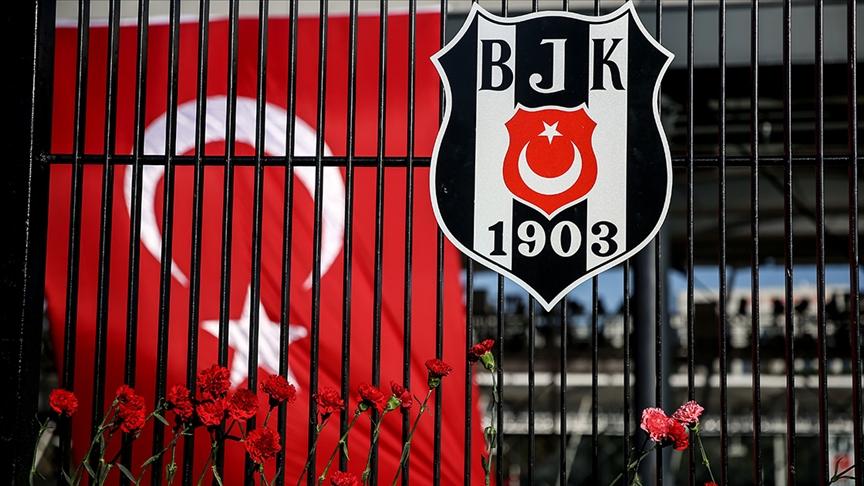
Roses were placed around the stadium after the incident (Anadolu Ajansı)
The judicial process initiated after the Beşiktaş attacks evolved into a lengthy, multi-defendant case. The Istanbul Chief Public Prosecutor’s Office prepared a comprehensive indictment based on evidence collected by security units, technical reports, and witness statements. The indictment characterized the attack as an organized terrorist act targeting the unity of the Republic of Türkiye and its territorial integrity. The defendants were charged with “undermining the unity and territorial integrity of the state,” “intentional murder by planning and bombing,” “attempted intentional murder,” and “unauthorized possession and use of dangerous materials.” The case file included numerous individuals who played different roles in the planning of the attack, reconnaissance activities, transportation of explosives, and organizational connections.
The trial was conducted by the 29th Heavy Criminal Court of Istanbul, which issued its verdict within 2019. The court sentenced the detained defendants Zozan Kutum, Mehmet Emin Töre, Gülşen Bahadır, and Tufan Beyhan to 47 aggravated life sentences each for “undermining the unity and territorial integrity of the state” and for “intentionally killing 46 people by planning and bombing.” The same defendants were also sentenced to thousands of years in total for “attempted intentional murder” against 242 individuals and for other offenses related to the use of explosives. Some defendants received prison sentences ranging from 7.5 to 15 years for membership in a terrorist organization, while others were acquitted on charges where evidence was deemed insufficient.
The verdict was appealed to the 2nd Criminal Chamber of the Istanbul Regional Court of Justice, which largely upheld the lower court’s rulings. This marked progress toward the finalization of the core convictions related to the Beşiktaş attack. Meanwhile, following the death of police officer Muammer Ateş, who had been severely injured in the attack and later died, a supplementary indictment was prepared and a new case was opened. In subsequent years, further investigations led to the arrest of fugitive suspect Aydın Ekici, who was convicted in his trial of “membership in an armed terrorist organization.” Thus, the judicial process concerning the Beşiktaş attacks assumed a dynamic structure involving multiple case files and supplementary indictments.
Immediately after the attack, political parties, civil society organizations, and professional associations across Türkiye issued comprehensive condemnations. Despite differing political views, representatives from both the ruling coalition and the opposition expressed a unified stance against terrorism and emphasized national solidarity. Rallies under the slogan “Cursed be terrorism” were held in numerous cities, with Istanbul at the forefront, where citizens gathered in public squares holding Turkish flags. Marches were organized around Beşiktaş and in various provinces, prayers were recited, and memorial events were held. Civil society organizations and professional associations launched solidarity campaigns to provide material and moral support to the families of the martyrs and the injured.
President Recep Tayyip Erdoğan condemned the attack in the strongest possible terms through written statements and public speeches. He asserted that all terrorist organizations—including the PKK, DEAŞ, and FETÖ—were pursuing the same objective against Türkiye and its people, with differences among them limited only to their methods. Erdoğan emphasized that the attack targeted Türkiye’s stability and the morale of its security forces, but that the state would offer no concessions in its fight against terrorism. He also stated that Türkiye required concrete international solidarity beyond mere verbal support and affirmed the country’s determination to heal its wounds using its own resources. Government and state officials’ statements conveyed the message that the perpetrators and supporters of the attack would be pursued “wherever they may be.”【2】
Numerous states and international organizations sent condolences to Türkiye. Foreign ministries of European countries, the United States, Russia, and regional nations classified the attack as a terrorist act and expressed solidarity with Türkiye. The United Nations, NATO, and other international organizations issued statements condemning terrorist attacks targeting civilians and security forces.【3】 Over time, the December 10, 2016 attack became one of the events etched into Türkiye’s collective memory. The area where the attack occurred and known in public discourse as “Beleştepe” was renamed “Martyrs’ Hill” and transformed into a memorial space honoring the victims.【4】 Every year on the anniversary of the attack, ceremonies are held during which the names of the martyrs are individually recited, and their families and public officials pay tribute to their memory; thus, the 2016 Istanbul Beşiktaş terrorist attacks continue to hold a significant place in Türkiye’s recent history, both in legal proceedings and in societal memory.
Anadolu Ajansı. "Başbakan Yardımcısı Kurtulmuş: İstanbul’daki terör saldırısında oklar PKK’yı gösteriyor." Accessed December 8, 2025.https://www.aa.com.tr/tr/gunun-basliklari/basbakan-yardimcisi-kurtulmus-istanbuldaki-teror-saldirisinda-oklar-pkkyi-gosteriyor/703691
Anadolu Ajansı. "Beleştepe’ye ‘Şehitler Tepesi’ adı verildi." Accessed December 8, 2025.
Anadolu Ajansı. "Beşiktaş’taki terör saldırısı davasında tutuklu sanığa 15 yıla kadar hapis istemi." Accessed December 8, 2025.https://www.aa.com.tr/tr/gundem/besiktastaki-teror-saldirisi-davasinda-tutuklu-saniga-15-yila-kadar-hapis-istemi-/3136486
Anadolu Ajansı. "Beşiktaş’taki terör saldırısının üzerinden 6 yıl geçti." Accessed December 8, 2025.
Anadolu Ajansı. "Siyasi partiler ile STK’lar İstanbul’daki terör saldırısını lanetledi." Accessed December 8, 2025.https://www.aa.com.tr/tr/turkiye/siyasi-partiler-ile-stklar-istanbuldaki-teror-saldirisini-lanetledi/704415
Anadolu Ajansı. "İstanbul’da terör saldırısı." Accessed December 8, 2025.
Anadolu Ajansı. "Şehitlerin baba ocaklarında yas var." Accessed December 8, 2025.
Anadolu Ajansı. “Beşiktaş’taki PKK’nın terör saldırısı davasında müebbet hapis istemi.” Accessed December 8, 2025.https://www.aa.com.tr/tr/turkiye/besiktastaki-pkknin-teror-saldirisi-davasinda-muebbet-hapis-istemi/1398045
Anadolu Ajansı. “Beşiktaş’taki terör saldırısının firari sanığına 7 yıl sonra dava açıldı.” Accessed December 8, 2025.https://www.aa.com.tr/tr/gundem/besiktastaki-teror-saldirisinin-firari-sanigina-7-yil-sonra-dava-acildi/2947485
Anadolu Ajansı. “Beşiktaş’taki terör saldırısının üzerinden 8 yıl geçti.” Accessed December 8, 2025.https://www.aa.com.tr/tr/gundem/besiktastaki-teror-saldirisinin-uzerinden-8-yil-gecti/3419806
Anadolu Ajansı. “İstanbul’daki terör saldırısı nedeniyle ülkede milli yas ilan edildi” (foto galeri). Accessed December 8, 2025.https://www.aa.com.tr/tr/pg/foto-galeri/istanbuldaki-teror-saldirisi-nedeniyle-ulkede-milli-yas-ilan-edildi-
Anadolu Ajansı. “İstanbul’daki terör saldırısına dünyadan tepkiler.” Accessed December 8, 2025.https://www.aa.com.tr/tr/dunya/istanbuldaki-teror-saldirisina-dunyadan-tepkiler/703642
Anadolu Ajansı. “İstanbul’daki terör saldırısına meydanlardan tepki.” Accessed December 8, 2025.https://www.aa.com.tr/tr/gunun-basliklari/istanbuldaki-teror-saldirisina-meydanlardan-tepki/704909
Anadolu Ajansı. “İstanbul’daki terör saldırısı” (infografik). Accessed December 8, 2025.https://www.aa.com.tr/tr/info/infografik/3026
CNN Türk. "Stadyum önünde saldırıp Beşiktaş’ı kana bulayan PKK’lı teröristler ‘cesaret hapı’ almış." Accessed December 8, 2025.https://www.cnnturk.com/turkiye/stadyum-onunde-saldirip-besiktasi-kana-bulayan-pkkli-teroristler-cesaret-hapi-almis-650596
GZT Jurnalist. “İstanbul Beşiktaş’ta gerçekleşen terör saldırısıyla ilgili ilk açıklamalar.” Accessed December 8, 2025.https://www.gzt.com/jurnalist/istanbul-besiktasta-gerceklesen-teror-saldirisiyla-ilgili-ilk-aciklamalar-2578387
Gazetevatan. “10 Aralık 2016 saldırısı: 10 Aralık 2016 Beşiktaş patlaması nasıl oldu, Beşiktaş patlamasını kim yaptı? 10 Aralık Beşiktaş patlaması şehitleri isimleri.” Accessed December 8, 2025.https://www.gazetevatan.com/yasam/10-aralik-2016-saldirisi-10-aralik-2016-besiktas-patlamasi-nasil-oldu-besiktas-patlamasini-kim-yapti-10-aralik-besiktas-patlamasi-sehitleri-isimleri-2007320
Hakkari Valiliği. "Valimiz Sayın Akbıyık’tan Beşiktaş’taki terör saldırısına ilişkin açıklama." Accessed December 8, 2025.http://www.hakkari.gov.tr/valimiz-sayin-akbiyiktan-besiktastaki-teror-saldirisina-iliskin-aciklama
Hürriyet. “Son dakika: İstanbul Beşiktaş’ta 2 patlama, açıklama geldi.” Accessed December 8, 2025.https://www.hurriyet.com.tr/gundem/son-dakika-istanbul-besiktasta-2-patlama-aciklama-geldi-40303085
TRT Haber. "İstanbul Beşiktaş’ta terör saldırısı." Accessed December 8, 2025.
Yeni Şafak. "Beşiktaş’taki terör saldırısını kim yaptı?" Accessed December 8, 2025.
Yeni Şafak. "İstanbul’da iki alçak saldırı: 29 şehit." Accessed December 8, 2025.
İstanbul Valiliği. "Beşiktaş’taki terör saldırısının şehitleri anıldı." Accessed December 8, 2025.
[1]
Anadolu Ajansı. “Şehitlerin baba ocaklarında yas var.” Erişim: 8 Aralık 2025.
https://www.aa.com.tr/tr/turkiye/sehitlerin-baba-ocaklarinda-yas-var-/704208
[2]
Hürriyet. “Son dakika: İstanbul Beşiktaş’ta 2 patlama, açıklama geldi.” Erişim: 8 Aralık 2025.
https://www.hurriyet.com.tr/gundem/son-dakika-istanbul-besiktasta-2-patlama-aciklama-geldi-40303085
[3]
Anadolu Ajansı. “İstanbul’daki terör saldırısına dünyadan tepkiler.” Erişim: 8 Aralık 2025.
https://www.aa.com.tr/tr/dunya/istanbuldaki-teror-saldirisina-dunyadan-tepkiler/703642
[4]
Anadolu Ajansı. “Beleştepe’ye ‘Şehitler Tepesi’ adı verildi.” Erişim: 8 Aralık 2025.
https://www.aa.com.tr/tr/turkiye/belestepeye-sehitler-tepesi-adi-verildi/704387

History | Around 22:29 on 10 December 2016 | ||||||||
|---|---|---|---|---|---|---|---|---|---|
Location | Istanbul Türkiye – Vodafone Park area (Beleştepe) and Maçka Park Beşiktaş | ||||||||
Attack Type | Bomb-laden vehicle attack and suicide attack (two-stage coordinated attack) | ||||||||
Terrorist Organization | TAK (Liberation Falcons of Kurdistan), linked to the PKK | ||||||||
Number of Martyrs | 47 martyrs | ||||||||
Number of Killed Terrorists | 2 (the person who used the bomb-laden vehicle and the suicide attacker in Maçka Park) | ||||||||
Number of Injured | Over 240 injured (mostly security personnel) | ||||||||
Prominent Perpetrators | Kadri Kılınç (the terrorist who used the bomb-laden vehicle, registered in Mardin/Kızıltepe) and the identified suicide bomber in Maçka Park, reported to be a member of the organization with the code name "Tolhildan" | ||||||||
No Discussion Added Yet
Start discussion for "2016 Istanbul Beşiktaş Terror Attacks" article
Planning and Background of the Attack
Course of the Attack
Martyrs and Injured
Responsible Terrorist Organization and Perpetrators
Investigation and Judicial Process
Social and International Reactions, Commemoration, and Memory