
This article was automatically translated from the original Turkish version.
+1 More
The 2025 Nobel Peace Prize has been awarded to Maria Corina Machado for her efforts in defending democratic rights in Venezuela and promoting a peaceful political transition. The Norwegian Nobel Committee stated that Machado is deserving of the prize for her “uninterrupted work to advance the democratic rights of the Venezuelan people and her struggle for a peaceful transition from dictatorship to democracy.”
Machado, recognized as a leader of Venezuela’s democracy movement, has been described as one of the “most notable examples of civil courage in Latin America in recent years.” The Committee’s statement highlighted her as “a peace advocate who keeps the flame of democracy alive in an increasingly dark environment.”
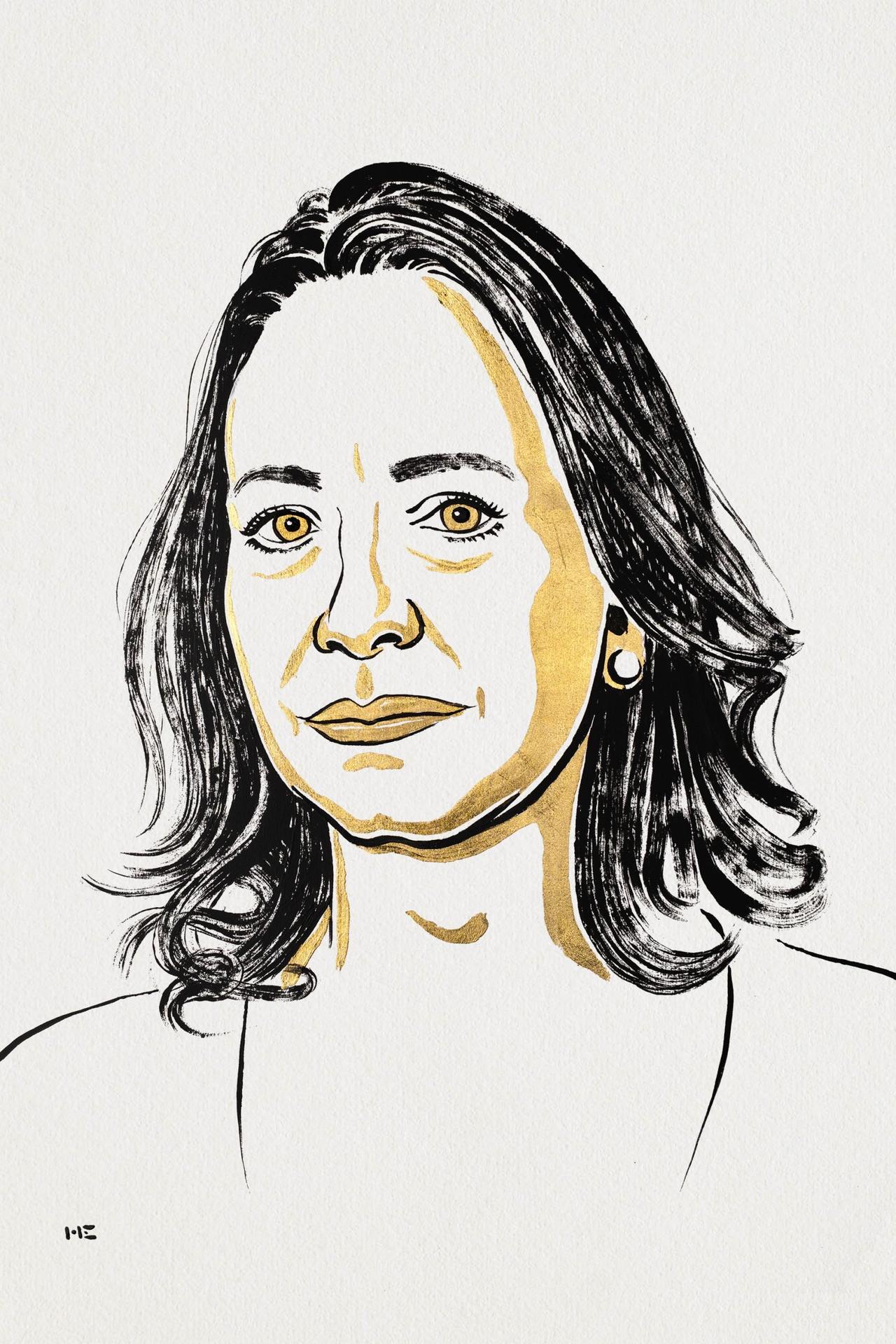
Illustration of Maria Corina Machado (The Nobel Prize)
According to the Committee’s statement, Venezuela has transformed over the past two decades from a democratic system into an authoritarian regime. The country is experiencing widespread economic and humanitarian crises, with a significant portion of its population living in poverty. Approximately eight million Venezuelans have left the country. The state’s repressive apparatus operates through systematic arrests of opponents, extrajudicial actions, and electoral manipulation. Under these conditions, political activity has become increasingly difficult.
Maria Corina Machado is one of the founders of the civil society organization Súmate, established to promote democratic development. In the early 2000s, she led efforts through this organization to defend free and fair elections. Machado has served in parliament during different periods and initiated various measures to monitor electoral processes. This movement, known for its call to “reject the gun in favor of the ballot,” has become a defining chapter in Venezuela’s history of democratic resistance.
Prior to the 2024 presidential elections, Machado emerged as the unified opposition candidate. However, her candidacy was blocked by the government. In response, she endorsed Edmundo González Urrutia, the opposition’s alternative candidate. Volunteers across the country were deployed to ensure ballot security and to guarantee transparent vote counting. Citizens documented and publicly disclosed election results to counter the risk of ballot destruction. Throughout this process, the opposition demonstrated coordinated action across diverse political groups.
Although the election results were widely believed to favor the opposition, the ruling regime refused to recognize them. The Committee described this process as “an example of a peaceful, democratic, and organized opposition movement.”
The Norwegian Nobel Committee emphasized the link between democracy and lasting peace. It noted that as democratic values decline globally, the rise of authoritarian regimes and militarism has become a global trend. Restrictions on press freedom, the politicization of the judiciary, and the suppression of dissent are cited as indicators of this trend.
The Committee stated that Maria Corina Machado meets all three criteria outlined in Alfred Nobel’s will. She has united Venezuela’s opposition, resisted the militarization of Venezuelan society, and consistently advocated for a peaceful democratic transition.
The 2025 Nobel Peace Prize was announced on 10 October 2025 at 09:00 GMT at the Norwegian Nobel Institute in Oslo. A total of 338 candidates were nominated this year, of which 244 were individuals and 94 were organizations. The prize amount is 11 million Swedish kronor (approximately 1.2 million US dollars). The award ceremony is scheduled to take place on 10 December 2025, the anniversary of Alfred Nobel’s death.
Al Jazeera. “Nobel Peace Prize 2025 live: Venezuela’s Maria Corina Machado Wins.” *Al Jazeera Liveblog*. Accessed October 10, 2025. https://www.aljazeera.com/news/liveblog/2025/10/10/nobel-peace-prize-2025-2.
Anadolu Ajansı. “2025 Nobel Barış Ödülü Sahibini Buldu.” Anadolu Ajansı. Accessed October 10, 2025. https://www.aa.com.tr/tr/dunya/2025-nobel-baris-odulu-sahibini-.buldu/3713467#.
Nobel Prize. “All Nobel Prizes 2025.” The Nobel Prize Official Website. Accessed October 10, 2025. https://www.nobelprize.org/all-nobel-prizes-2025/.
Nobel Prize. “Press Release: The Nobel Peace Prize 2025.” *The Nobel Prize Official Website*. Accessed October 10, 2025. https://www.nobelprize.org/prizes/peace/2025/press-release/.

No Discussion Added Yet
Start discussion for "2025 Nobel Peace Prize" article
Political Context in Venezuela
The 2024 Presidential Election Process
The Nobel Committee’s Assessment
Award Ceremony and Nomination Process