


This article was automatically translated from the original Turkish version.
Nepal General Elections are the parliamentary elections held on 5 March 2026 to determine the new members of Nepal’s House of Representatives. The elections were held approximately six months after the fall of Prime Minister Khadga Prasad Sharma Oli’s government, which followed protests led by youth in September 2025 against the government’s ban on social media platforms.
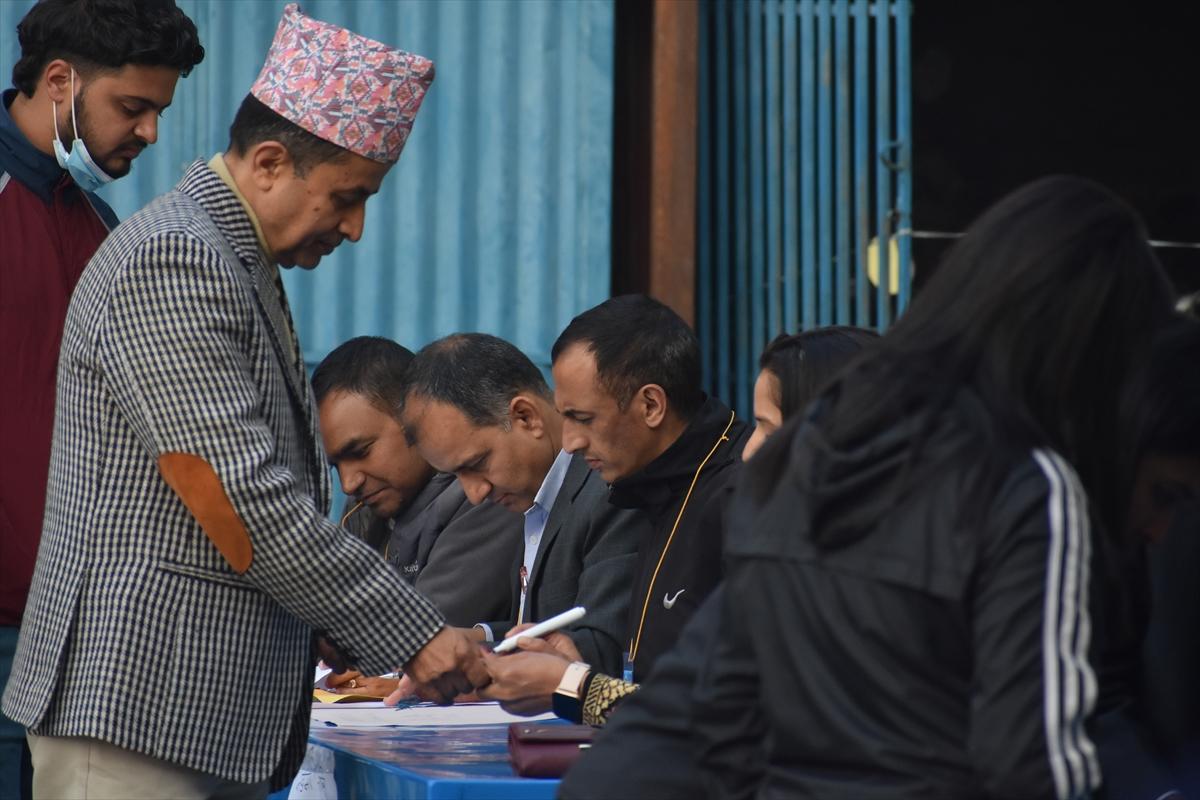
Nepal general elections, 5 March 2026 - (Anadolu Ajansı)
Nepal is a South Asian country with a population of approximately 30 million. In the elections, the public voted to elect the 275 members of the House of Representatives, the lower house of the national parliament.
The political process leading to the 2026 general elections in Nepal is linked to the protests that took place in September 2025. These protests began after the government decided to block access to social media platforms such as Facebook, Instagram, WhatsApp, YouTube, and X, citing lack of proper licensing.
Following this decision, widespread protests across the country were led by young people. The protests quickly turned violent. It was reported that at least 74 to 77 people lost their lives during the demonstrations. More than two thousand individuals were injured, and attacks were carried out against public buildings and the homes of several political leaders.
During the protests, various public institutions including the Nepal Parliament, the Supreme Court of Nepal, and the central government secretariat were set on fire.
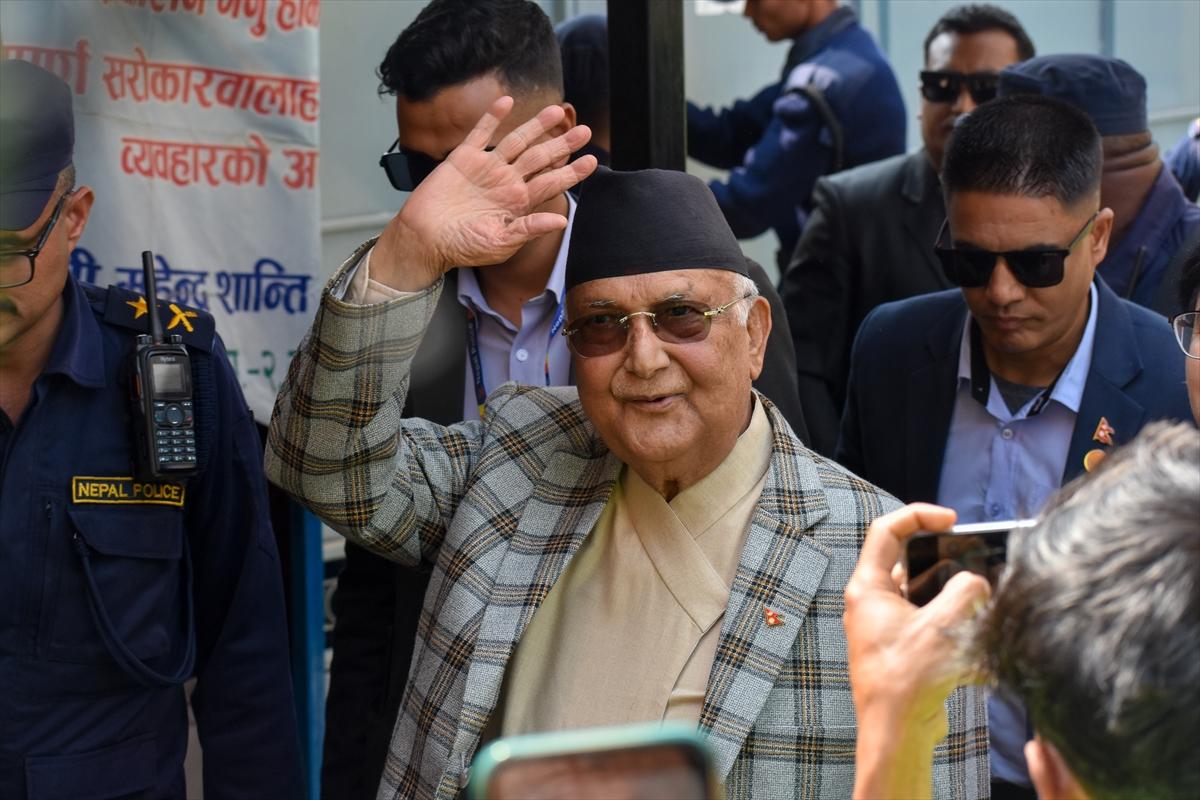
Former Prime Minister KP Sharma Oli at a polling station, 5 March 2026 - (Anadolu Ajansı)
As the protests intensified, the then Prime Minister Khadga Prasad (KP) Sharma Oli resigned from office on 9 September 2025. It was also reported that several ministers in his cabinet resigned during the unrest. Amid the security vacuum created by the protests, thousands of prisoners escaped from jails.
Following the prime minister’s resignation, an interim administration was established. On 12 September 2025, former Chief Justice of the Supreme Court of Nepal Sushila Karki assumed office as interim prime minister.
During the interim administration, the country prepared for the organization of a new parliamentary election in the political environment that followed the protests.
The 2026 general elections, held after the 2025 protests, were the first national election conducted following the unrest. The elections were organized during the interim administration to determine the composition of the new parliament.
The Nepal General Elections were held on 5 March 2026. Voting commenced at 07:00 local time and concluded at 17:00 nationwide.
Voting operations were conducted across more than 23,000 polling centers established throughout Nepal. A significant portion of these centers were located in schools and other public buildings.
To facilitate voter participation across the country’s diverse regions, the government declared a three-day official holiday on election day. Over 80 percent of Nepal’s territory is mountainous, posing significant logistical challenges for election organization. In some areas, ballot boxes and election materials were transported by hand to counting centers. In other regions, election materials were delivered by air.
The number of registered voters eligible to vote in the elections was announced as approximately 19 million. Of these, approximately 800,000 were first-time voters.
According to demographic data, of the registered voters, approximately 9.66 million were male and 9.24 million were female.
According to data released by the Election Commission of Nepal, voter turnout in the 2026 general elections reached approximately 60 percent. This figure is close to the 61 percent turnout recorded in the 2022 elections. Previous elections recorded turnouts of 68 percent in 2017 and 78 percent in 2013.
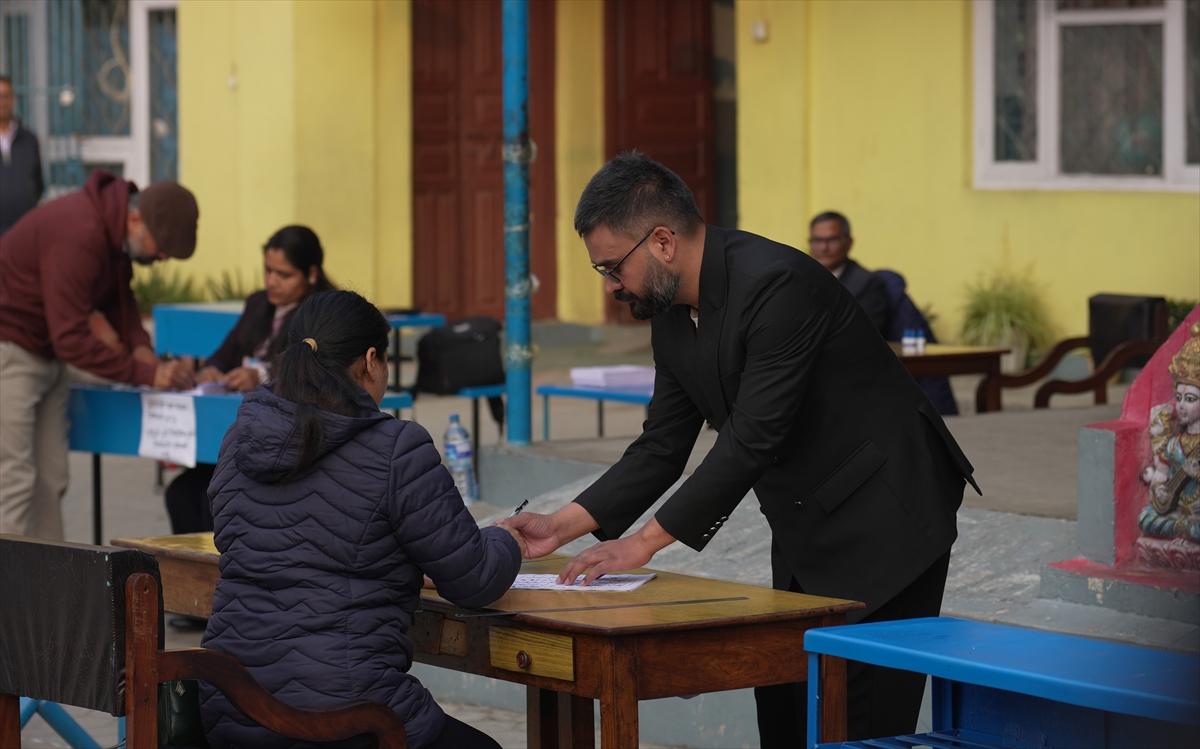
Nepal general elections, 5 March 2026 - (Anadolu Ajansı)
In Nepal, parliamentary elections are conducted under a mixed electoral system introduced in 2015. This system combines a majoritarian direct election method with a proportional representation model. Under this system, voters cast ballots using two distinct methods to elect representatives to parliament.
The House of Representatives, the lower house of Nepal’s parliament, consists of 275 members. Of these, 165 are elected through direct elections using the “first-past-the-post” (FPTP) majoritarian system, in which the candidate receiving the most votes in each constituency is elected.
The remaining 110 seats are allocated through proportional representation. Political parties participate in the elections by submitting candidate lists, and the number of seats each party receives is determined by the proportion of the total national vote it obtains.
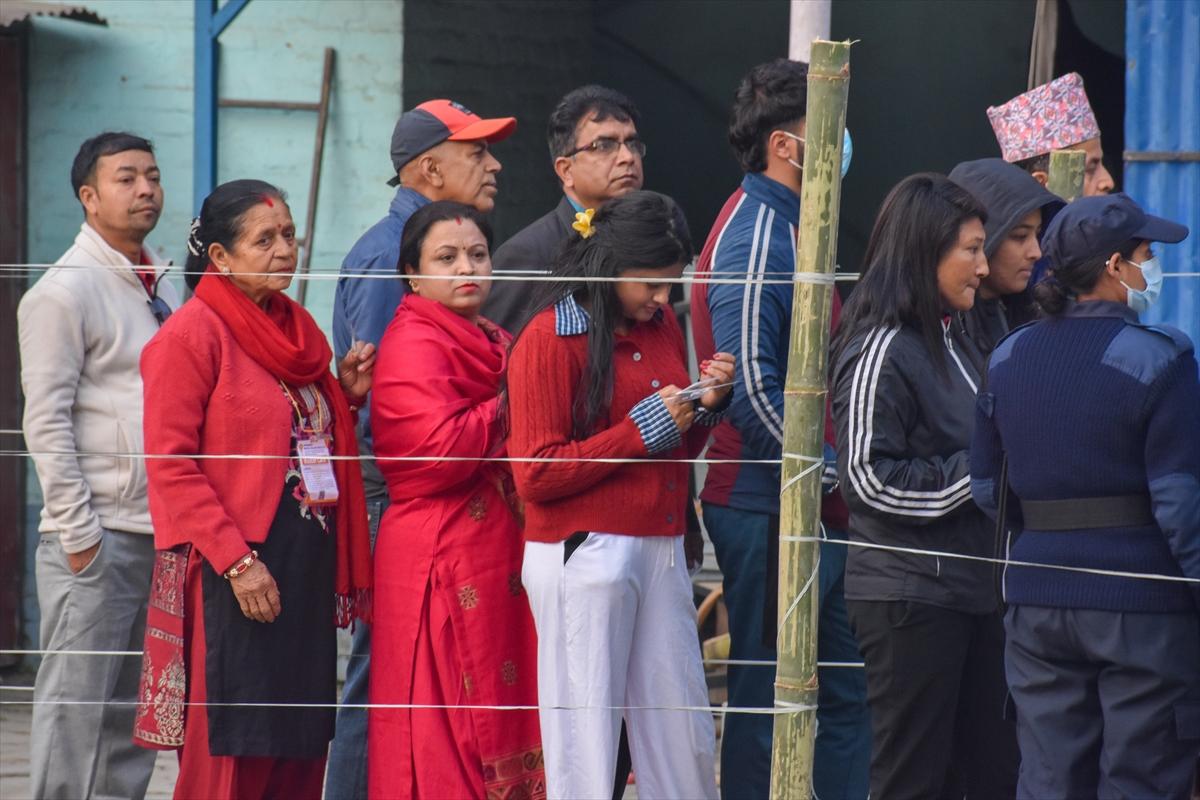
Nepal general elections, 5 March 2026 - (Anadolu Ajansı)
One of the prominent political formations in the 2026 Nepal general elections was the Rastriya Swatantra Party (RSP). During the election campaign, the party nominated Balendra Shah as its prime ministerial candidate. RSP is a political party established in 2022 and had a history of approximately three and a half years at the time of the election. The party is led by Rabi Lamichhane.
One of Nepal’s longest-standing political parties is the Nepali Congress. The party has long been among the traditional political forces in Nepali politics. Among its prime ministerial candidates was Gagan Thapa, who assumed leadership of the party following a special party congress held in January.
One of the major parties competing in the elections is the Communist Party of Nepal (Unified Marxist–Leninist), known as CPN-UML. The party was represented by former Prime Minister Khadga Prasad Sharma Oli.
KP Sharma Oli, one of the political leaders who has served multiple terms as Prime Minister of Nepal, ran again in this election.
Another party competing in the elections was the Nepal Communist Party (NCP). The party was represented by former Maoist leader Pushpa Kamal Dahal (Prachanda). Pushpa Kamal Dahal, who previously served as Prime Minister during the periods 2008–2009, 2016–2017, and 2022–2024, was a prominent figure in the election process.
More than 60 political parties participated in the 2026 general elections across Nepal. A total of more than 3,400 candidates competed in the elections. It was reported that over 1,000 of these candidates were under the age of 40.
One of the most prominent political figures in the 2026 Nepal general elections was Balendra Shah. Known in Nepali public discourse by the nickname “Balen”, Shah was previously known as a rapper before entering politics.
Balendra Shah was elected as Mayor of Kathmandu Metropolitan City in 2022. He resigned from this position to run for prime minister in the 2026 general elections. During the election campaign, he was nominated as the prime ministerial candidate by the Rastriya Swatantra Party (RSP).
Celebration by RSP supporters in Nepal, 6 March 2026 - (Anadolu Ajansı)
During the election campaign, Balendra Shah held large-scale rallies across the country. It was noted that Shah’s campaign events attracted particular attention among young voters.
Shah’s political identity became widely recognized during his tenure as Kathmandu Mayor, during which he implemented measures such as removing illegal vendors, resolving waste management issues, and promoting road expansion projects.
During the campaign, Balendra Shah emphasized in his addresses to supporters the need to increase access to education and healthcare services for disadvantaged communities.
Balendra Shah was elected to parliament from the Jhapa-5 constituency. In this constituency, he competed against former Prime Minister Khadga Prasad Sharma Oli.
According to the election results, Balendra Shah received 68,348 votes, while KP Sharma Oli received 18,734 votes. With this result, Shah won the election with one of the highest vote totals ever recorded by a single candidate in the history of Nepal’s parliamentary elections.
In the 2026 Nepal General Elections, 165 seats in the House of Representatives were determined through direct elections. According to vote count results, the Rastriya Swatantra Party (RSP) emerged as the party that won the most seats in the direct election constituencies.
According to the announced results, RSP won 125 of the 165 directly elected seats. With this outcome, the party became the largest political group in the House of Representatives.
Al Jazeera. “Nepal Election 2026: Who Are the Contenders and What’s at Stake?” Al Jazeera, March 4, 2026. Accessed March 10, 2026. https://www.aljazeera.com/news/2026/3/4/nepal-election-2026-who-are-the-contenders-and-whats-at-stake
Al Jazeera. “Nepalese Vote in General Election Months After Gen Z Uprising.” Al Jazeera, March 5, 2026. Accessed March 10, 2026. https://www.aljazeera.com/news/2026/3/5/nepalese-vote-in-general-election-months-after-gen-z-uprising
Al Jazeera. “Rapper-turned-politician Balen Shah’s RSP Heads For Poll Landslide in Nepal.” Al Jazeera, March 8, 2026. Accessed March 10, 2026. https://www.aljazeera.com/news/2026/3/8/rapper-turned-politician-defeats-veteran-leader-in-nepal-election-upset
Anadolu Ajansı. “Nepal’de Protestolar Sonrası İlk Seçimde Gençleşen Partiler ile Geleneksel Siyaset Yarışacak.” Accessed March 10, 2026. https://www.aa.com.tr/tr/dunya/nepalde-protestolar-sonrasi-ilk-secimde-genclesen-partiler-ile-geleneksel-siyaset-yarisacak/3850379
BBC News. “Nepal Election 2026 – Live Updates.” BBC News, 2026. Accessed March 10, 2026. https://www.bbc.com/news/live/c93j7975n9et
BBC News. “Vote Counting Continues in Nepal Election - What is The Latest Result?” BBC News, 2026. Accessed March 10, 2026. https://www.bbc.com/news/articles/cev7z9802zjo
NDTV. "Nepal Elections 2026: Balen Shah’s RSP Sweeps Nepal Polls, Winning 125 of 165 Seats." NDTV, 2026. Accessed March 10, 2026. https://www.ndtv.com/world-news/nepal-elections-2026-balen-shahs-rsp-sweeps-nepal-polls-winning-125-of-165-seats-11192109
News on Air. "Balendra Shah’s RSP continues its march towards a historic victory in general elections in Nepal." News on Air, 2026. Accessed March 10, 2026. https://www.newsonair.gov.in/nepal-election-balendra-shahs-rsp-inches-towards-sweeping-victory-in-general-elections-counting-of-votes-underway/

No Discussion Added Yet
Start discussion for "2026 Nepal General Elections" article
Political Background
2025 Protests and Political Crisis
Resignation of Prime Minister Oli’s Government
Interim Government Period
Connection Between the Protests and the Election Process
Election Process
Election Date and Voting Hours
Number of Voters and Demographic Distribution
Voter Turnout
Election System
Major Political Parties and Candidates in the Election
Rastriya Swatantra Party (RSP)
Nepali Congress
Communist Party of Nepal (Unified Marxist–Leninist) – CPN-UML
Nepal Communist Party (NCP)
Number of Parties and Candidates in the Election
Rise of Balendra Shah and the Rastriya Swatantra Party
Balendra Shah’s Political Profile
Campaign and Public Support
Election Results
Election Results