

This article was automatically translated from the original Turkish version.
+1 More
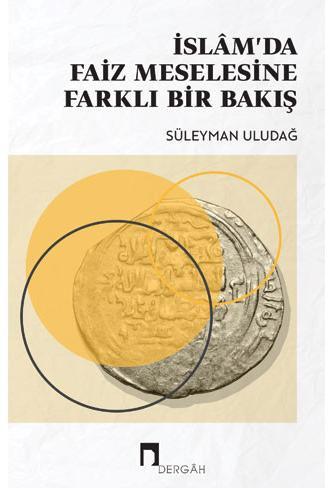
A New Perspective on the Issue of Interest in Islam is a scholarly work by Prof. Dr. Süleyman Uludağ (b. 1937), one of the leading figures in contemporary Turkish intellectual life, examining the issue of interest (riba) in Islam from both historical and contemporary perspectives. Published as part of Dergâh Yayınları’s series “Contemporary Islamic Thought,” the book analyzes the place of interest in Islamic law, its various interpretations, and its effects in the modern world within an academic framework. The first edition was published in April 1988; the book, consisting of 361 pages, has reached its fifth edition as of July 2023.
A New Perspective on the Issue of Interest in Islam begins by drawing attention to the presence of interest practices in the same regions where the Abrahamic religions—Judaism and Christianity—originated and developed, and where Islam emerged. The work emphasizes that Islam explicitly prohibits interest on both moral and legal grounds, while highlighting that the question of “what constitutes interest and what does not” has been a continuously debated issue within Islamic jurisprudence and legal circles throughout history.
The book notes that in the modern world, interest has become one of the fundamental elements of the capitalist economic system, a development that has also influenced economic and intellectual circles in the Islamic world. As a result of this influence, new interpretations have emerged that differ from classical approaches, particularly those that narrowly define interest-based transactions by distinguishing between riba and interest. The work observes that these interpretations have led to the emergence of interest-free financial and banking institutions, and that the theoretical and practical foundations of these institutions have become subjects of debate.
Süleyman Uludağ approaches the issue of riba and interest not merely as a jurisprudential debate but also through its historical development, socio-economic impacts, and contemporary applications. The book comparatively examines the rulings on interest in the Qur’an and Sunnah, early Islamic practices, the views of different schools of thought, and the differences among these views. It also includes discussions on legal and administrative regulations concerning interest during the Ottoman period and on changing approaches to interest within the evolving economic system of the Republican era.
The work further investigates contemporary topics such as Islamic economics, interest-free banking, and finance models based on profit-and-loss sharing, offering readers the opportunity to evaluate the issue of interest from both traditional and modern perspectives. In this regard, the book possesses the character of a research study that illuminates the relationship between Islamic law and current economic debates.
The language and style of Prof. Dr. Süleyman Uludağ’s A New Perspective on the Issue of Interest in Islam combine academic rigor with analytical clarity. The author explains complex juridical and economic concepts such as interest and riba in simple and accessible terms, and evaluates various viewpoints on the subject through comparative analysis and an objective stance. Throughout the text, no praise or persuasive rhetoric is employed; the work adheres strictly to a scientific approach. Süleyman Uludağ’s extensive scholarly积累 and critical analytical skills reinforce the theoretical robustness of the book. In this sense, the work serves as a key reference for researchers in the fields of Islamic law and Islamic economics.

No Discussion Added Yet
Start discussion for "A New Perspective on the Issue of Interest in Islam (Book)" article
Content and Thematic Structure
Language and Style