

This article was automatically translated from the original Turkish version.
+2 More
Type(s) | Academic Research | ||||||||
|---|---|---|---|---|---|---|---|---|---|
Author(s) | İbrahim Kalın | ||||||||
Year of Publication | 2007 | ||||||||
Publisher(s) | İSAM | ||||||||
Number of Pages | 186 | ||||||||
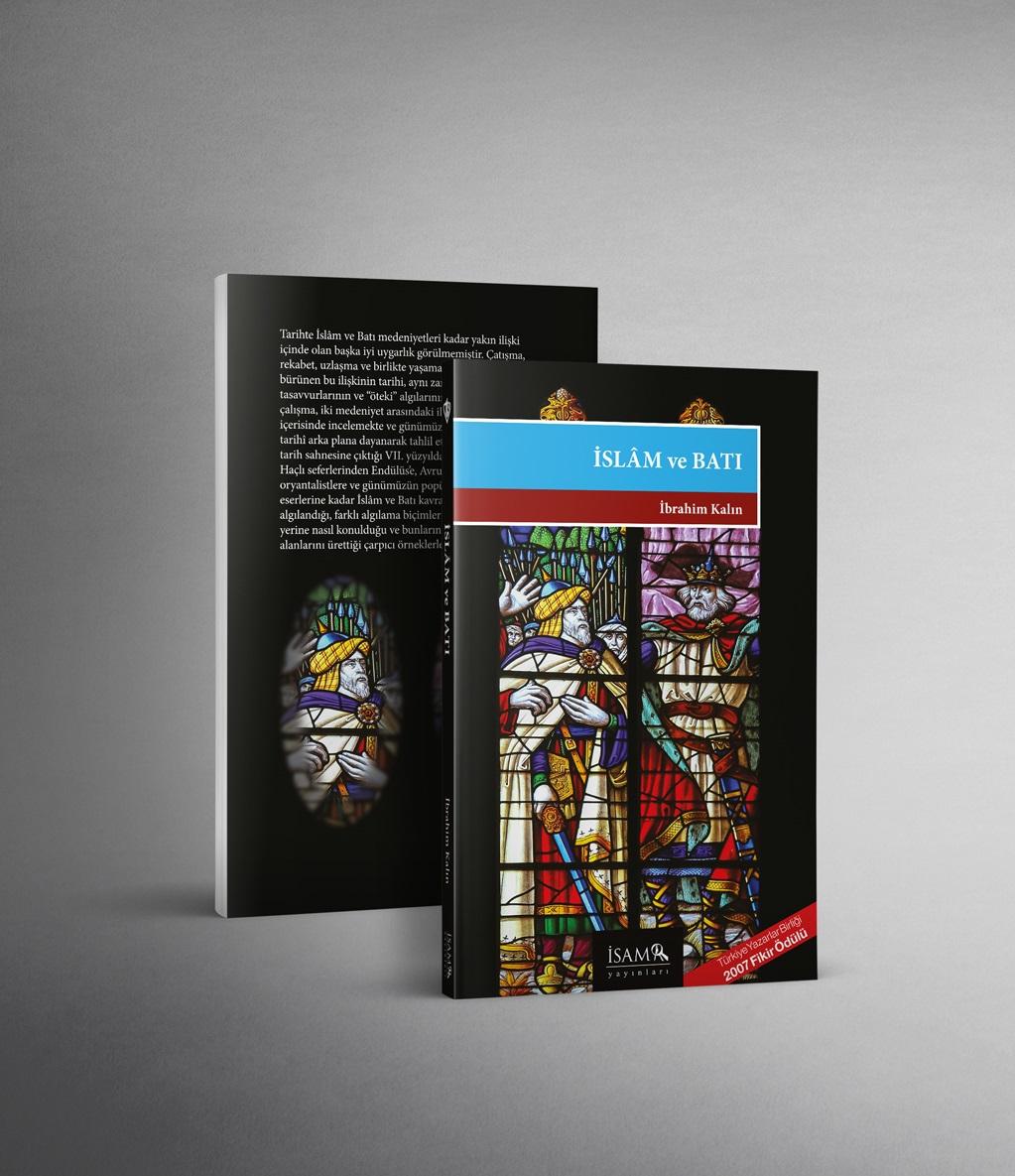
Islam and the West is a work authored by Ibrahim Kalin. The book presents an examination of the historical, cultural, and intellectual dimensions of the relationship between Islamic and Western civilizations. It explains the mutual perceptions and interaction processes between the two civilizations within their historical contexts.
The work focuses on how the West conceptualized Islam and how this perception evolved historically. Within this framework, the origins of Western modes of thought regarding Islamic civilization are analyzed at theological, philosophical, and political levels. The book also investigates how the Islamic world perceives the West, discussing how both civilizations define each other not only through religion but also through cultural and political identities.
To achieve this aim, the author draws on historical sources, orientalist literature, classical philosophical texts, and modern thinkers. In the book, the East-West dichotomy is not treated as a historical problem but as one of the fundamental elements of modern identity formation. The concept of “the West” is not merely a geographical designation but is also understood as an intellectual mode of identity. Islam, within Kalın’s framework, is evaluated both as a religion and as a civilization, defined as a holistic civilization encompassing belief systems, history, culture, art, philosophy, and social structures.
The book explains how the concept of the “Other” in Western thought was shaped through Islam. It historically traces how Islam was portrayed in Western thought first as a theological deviation, then as a political threat, and finally as a structure opposed to modernization. During this process, the institutionalization of Orientalism and the definition of modern European identity through opposition to Islam are identified as critical turning points.
Interaction between the two civilizations is examined through historical processes such as the Crusades, the experience of Al-Andalus, Ottoman-European relations, Enlightenment thought, and modern Orientalism. Kalın emphasizes that Western understandings of Islam have largely been shaped by Western intellectual traditions and historical experiences. This framework demonstrates that the West has not viewed Islam as an external phenomenon but as an integral component in the process of defining its own identity.
The book also addresses the intellectual transformation experienced by the Islamic world in its relations with the West. The prominence of Western superiority in science, technology, and politics during the modern era has generated new debates in Muslim societies concerning identity, self-confidence, and cultural belonging. Within this context, the Western understanding of modernization is comparatively assessed against the historical continuity of Islamic civilization.
The work is written within an academic systematic framework and offers a comprehensive analysis at both historical and conceptual levels. The author employs terminology in a clear, simple, and pedagogical manner, linking abstract concepts to concrete historical contexts. The definitions of concepts, the presentation of historical examples, and the explanation of intellectual frameworks proceed in a unified manner. In this respect, the book is accessible not only to academic audiences but also to general readers interested in intellectual depth.
Altıntaş, Yusuf Ziya. “İslam ve Batı: İbrahim Kalın’ın Medeniyetler Değerlendirmesi.” *Perspektif*, no. 206, February 2012. Accessed November 1, 2025. https://www.academia.edu/33226556/%C4%B0slam_ve_Bat%C4%B1_%C4%B0brahim_Kal%C4%B1n_%C4%B1n_Medeniyetler_De%C4%9Ferlendirmesi
Kalın, İbrahim. *İslam ve Batı.* İstanbul: İSAM Yayınları, 2007. Accessed November 1, 2025. https://www.isam.org.tr/yayin/islam-ve-bati
Kalın, İbrahim. “Batı’daki İslâm Algısının Tarihine Giriş.” *Divan: Disiplinlerarası Çalışmalar Dergisi* 15 (December 2003): 1–51. Accessed November 1, 2025. https://dergipark.org.tr/tr/pub/divan/issue/25944/273321
Type(s) | Academic Research | ||||||||
|---|---|---|---|---|---|---|---|---|---|
Author(s) | İbrahim Kalın | ||||||||
Year of Publication | 2007 | ||||||||
Publisher(s) | İSAM | ||||||||
Number of Pages | 186 | ||||||||
No Discussion Added Yet
Start discussion for "Islam and the West (Book)" article
Aim and Scope
Theoretical Framework and Method
Key Findings and Arguments
Writing Style