


This article was automatically translated from the original Turkish version.
+2 More
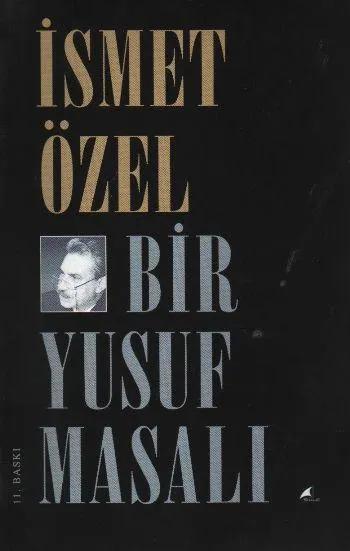
A Tale of Yusuf is the first poetry collection by Turkish poet and writer İsmet Özel, originally published in 2000. Drawing inspiration from the story of Yusuf in the Qur’an, the work presents a synthesis of traditional narrative forms and modern poetic structure. First published by Şule Yayınları, the book is regarded as one of İsmet Özel’s mature-period works. The book consists of seven sections, each presented under the heading “Bâb” as a poetic unity.
A Tale of Yusuf is organized into seven bâbs (sections), each centering on a specific theme or phase from the story of Yusuf and rendered through poetic narrative:
Each section comprises different poems but remains thematically anchored to a central idea.
The central narrative of the work is based on Surah Yusuf, the twelfth chapter of the Qur’an. İsmet Özel does not offer a direct exegesis of the story; instead, he re-creates its content and symbols through poetic language. Stages such as Yusuf’s childhood, his being cast into the well, his sale into slavery, his trial with Züleyha, his imprisonment, and ultimately his attainment of power are linked to various concepts on individual, social, and metaphysical levels.
The language used in the work embodies the characteristic features of İsmet Özel’s poetic vision. Long sentence structures, evocative expression, allusions to classical texts, and a modern poetic rhythm stand out. The poems are composed independently of classical verse forms, constructed with formal freedom without adherence to meter or rhyme.
Osmanlic vocabulary and religious and historical references are used extensively throughout. This enriches the layers of meaning in the text and implies that the reader is expected to possess a certain cultural background.
Themes related to time are prominent throughout the book. Yusuf’s waiting in the well, the years spent in Egypt, and the concepts of patience and surrender are conveyed poetically. The ideas of waiting and transformation are reinforced through rhythmic repetition employed by the poet.
The character of “Şivekâr” in the work represents the figure of Züleyha from the story of Yusuf. However, this character is not merely an object of love; rather, she functions as a metaphor for the trials and worldly temptations faced by the individual. This narrative aligns formally with the tradition of classical Sufi poetry.

No Discussion Added Yet
Start discussion for "A Tale of Yusuf (Book)" article
Structure of the Book
Theme
The Story of Yusuf and Symbolic Narrative
The Poet’s Language and Poetic Technique
Time, Experience, and Waiting
Woman and Love