

This article was automatically translated from the original Turkish version.
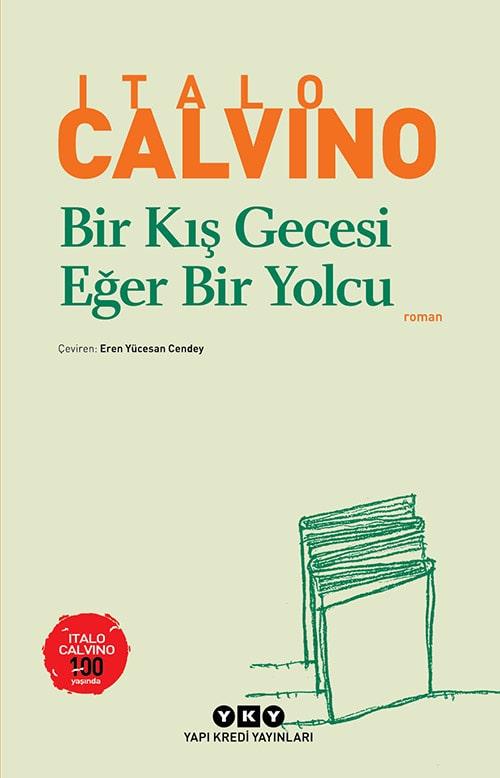
Author(s) | Italo Calvino | ||||||||
|---|---|---|---|---|---|---|---|---|---|
Publisher(s) | YKY Yayınları | ||||||||
Publication Date | 1979 | ||||||||
Type(s) | Novel | ||||||||
Translator(s) | Eren Yücesan Cendey | ||||||||
Number of Pages | 249 | ||||||||
A Winter Night's Tale is a 1979 novel by Italian writer Italo Calvino. This work, belonging to the postmodern literary genre, was translated into Turkish in 2008.
The novel describes a reader who discovers that the book he is reading is incomplete or incorrectly printed, and is consequently led to the beginnings of ten different novels due to various mishaps. As the reader becomes part of the narrative, the relationship between author and reader, the process of reading and writing, and the triangle between work, author, and reader are examined.
The novel begins with a narrator who directly addresses the reader. The story unfolds as the reader discovers that his book is incomplete or incorrectly printed and sets out to find a correct copy. However, each time he is directed to the beginning of a different book. During this process, he reads the openings of ten different novels, none of which are completed. The novel’s central structure is shaped around these unfinished texts, while simultaneously questioning the nature of the act of reading.
The fundamental conflict of the work lies in the reader’s continual encounter with incomplete texts and his inability to reach a final conclusion.
• The Act of Reading and the Reader: By making the reader the subject of the narrative, the novel transforms reading into a literary object.
• Reality and Fiction: The constantly interrupted stories blur the boundaries between fiction and reality. The novel deciphers the reader’s processes of meaning-making.
• Intertextuality: Calvino highlights intertextual relationships by shifting between different narratives and styles.
• Second-Person Narration: The novel is written directly in the second person using the pronoun “you.” This technique makes the reader the immediate subject of the text.
• Novel Within a Novel: The work contains ten different stories, and the continuity of the narrative is deliberately disrupted, breaking the traditional structure of plot.
• Blurring of Fiction and Reality: The author’s inclusion of himself as a character within the narrative renders the boundary between narrator and fiction ambiguous.
Ayyıldız, Bülent. "Italo Calvino: 'From the Death of the Author to the Role of the Reader' or 'On If on a Winter's Night a Traveler.'" *Pasajlar Sosyal Bilimler Dergisi*, no. 2, June 15, 2019. https://www.researchgate.net/publication/342803854_Italo_Calvino_Yazarin_Olumunden_Okurun_Rolune_veya_Bir_Kis_Gecesi_Eger_Bir_Yolcu_Uzerine_Bir_Deneme
Calvino, Italo. *Bir Kış Gecesi Eğer Bir Yolcu.* 26th ed. Istanbul: YKY, January 2025. Accessed March 13, 2025. https://www.yapikrediyayinlari.com.tr/bir-kis-gecesi-eger-bir-yolcu.aspx
Demiryürek, Meral. “Italo Calvino'nun ‘Bir Kış Gecesi Eğer Bir Yolcu’ Romanı Bağlamında İkinci Kişili Anlatıcı ve Bakış Açısı.” In Kurgan Edebiyat’ın Şerif Aktaş’a Armağan, pp. 133–148. Ankara: Kurgan Edebiyat, 2012. https://www.academia.edu/72588255/Italo_Calvinonun_Bir_K%C4%B1%C5%9F_Gecesi_E%C4%9Fer_Bir_Yolcu_Roman%C4%B1_Ba%C4%9Flam%C4%B1nda_%C4%B0kinci_Ki%C5%9Fili_Anlat%C4%B1c%C4%B1_ve_Bak%C4%B1%C5%9F_A%C3%A7%C4%B1s%C4%B1
Demiryürek, Meral. “Kurgusal Metinlerde İkinci Kişili Anlatıcı ve Bakış Açısı”. FSM İlmi Araştırmalar İnsan ve Toplum Bilimleri Dergisi, no. 2 (December 2013): 119–39. https://dergipark.org.tr/tr/pub/fsmia/issue/6474/85554
Çelenk, S. “Calvino Anlatısında ‘Sürgün’ Konumlar”. Kültür ve İletişim, 13, no. 2 (2010): 107–129. https://dergipark.org.tr/tr/pub/kulturveiletisim/issue/64569/985272

Author(s) | Italo Calvino | ||||||||
|---|---|---|---|---|---|---|---|---|---|
Publisher(s) | YKY Yayınları | ||||||||
Publication Date | 1979 | ||||||||
Type(s) | Novel | ||||||||
Translator(s) | Eren Yücesan Cendey | ||||||||
Number of Pages | 249 | ||||||||
No Discussion Added Yet
Start discussion for "A Winter Night If a Traveler (Book)" article
Typologies of the Novel’s Characters
Subject and Main Narrative Structure of the Novel
Themes and Narrative Technique
Themes
Narrative Technique