


This article was automatically translated from the original Turkish version.
+1 More
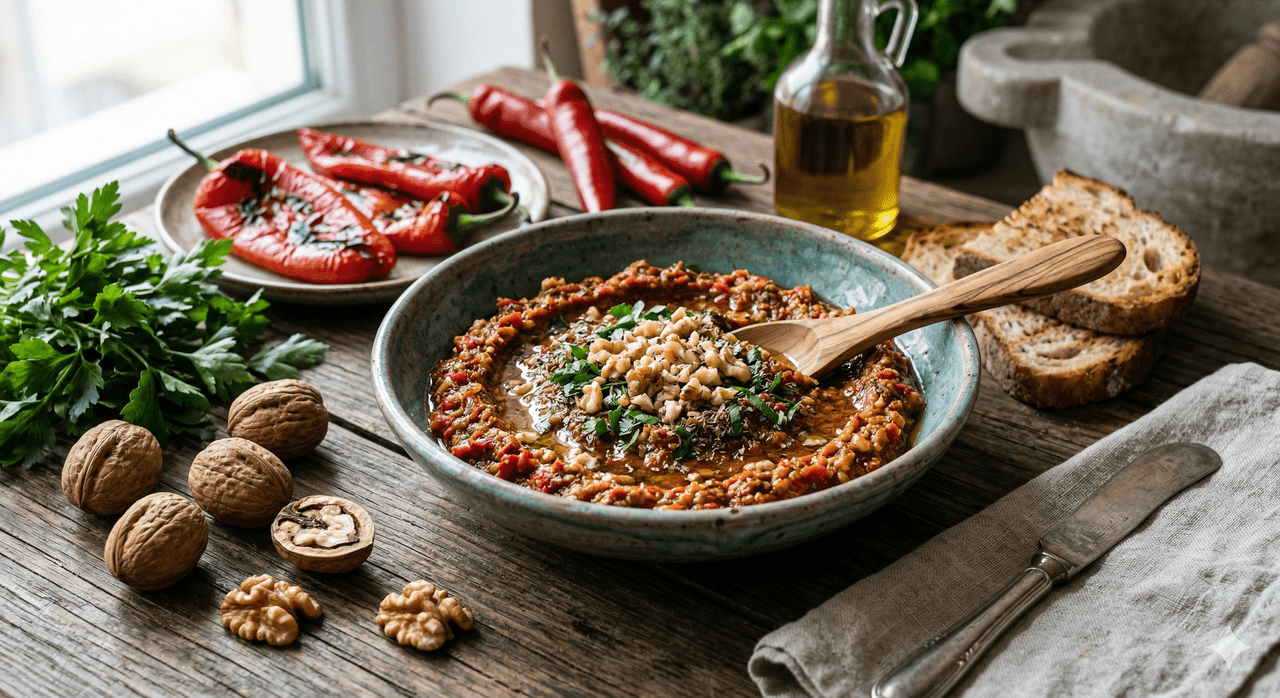
Abaza Acıkası (AI-generated image)
Registration Number | 1544 | ||||||||
|---|---|---|---|---|---|---|---|---|---|
Geographical Indication Type(s) | Mahreç Sign | ||||||||
Usage Type | Breakfast/Meal | ||||||||
Material(s) | 20-25 ml water 30 g oregano 30 g basil 30 g ground dill seed 80-85 g garlic 1 kg tomato paste pepper | ||||||||
A regional sauce and seasoning type found in the culinary culture and winter preparation traditions of Sakarya province, with salça pepper (Capsicum annuum) as its main ingredient. Following an application by the Sakarya Chamber of Commerce and Industry on 24 January 2022, it was registered in the geographical indications register on 20 February 2024 under registration number 1544 as a "Geographical Indication".
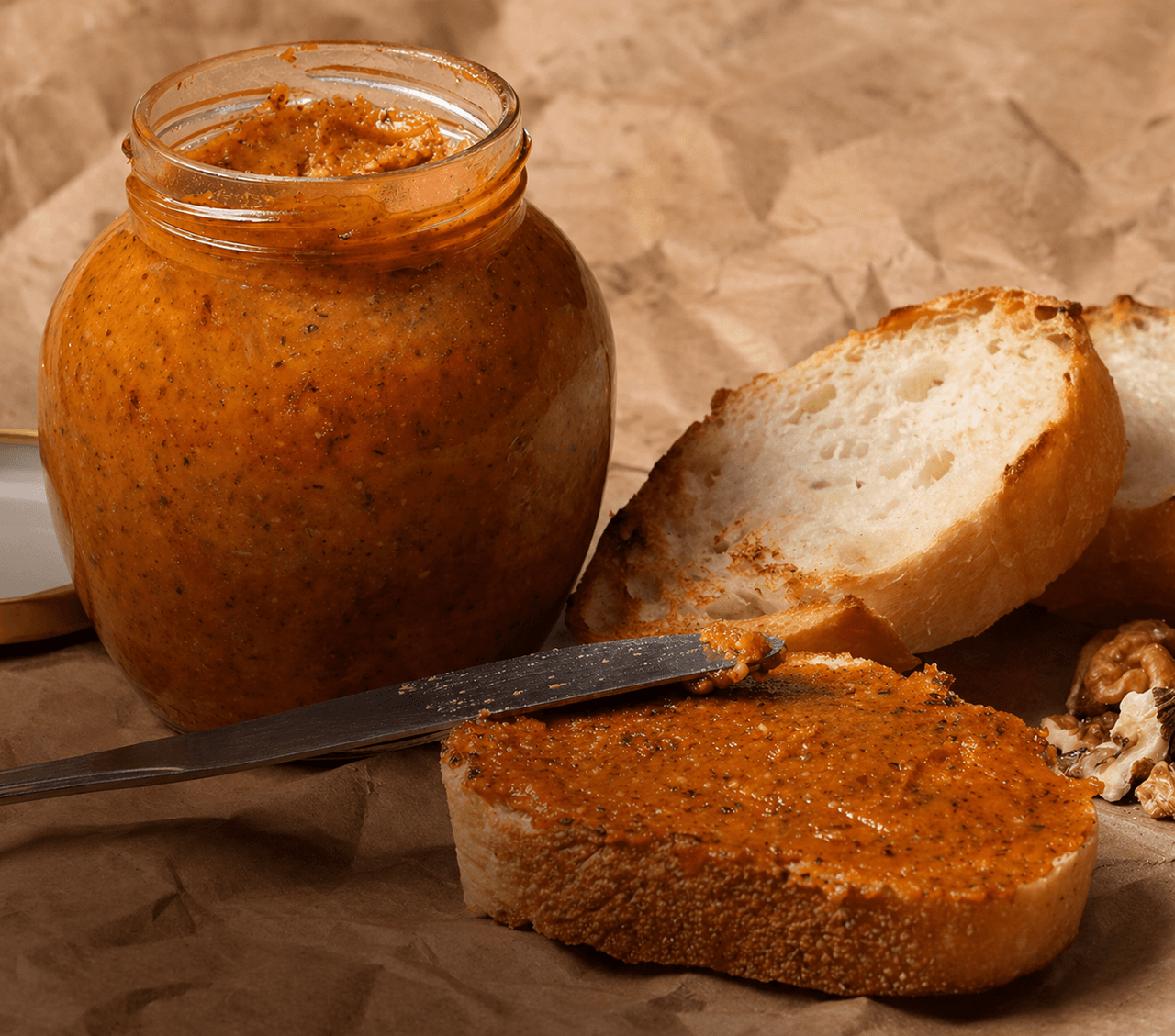
Abaza Acıkası (SATSO)
This product is marketed in two distinct forms: "breakfast-type" and "cooking-type". The key difference between the two is the addition of finely ground walnut kernels to the breakfast-type version, while the cooking-type contains no walnuts. The product has a creamy consistency and is spreadable on bread; its color varies from red to orange depending on the characteristics of the salça pepper used.
The standard ingredients used to produce 1 kilogram of Sakarya Abaza Acıkası are as follows:
The production process begins with washing the salça peppers and removing their seeds. The peppers are placed in a pot with water and boiled at 105–110 °C. After the water reaches boiling point, they are cooked for approximately 80–90 minutes until the skins become easy to separate, then left to rest at room temperature for one hour. The peppers are then drained, their skins peeled, and left to stand on a strainer for 10–15 minutes before being stored at 4–6 °C overnight.
The next day, the peppers are processed into a purée. Today, this is typically done using a meat grinder, but traditionally it is achieved by crushing them between two stones. The large, stationary stone, 50–60 cm in length and suitable for food contact, is called "ahaka", while the handheld oval stone weighing 400–600 grams is called "apıhnıga". The process of pounding the peppers with these stones to produce a homogeneous purée with low fluidity takes 100–120 minutes.
Meanwhile, the garlic cloves are softened with water, peeled, and crushed in a mortar with 5–7 grams of finely broken rock salt. The crushed garlic, along with the spices (caraway, basil, oregano) and the remaining rock salt, are added to the pepper purée and thoroughly mixed. For the breakfast-type version, the walnut kernels are added at this stage. The finished acıka is filled into glass jars, sealed, and stored upside down until cooled.
Sakarya Abaza Acıkası can be stored at a temperature range of 4–6 °C for up to one year. Once the jar lid is opened, the product must be consumed within one week. Compliance with standards is regularly inspected once a year by a three-member inspection body composed of experts from the Sakarya Chamber of Commerce and Industry, the Sakarya Commodity Exchange, and the Sakarya Provincial Directorate of Agriculture and Forestry. The inspection verifies the ingredients used, the production method, and the correct application of the geographical indication emblem.
Accessed November 26, 2025. https://www.aa.com.tr/tr/kultur/ahlatta-acilan-kurslarla-geleneksel-tas-isciligi-yasatiliyor/3116279.
Sakarya Şehir Hafızası. "Sakarya Abaza Acıkası." Accessed March 21, 2026. https://sehirhafizasi.sakarya.edu.tr/sakarya-abaza-acikasi/
TÜRKPATENT "No: 1544 – Mahreç İşareti SAKARYA ABAZA ACIKASI" Accessed

Abaza Acıkası (AI-generated image)
Registration Number | 1544 | ||||||||
|---|---|---|---|---|---|---|---|---|---|
Geographical Indication Type(s) | Mahreç Sign | ||||||||
Usage Type | Breakfast/Meal | ||||||||
Material(s) | 20-25 ml water 30 g oregano 30 g basil 30 g ground dill seed 80-85 g garlic 1 kg tomato paste pepper | ||||||||
Varieties and Physical Characteristics
Ingredients and Mixing Ratios
Production Process and Traditional Tools
Storage Conditions and Inspection