

+2 More

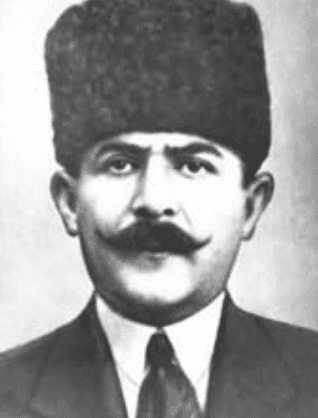
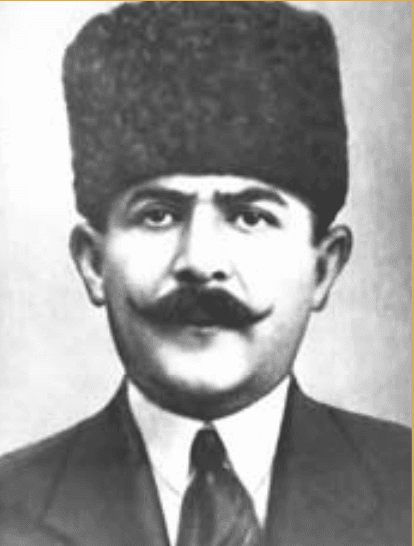
Abdülkadir Kemali (Öğütçü) Bey
Birth-Death | 1889, Osmaniye (Yarpuz) – 21 July 1949, Ankara | ||||||||
|---|---|---|---|---|---|---|---|---|---|
Education | Adana İdadisi Istanbul Law School (1912) Hamidiye Higher Commercial School | ||||||||
Professional Positions | Assistant prosecutor (Siirt, Basra), district governor (Kirmasti), Adana Directorate of Legal Affairs, law practice, judge in Bergama (1939–1940) | ||||||||
Political Positions | Member of Parliament for Kastamonu (1920), Minister of Justice (1920), president of the Pozantı Independence Court (1920–1921), founder of the Ahali Republican Party (1930) | ||||||||
Journalism | Erganun, Şeb-Tap, Mehtap, Mücâhede (1923), Toksöz (1924), Ahali (1930) | ||||||||
Exile | Syria, Lebanon, Palestine (1930–1939) | ||||||||
Award(s) | Independence Medal with red-green ribbon (1925) | ||||||||
Personal Information | Father of five children, father of Orhan Kemal, from Çukurova | ||||||||
Abdülkadir Kemali (Öğütçü) Bey was born in 1889 in the Osmaniye district of Adana and worked as a lawyer politician and journalist during the final years of the Ottoman Empire and the early years of the Republic. Kemali Bey began his education in Adana and graduated from the Istanbul Law School in 1912. He joined the Committee of Union and Progress and published several newspapers. Siirt served as a prosecutor and district governor in Basra and Adana and participated in the Gallipoli Campaign as a reserve officer. In 1920 he was elected as a deputy from Kastamonu in the First Term of the Grand National Assembly of Türkiye and served as president of the Pozantı Independence Court but had limited participation in parliamentary proceedings due to frequent leaves of absence. He proposed legislation and motions on justice education and economics. After his term as deputy he practiced law in Adana and Istanbul and published the newspapers Mücâhede Toksöz and Ahali. He was prosecuted for his oppositional writings and fled to Syria in 1930. He returned to Türkiye in 1939 and served as a judge in Bergama. He joined the Democrat Party in 1946 but ran as an independent candidate and died in Ankara in 1949. He received the Independence Medal with red and green ribbon due to his membership in the Pozantı Independence Court and is also known as the father of the writer Orhan Kemal.
Abdülkadir Kemali Bey was born in 1889 in the Osmaniye (Yarpuz) district of Adana as the son of retired Investigating Judge Bekir Sıtkı Bey and Emine Dilber Hanım. He completed his primary and secondary education at the Ceyhan Primary School and its Intermediate School and his high school education at the Adana High School. He moved to Istanbul and studied for two years at the Hamidiye Higher Commercial School before enrolling in the Istanbul Law School. During this period he joined the Committee of Union and Progress and published the newspapers Erganun Şeb-Tap and Mehtap. While studying law he began his civil service on 1 December 1909 as a clerk at the Registry Office of the Ministry of Justice.
After graduating from the Law School in 1912 Kemali Bey was serving as a clerk at the Istanbul Inquiry Office when he was appointed Assistant Prosecutor at the SiirtBidayet Court on 10 April 1913. He later served as Prosecutor at the Central Bidayet Court of the Basra Vilayet. On 18 April 1914 he resigned from his post after his request for leave was denied. That same year he was called up for military service as a reserve officer following the declaration of mobilization and participated in the Gallipoli Campaign with the rank of second lieutenant. On 24 June 1918 he was appointed to the Directorate of Legal Affairs in Adana and subsequently transferred to the governorship of Kirmasti (Mustafa Kemal Paşa). He was arrested on 2 April 1919 in Bilecik for being held responsible for the killing of 18 Armenians and imprisoned in the Bekirağa Barracks in Istanbul. He was tried by the Bursa Military Court and found not guilty and released. He then applied to the Ministry of Justice and was appointed Prosecutor at the Kastamonu Bidayet Court.
In 1920 Kemali Bey was elected as a deputy from Kastamonu in the First Term of the Grand National Assembly of Türkiye with 143 votes and arrived in Ankara on 10 April 1920. Due to frequent leaves of absence his participation in parliamentary proceedings was limited: he took leave for four months on 11 September 1920 fifteen days on 2 September 1921 three months on 7 July 1921 four months on 6 February 1922 twenty days on 24 August 1922 and one and a half months on 5 February 1923. On 15 June 1920 he was appointed Deputy Undersecretary of the Ministry of Justice but served only briefly. After the Koçgiri Rebellion he was sent by the Grand National Assembly on 20 October 1920 to investigate the region. On 1 November 1920 he was elected as Minister of Justice but resigned on 4 November citing health reasons. On 22 November 1920 he was elected as a member of the Independence Court and served as president of the Pozantı Independence Court from November 1920 to February 1921. He delivered 129 speeches in the Assembly of which 14 were in closed sessions submitted nine legislative proposals seven motions and one motion of censure. His legislative proposals included the amnesty of prisoners sentenced to imprisonment during mobilization the endowment law the government paper money law the establishment of a law school in Ankara a medical school in Kastamonu the creation of murder courts additional articles to the Penal Code the assignment of gendarmerie to prosecutors the liberalization of tobacco cultivation and the sale of bread by weight. His motions covered grain procurement from farmers battlefield pay for workers in military factories the relocation of the Assembly to another city the deployment of Independence Courts to liberated regions a survey of families of deserting soldiers and the minting of coinage at the mint. He submitted a motion of censure regarding the regulations on inflammatory articles published in the newspaper Akşam.
After his term as deputy Kemali Bey returned to Adana and resumed his legal practice. In 1923 he published the newspaper Mücâhede. He was tried at the Adana Bidayet Court on 8 December 1923 for an article published in the paper and acquitted. On 30 August 1924 he launched the newspaper Toksöz in Adana and continued its publication in Istanbul from 15 December 1924. On 30 December 1924 the government shut down Toksöz and Kemali Bey was arrested. On 12 January 1925 he was sentenced to six months in prison by the Fourth Criminal Court of Istanbul. After his release he was again prosecuted for allegedly inciting the Sheikh Said Rebellion through his writings in Toksöz but was acquitted in January 1926. Between 1926 and 1930 he practiced law and engaged in farming in Adana.
Politically Kemali Bey maintained an oppositional stance distancing himself from both the First and Second Groups and acting as if part of a third group. He opposed the Republican People’s Party but did not join the Progressive Republican Party. He planned to establish the Müdâfaa-i Umumiye Fırkası. On 29 September 1930 he founded the Ahali Cumhuriyet Fırkası and launched the newspaper Ahali. The party organized in Adana and Maraş but was rejected in Kastamonu. It did not participate in municipal elections. After the dissolution of the Free Republican Party the party continued to exist but experienced internal divisions. On 8 December 1930 the editor of Ahali Reşit Feyzi Bey was arrested and investigations were initiated against the party secretary Mahmut Bey and Kemali Bey. Kemali Bey was investigated by the Adana Inquiry Court for allegedly using religion for political purposes and inciting the public against the government. He fled to Syria on 17 December 1930. On 21 December 1930 the party and its newspaper were shut down by the government.
Kemali Bey lived in exile in Syria Lebanon and Palestine for nine years. In 1939 he was permitted to return to Türkiye during the presidency of İsmet İnönü and came back in June 1939. On 27 November 1939 he was appointed judge in Bergama but resigned on 23 June 1940. In 1946 he joined the Democrat Party but soon left and ran as an independent candidate from Adana. He practiced law in Istanbul and published articles in the newspaper Büyükada. He conducted studies on religious matters and plants. Kemali Bey was the father of five children and the father of the writer Orhan Kemal. In 1922 the Grand National Assembly presented him with a mace as a victory commemoration. He applied for the Independence Medal on 6 April 1924 due to his membership in the Pozantı Independence Court and received the red and green ribboned Independence Medal on 22 April 1925. The medal is now exhibited at the Orhan Kemal Museum. In 1949 he traveled to Ankara for a hearing at the Court of Cassation fell ill and died at 1947’de Gülhane Hospital. (There are conflicting accounts of the date of death: the Atatürk Encyclopedia and Radikal both list 1949 but the context supports 1949 as the correct year.) He was buried at the Cebeci Asri Cemetery.
Gültekin, Mehmet Nuri. “Bir Aydının Portresi.” *Radikal*, February 3, 2006. https://www.orhankemal.org/links/235.htm.
Yılmaz, Mehmet Serhat. “Abdülkadir Kemali (Öğütçü) Bey (1889-1949).” *Atatürk Ansiklopedisi*. Accessed May 30, 2025. https://ataturkansiklopedisi.gov.tr/detay/1909/Abd%C3%BClkadir-Kemali-(%C3%96%C4%9F%C3%BCt%C3%BC)-Bey-(1889-1949).

Abdülkadir Kemali (Öğütçü) Bey
Birth-Death | 1889, Osmaniye (Yarpuz) – 21 July 1949, Ankara | ||||||||
|---|---|---|---|---|---|---|---|---|---|
Education | Adana İdadisi Istanbul Law School (1912) Hamidiye Higher Commercial School | ||||||||
Professional Positions | Assistant prosecutor (Siirt, Basra), district governor (Kirmasti), Adana Directorate of Legal Affairs, law practice, judge in Bergama (1939–1940) | ||||||||
Political Positions | Member of Parliament for Kastamonu (1920), Minister of Justice (1920), president of the Pozantı Independence Court (1920–1921), founder of the Ahali Republican Party (1930) | ||||||||
Journalism | Erganun, Şeb-Tap, Mehtap, Mücâhede (1923), Toksöz (1924), Ahali (1930) | ||||||||
Exile | Syria, Lebanon, Palestine (1930–1939) | ||||||||
Award(s) | Independence Medal with red-green ribbon (1925) | ||||||||
Personal Information | Father of five children, father of Orhan Kemal, from Çukurova | ||||||||
No Discussion Added Yet
Start discussion for "Abdülkadir Kemali (Öğütçü) Bey" article
Early Life and Education
Legal and Military Career
Deputyship in the Grand National Assembly and the Independence Court
Journalism and Political Opposition
Exile and Final Years