

This article was automatically translated from the original Turkish version.
+2 More
Location | Üsküdar Istanbul | ||||||||
|---|---|---|---|---|---|---|---|---|---|
Construction | 1880–1885 | ||||||||
Original Function | as a hunting lodge by Khedive Ismail Pasha | ||||||||
Possible Architect | Alexandre Vallaury (no definitive documentation) | ||||||||
Floor | 1st Floor Ground Floor Bodrum | ||||||||
Area(s) | Total approximate usable area of 1 860 m² | ||||||||
Current Use | as a social facility by the Koç Community | ||||||||
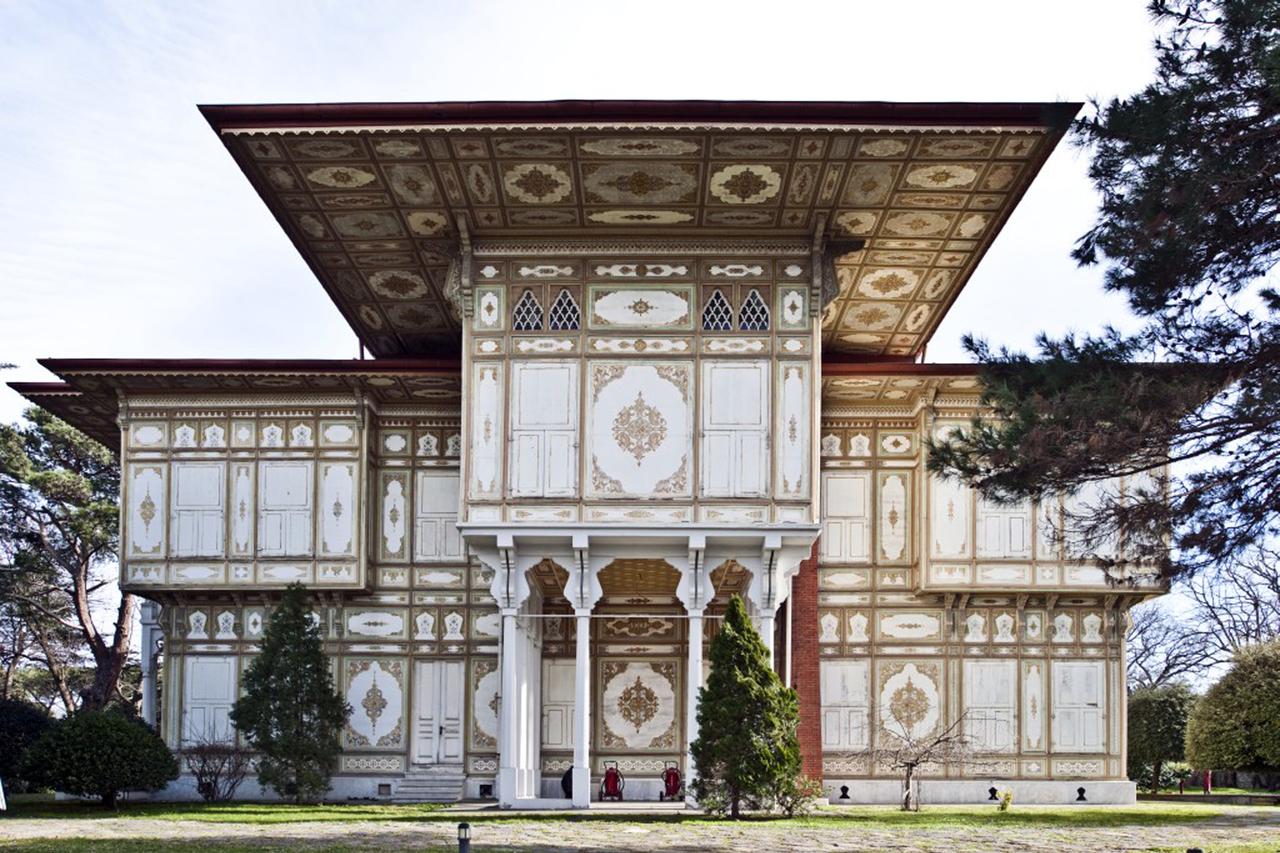
Abdülmecid Efendi Köşkü is a residential and selamlık structure located within the Abdülmecid Efendi Korusu in Istanbul’s Üsküdar district, dating to the late Ottoman period. The köşk was constructed between 1880 and 1885 and from the early 20th century onward served as a gathering place for art and literary circles as well as a venue for various meetings. Today, the köşk and its grove are preserved and revitalized by institutions under the Koç Community umbrella for social and cultural purposes.

Abdülmecid Efendi Köşkü (Istanbul Metropolitan Municipality)
The structure is situated within the Abdülmecid Efendi Korusu in Üsküdar, set within a landscape that has largely retained its original layout. It is noted that during the planting phase of the grove, saplings of various species were imported from European nurseries. The main surviving portion of the köşk today is the selamlık building; the harem and auxiliary units have not survived to the present day.
The köşk was commissioned between 1880 and 1885 by Ismail Pasha, Khedive of Egypt, as a hunting lodge. It is reported that 20,000 and 8,000 Egyptian gold pounds were spent on construction and furnishings respectively. Subsequently, the building was purchased by Sultan Abdülhamid II and allocated for the use of his cousin, Caliph Abdülmecid Efendi. This period marked the köşk’s emergence as a summer residence and a space for Abdülmecid Efendi’s painting activities.

Entrance to Abdülmecid Efendi Köşkü (Istanbul Metropolitan Municipality)
Following the abolition of the caliphate in 1924, the köşk was transferred to the Treasury (Istanbul Defterdarlığı). After the Defterdarlık period, it passed into the ownership of the Kalkavan family and was later acquired by Kazım Taşkent, founder of Yapı Kredi Bank, who preserved it. Today it is used by the Koç Community as a social facility.
The architectural language of the köşk combines elements of Ottoman and Egyptian styles with a 19th-century Baroque interpretation executed in wood. Although no definitive documentation exists regarding its architect, assessments have linked it to Alexandre Vallaury, a prominent architect of the period.
It is suggested that the main entrance portal and the monumental walls on either side may have been planned by Abdülmecid Efendi himself, and that Egyptian stylistic motifs were adopted in the exterior door decorations. Major decorative alterations were carried out in 1903, and in 1987 the wooden wings and eaves of the monumental “Selamlık Gate” were restored and the original calligraphic work repaired.

Abdülmecid Efendi Köşkü and its Grove (Istanbul Metropolitan Municipality)
The existing structure is a three-story selamlık comprising a basement, ground floor, and one upper floor. The total usable area is approximately 1,860 m². The ground floor follows a “orta sofalı” plan, a late example of the traditional Turkish house typology. The entrance opens into a spacious, tiled sofahall; to the left of the sofahall is an eyvan, and to the right is a monumental staircase leading to the upper floor. Four rooms are located at the corners of the sofahall, with a large room opening onto the garden situated at the rear. Behind the two side rooms on the ground floor, service spaces were incorporated.
On the upper floor, the ceiling architecture and decoration of the central sofahall are prominent. Perspective wall paintings enhance the spatial depth of the interior, reinforcing the intention to expand the volume. Three doors from the sofahall open onto a balcony facing Bağlarbaşı; decorative arabesque arches adorn these doors toward the sofahall. The two front rooms at the upper floor corners include the right-hand room, which is adorned with Kütahya tiles and known as the “Çinili Oda” (Tiled Room); a tradition holds that Halife Abdülmecid’s daughter, Dürrüşehvar Sultan, was born here. The left-hand room features a more restrained decorative approach, with wooden panels partially gilded with gold leaf. The volume extending beyond the building’s contour and resting on ten reinforced concrete columns is referred to in descriptions as the “dining room”; above its windows are plastered pediment windows. On the upper floor, facing the rear garden, a slender, elongated balcony overlooks a pool and connects via three doors to an internal sofahall arrangement featuring metal frames and colored glass. Adjacent to the internal sofahall are two rooms: the left one, with its color scheme and door arrangement, evokes the impression of a “lady guests’ reception room”; in the ceiling decoration of the right room, qasidas are arranged in panel form.
On the right wall of the wide and comfortable staircase ascending from the ground floor to the upper floor is a painting signed by H. Avni Lifij and dated 1922. Beneath the staircase is a “koltuk kapısı” (seat door) opening toward the harem side, protected externally by a small canopy. The monumental “Selamlık Gate” at the main entrance bears the Kufic inscription: “There is no victor except Allah.”

Abdülmecid Efendi Köşkü (Seda Nur Korkmaz)
The rear room on the ground floor features a tiled floor and two focal elements in its corners: a marble fountain and a tiled fireplace. Above the fountain is the tugra of Sultan Mehmed Reşad and beneath it the inscription “May my Sultan live long”; on the tiled panel is the verse from Surah Al-Anbiya: “We made every living thing from water.” On the tiled section facing the entrance, an interpretive inscription reads: “O my Lord, protect us from the fire (Hell), grant us deliverance, and place us among the righteous in Paradise.” In one corner of the tiles, the maker’s inscription is recorded: “Muhammed Emin, son of Telamiz-i Muhammed Hilmi, Kütahya, 1321.” The upper floor ceiling decoration includes examples that reflect the building’s most classical decorative sensibility in terms of color and composition.
The information that “rare” tree species were imported from European nurseries for the grove’s planting aligns with the late 19th- and early 20th-century landscape design practices of the period. At the time of its construction, the köşk was situated within a grove of approximately two hundred dönüms.
During Abdülmecid Efendi’s time, the köşk served not only as a hunting and leisure retreat but also as a space for painting and artistic gatherings; after the Second Constitutional Era, it also hosted political meetings. It is reported that Abdülmecid Efendi regularly met with artists and that musical and poetic evenings were organized in the salon near the pool. In 1916, a luncheon was held at the köşk to celebrate the publication of Abdülhak Hâmid’s play Finten, attended by approximately sixty poets and artists, marking another significant cultural event in the köşk’s history.
In 1987, the wooden wings and eaves of the monumental Selamlık Gate were restored and the original calligraphic work repaired to preserve the structure. Throughout the 20th century, the köşk changed hands multiple times; from the 1970s onward, it entered a preservation process associated with Yapı Kredi; in 2011, it was acquired by the Koç Holding Pension and Assistance Foundation and formally protected. Today, the köşk and its grove are used for social and cultural purposes under the Koç Community.
Culture Inventory. "Abdülmecit Efendi Köşkü." Accessed October 3, 2025. https://kulturenvanteri.com/yer/abdulmecit-efendi-kosku/#17.19/41.028311/29.041397
Istanbul Metropolitan Municipality. “Abdülmecit Efendi Köşkü.” *Tarihî Eserler Bilgi Sistemi.* Accessed October 3, 2025. https://historicalartifacts.ibb.gov.tr/Detail.aspx?Id=112&lng=tr-TR
Korkmaz, Seda Nur. “Abdülmecid Efendi Pavilion, Traditional Ottoman Mansion in Istanbul, Turkey.” Pexels. Accessed October 3, 2025. https://www.pexels.com/photo/abdulmecid-efendi-pavillion-traditional-ottoman-mansion-in-istanbul-turkey-14184479/
Koç Holding Emekli ve Yardım Sandığı Vakfı. "Köşk." Accessed October 3, 2025. https://www.khev.org.tr/tr/kosk-12
Koç Holding Emekli ve Yardım Sandığı Vakfı. *Abdülmecit Efendi Köşkü.* İstanbul: KHEV Yayınları. Accessed October 3, 2025. https://www.khev.org.tr/content/docs/Abdulmecit_Efendi_Kosku_TR.pdf
Üsküdar Municipality. "Şehzade Abdülmecit Efendi Köşkü." Accessed October 3, 2025. https://www.uskudar.bel.tr/tr/main/erehber/saraylar-kasirlar-koskler/47/sehzade-abdulmecit-efendi-kosku/895

Location | Üsküdar Istanbul | ||||||||
|---|---|---|---|---|---|---|---|---|---|
Construction | 1880–1885 | ||||||||
Original Function | as a hunting lodge by Khedive Ismail Pasha | ||||||||
Possible Architect | Alexandre Vallaury (no definitive documentation) | ||||||||
Floor | 1st Floor Ground Floor Bodrum | ||||||||
Area(s) | Total approximate usable area of 1 860 m² | ||||||||
Current Use | as a social facility by the Koç Community | ||||||||
No Discussion Added Yet
Start discussion for "Abdülmecit Efendi Pavilion" article
Location and Scope
Construction Process and Early Period
Ownership and Usage Changes
Architectural Style and Possible Architect
Plan Scheme and Floors
Staircase, Doors, and Inscriptions
Interior Furnishings and Decorative Program
Grove and Landscape Design
Artistic and Social Functions
Preservation, Restoration, and Current Use