


This article was automatically translated from the original Turkish version.
+1 More
Actinium
Periodic Table | 7 | ||||||||
|---|---|---|---|---|---|---|---|---|---|
Chemical Symbol | Ac | ||||||||
Atomic Number | 89 | ||||||||
Group | Actinides (or sometimes Group 3) | ||||||||
Atomic Weight | (227) g/mol (for the most stable isotope, ²²⁷Ac) | ||||||||
Electron Configuration | [Rn] 6d¹7s² | ||||||||
Density | 10 g/cm³ | ||||||||
Melting Point | 1050 °C | ||||||||
Boiling Point | ~3200 °C | ||||||||
Atomic Radius | ~247 pm | ||||||||
Electronegativity | 1.1 | ||||||||
Electron Affinity | 33.77 kJ/mol | ||||||||
Important Isotopes | ²²⁷Ac (Half-life: 21.77 years) | ||||||||
Year of Discovery(ies) | 1899 | ||||||||
Discoverer(s) | Andrew Debierne | ||||||||
Actinium is a silvery-white, soft, and highly radioactive metal with atomic number 89 and serves as the starting point of the actinium series. It was discovered in 1899 by André-Louis Debierne and derives its name from the Greek word "actinos," meaning "ray."
Actinium (Ac) is located in the seventh period of the periodic table and is generally regarded as the first element of the actinium series. Its electron configuration is [Rn] 6d¹7s², which determines its chemical behavior. This metal is solid at room temperature and has a density of approximately 10 g/cm³. It is an extremely radioactive element.
Actinium was discovered in 1899 by French chemist André-Louis Debierne in Paris. After isolating radium and polonium from uranium ores studied by Marie and Pierre Curie, Debierne identified the presence of a new element in the residual materials.

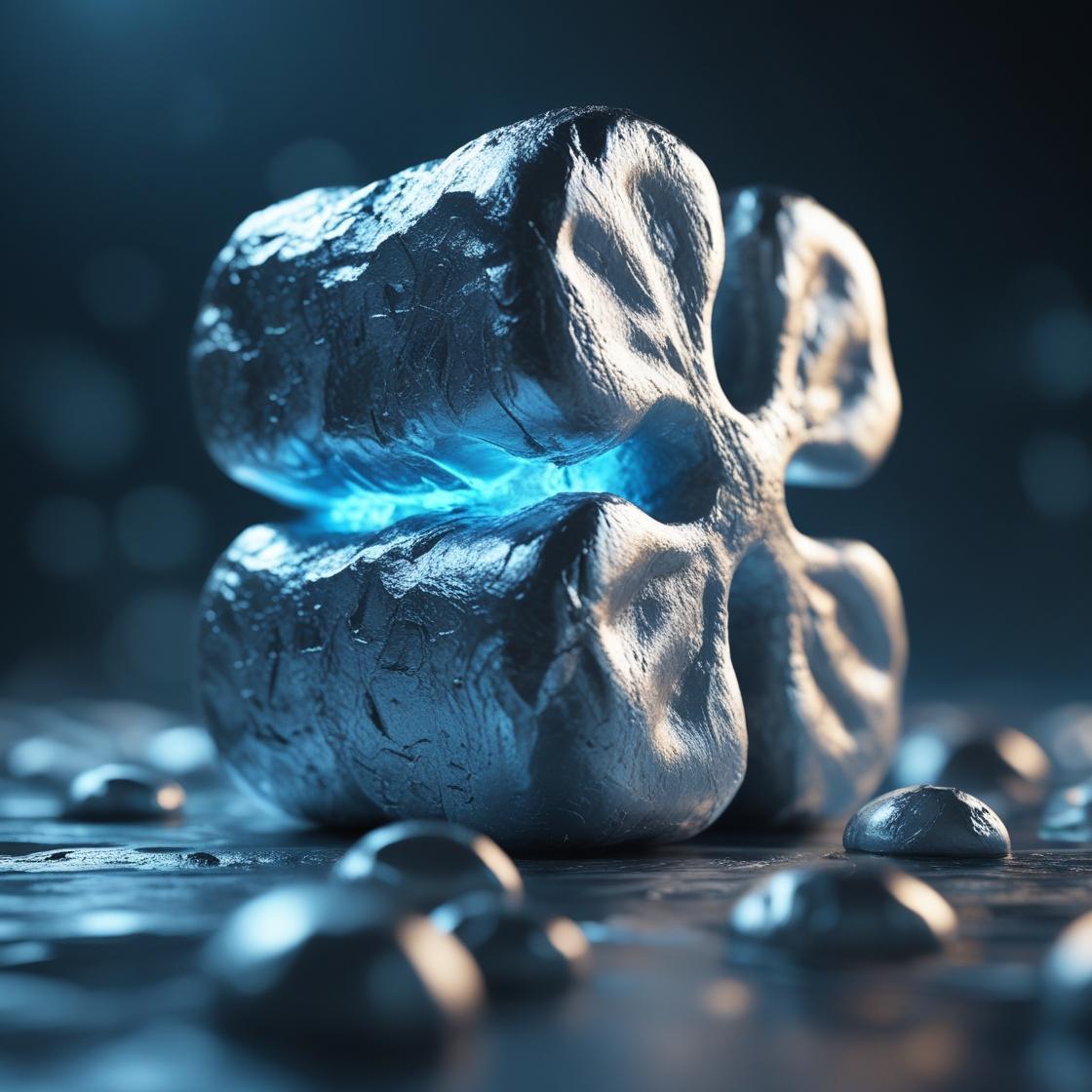
Actinium (Generated by Artificial Intelligence.)
The name of the element actinium is derived from the Greek word "actinos" (ακτίς or ακτίνος), meaning "ray" or "radiation." This naming reflects the element's intense radioactivity and its emission of rays.
Actinium occurs naturally in trace amounts in uranium and thorium ores. It appears as an intermediate product in the decay chains of uranium-235 and, to a lesser extent, uranium-238. For commercial production, it is typically synthesized by neutron bombardment of radium-226 isotopes in nuclear reactors.
Actinium is a soft, silvery-white metal. Its melting point is 1050 °C and its boiling point is approximately 3200 °C. The atomic radius is about 247 pm and its electronegativity is 1.1. Its electron affinity is reported as 33.77 kJ/mol. Chemically, actinium is highly reactive and exhibits properties similar to lanthanum. It rapidly oxidizes in air to form a white layer of actinium oxide (Ac₂O₃). The most common oxidation state is +3. In the dark, it emits a faint blue glow due to its intense radioactivity.
Actinium has many known isotopes, all of which are radioactive. The most important and longest-lived isotope is actinium-227 (²²⁷Ac), with a half-life of 21.77 years. It decays by emitting both beta and alpha particles. The majority of naturally occurring actinium consists of this isotope.
Due to its rarity and high radioactivity, actinium has very limited commercial applications.
Actinium has no known biological role. Due to its high radioactivity, it is extremely hazardous and toxic. If ingested, it accumulates primarily in bones and the liver, leading to severe health problems and a high risk of cancer. When handling actinium or its compounds, strict radiation safety protocols are mandatory, including specialized ventilated and shielded work areas such as glove boxes and protective equipment to prevent contamination and exposure.
National Center for Biotechnology Information. "Thorium." *PubChem Compound Database CID 23965*. Accessed May 31, 2025. https://pubchem.ncbi.nlm.nih.gov/compound/23965
TÜBİTAK Bilim Genç. "Aktinyum." *Bilim Genç*. Accessed May 31, 2025. https://bilimgenc.tubitak.gov.tr/periyodik-tablo/aktinyum

Actinium
Periodic Table | 7 | ||||||||
|---|---|---|---|---|---|---|---|---|---|
Chemical Symbol | Ac | ||||||||
Atomic Number | 89 | ||||||||
Group | Actinides (or sometimes Group 3) | ||||||||
Atomic Weight | (227) g/mol (for the most stable isotope, ²²⁷Ac) | ||||||||
Electron Configuration | [Rn] 6d¹7s² | ||||||||
Density | 10 g/cm³ | ||||||||
Melting Point | 1050 °C | ||||||||
Boiling Point | ~3200 °C | ||||||||
Atomic Radius | ~247 pm | ||||||||
Electronegativity | 1.1 | ||||||||
Electron Affinity | 33.77 kJ/mol | ||||||||
Important Isotopes | ²²⁷Ac (Half-life: 21.77 years) | ||||||||
Year of Discovery(ies) | 1899 | ||||||||
Discoverer(s) | Andrew Debierne | ||||||||
Classification and Fundamental Properties
Discovery
Etimology
Natural Occurrence
Physical and Chemical Properties
Isotopes
Applications
Biological Role and Precautions