


This article was automatically translated from the original Turkish version.
+1 More
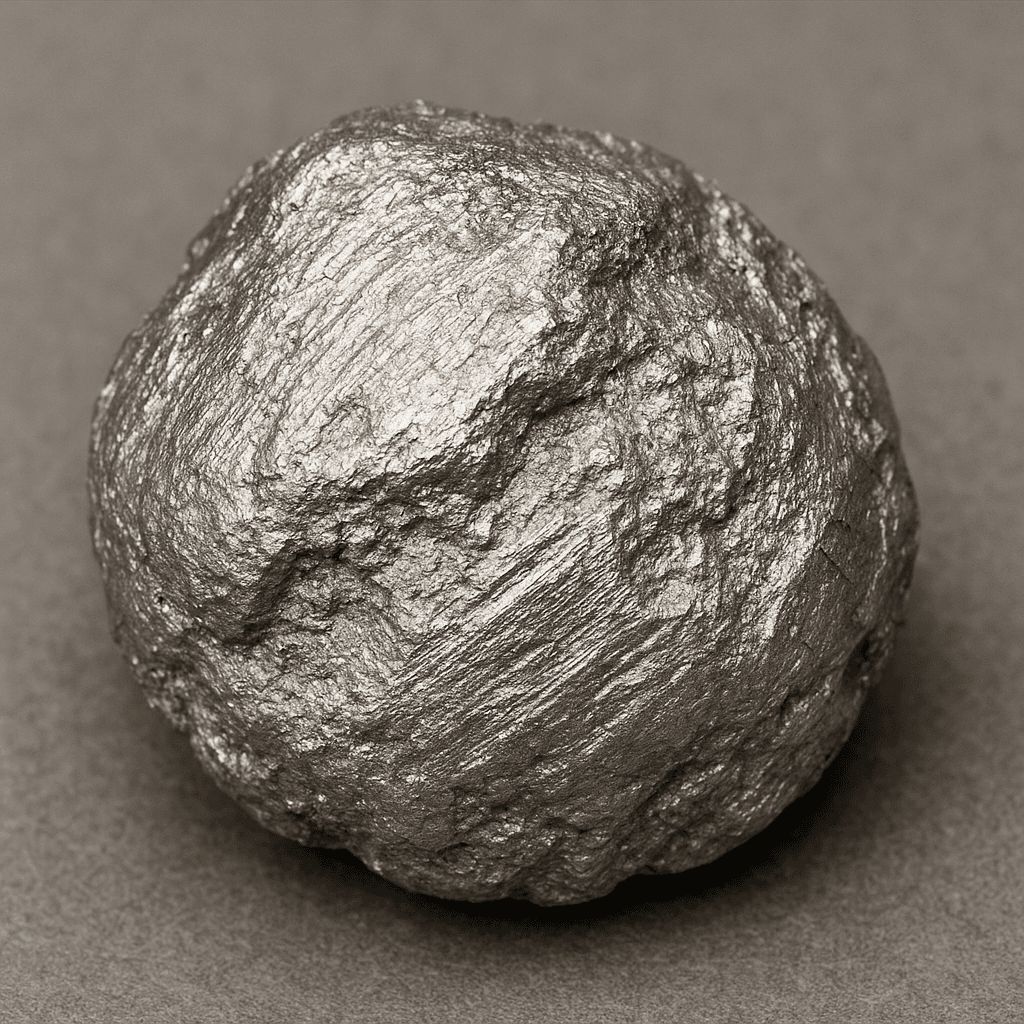
Radium (Ra)
Periodic Table | 7 | ||||||||
|---|---|---|---|---|---|---|---|---|---|
Chemical Symbol | Ra | ||||||||
Atomic Number | 88 | ||||||||
Group | 2 | ||||||||
Density | 5 g/cm³ | ||||||||
Electron Configuration | [Rn]7s² | ||||||||
Melting Point | 696 °C | ||||||||
Boiling Point | 1500 °C (or 1140 °C) | ||||||||
Atomic Radius | 2.83 Å | ||||||||
Electron Affinity | 9.65 kJ/mol | ||||||||
Electronegativity | 0.9 (Pauling) | ||||||||
Appearance | Bright, silvery-white metal | ||||||||
Most Important Isotope | ²²⁶Ra (Half-life: ~1600 years) | ||||||||
Year of Discovery | 1898 | ||||||||
Natural Occurrence | In trace amounts in uranium ores | ||||||||
Discoverer(s) | Marie Curie Pierre Curie | ||||||||
Radium is a bright, silvery, soft and radioactive metallic element with atomic number 88 and chemical symbol Ra, located in the alkaline earth metals group of the periodic table.
Radium is an alkaline earth metal found in group 2A (group 2) of the seventh period of the periodic table. Its electron configuration is [Rn]7s², with two valence electrons in its outermost shell. It tends to readily lose these electrons to form +2 ions (Ra²⁺) in its compounds. Chemically, it resembles other elements in its group (calcium, strontium, barium), but is far more radioactive. At room temperature, it exists in the solid state. Its high radioactivity makes studying its properties difficult and severely limits its applications.
Radium was discovered in 1898 by scientists Marie Curie and Pierre Curie, with contributions from Gustav Bémont, in Paris. The Curies noticed that uranium ores, particularly uraninite or pitchblende, emitted more radioactivity than could be explained by uranium alone, leading them to hypothesize the existence of other, more radioactive elements.
After processing several tons of uranium ore and employing chemical separation techniques, they successfully isolated polonium first, followed by minute quantities of radium salts (radium chloride). Metallic radium was first obtained in 1910 by Marie Curie and André-Louis Debierne through the electrolysis of radium chloride using a mercury cathode, followed by distillation of the mercury.
Radium (Generated by Artificial Intelligence.)
The name radium was given to the element due to its intense radioactive emission observed at the time of its discovery. It is derived from the Latin word "radius", meaning "ray". This naming emphasizes the element’s inherent ability to spontaneously emit energy and particles (radioactivity).
Radium’s electron configuration is [Rn]7s². It has a density of 5 g/cm³, a melting point of 696 °C, and a boiling point reported in some sources as 1140 °C, though 1500 °C is more commonly accepted in the literature. With an atomic radius of 2.83 Å, its electron affinity is 9.65 kJ/mol and its electronegativity is 0.9 on the Pauling scale. Radium is a bright, silvery-white metal that exists in the solid state at room temperature.
It is a highly reactive element; upon exposure to air, it rapidly oxidizes and darkens on the surface. It reacts vigorously with water and acids, releasing hydrogen gas. Radium is reported to be more volatile than barium and, as a radioactive element, decays by emitting alpha, beta, and gamma radiation.
Radium occurs in trace amounts in all uranium ores because it is a product in the radioactive decay chain of uranium. It can also be obtained as a byproduct during uranium enrichment. Today, radium is also extracted from spent nuclear fuel rods from nuclear reactors. Uranium mines in the Democratic Republic of the Congo and Canada are among the richest sources of radium. Annual global production is very low, estimated to be less than 100 grams.
Radium has many known isotopes, all of which are radioactive. The most stable and most common isotope is ²²⁶Ra. Radium-226 (²²⁶Ra) has a half-life of approximately 1600 years and decays by alpha emission into radon-222 gas. Historically, this isotope was used in numerous applications.
Due to its radioactivity, radium has limited applications, and many of its historical uses have been abandoned due to health risks.
Radium has no known biological role. On the contrary, due to its high radioactivity, it is highly hazardous and toxic to living organisms. Chemically similar to calcium, when ingested, it accumulates in bones. Radium deposited in bone tissue continuously emits radiation, damaging bone marrow and potentially causing leukemia and other bone cancers. The radon gas emitted by radium also increases the risk of lung cancer when inhaled. Therefore, strict safety measures and radiation protection protocols are essential when working with radium and its compounds.
National Center for Biotechnology Information. "Radium." *PubChem Compound Database CID 6328144*. Accessed May 30, 2025. https://pubchem.ncbi.nlm.nih.gov/compound/6328144
TÜBİTAK Bilim Genç. "Radyum." *Bilim Genç*. Accessed May 30, 2025. https://bilimgenc.tubitak.gov.tr/periyodik-tablo/radyum


Radium (Ra)
Periodic Table | 7 | ||||||||
|---|---|---|---|---|---|---|---|---|---|
Chemical Symbol | Ra | ||||||||
Atomic Number | 88 | ||||||||
Group | 2 | ||||||||
Density | 5 g/cm³ | ||||||||
Electron Configuration | [Rn]7s² | ||||||||
Melting Point | 696 °C | ||||||||
Boiling Point | 1500 °C (or 1140 °C) | ||||||||
Atomic Radius | 2.83 Å | ||||||||
Electron Affinity | 9.65 kJ/mol | ||||||||
Electronegativity | 0.9 (Pauling) | ||||||||
Appearance | Bright, silvery-white metal | ||||||||
Most Important Isotope | ²²⁶Ra (Half-life: ~1600 years) | ||||||||
Year of Discovery | 1898 | ||||||||
Natural Occurrence | In trace amounts in uranium ores | ||||||||
Discoverer(s) | Marie Curie Pierre Curie | ||||||||
Classification and Fundamental Properties
Discovery
Etimology
Physical and Chemical Properties
Natural Occurrence and Production
Isotopes
Applications
Biological Role and Effects