

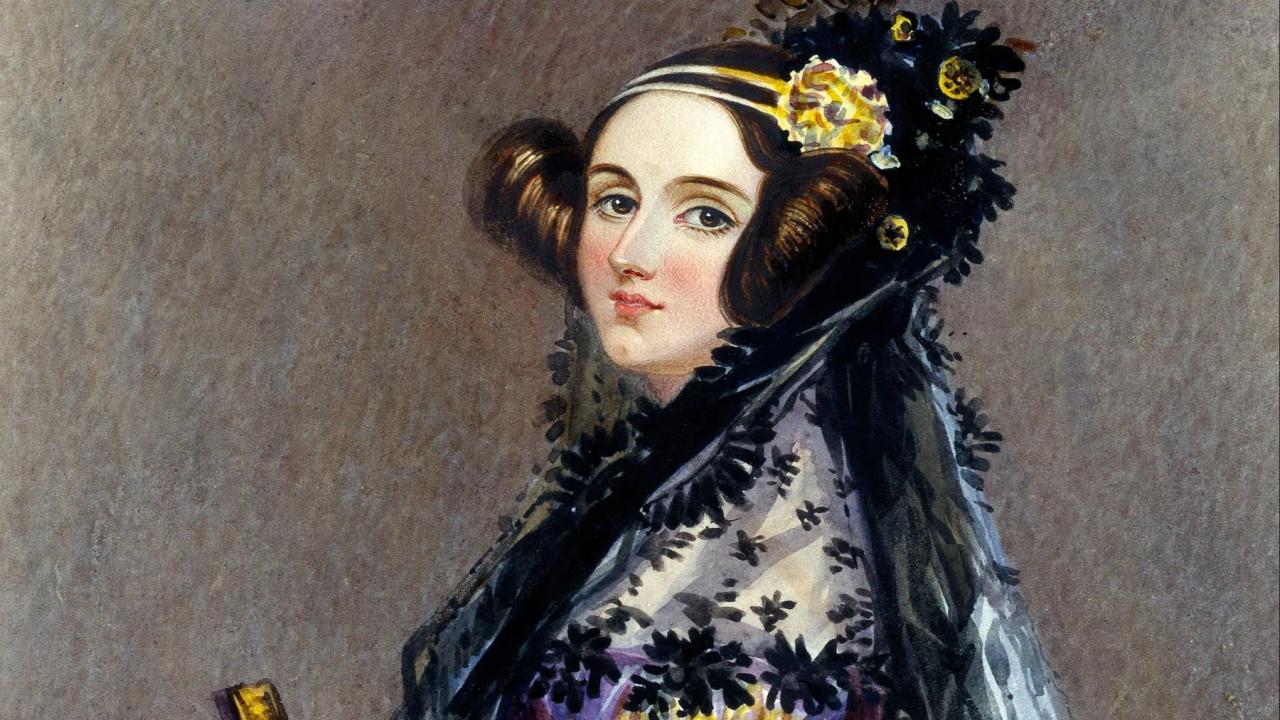

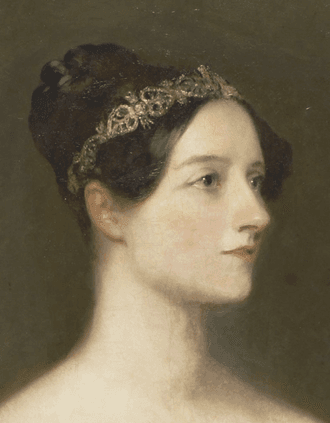
Ada Lovelace
Doğum tarihi | 1815-12-10 | ||||||||
|---|---|---|---|---|---|---|---|---|---|
Eş | 1st Earl of Lovelace William King-Noel | ||||||||
Ölüm tarihi | 1852-11-27 | ||||||||
Babası | George Byron, 6th Baron Byron | ||||||||
Annesi | Anne Isabella Milbanke | ||||||||
Çocuk | 2nd Earl of Lovelace Ralph King-Milbanke 15th Baroness Wentworth Anne Blunt Viscount Ockham Byron King-Noel | ||||||||
Island Lovelace is one of the pioneering figures who laid the foundations of computer science. Born in London in October 1815, Lovelace was the daughter of the poet Lord Byron and the mathematician Mother Isabella Byron. Her father abandoned the family shortly after Ada's birth, and she was raised solely by her mother.
Because her mother did not want Ada to develop a strong interest in poetry and literature, she ensured that Ada received intensive education in mathematics and science. Although it was uncommon for women to engage with science and mathematics at the time, Ada showed great interest and curiosity in these fields. From an early age, she asked inquisitive questions about natural sciences and engineering, striving to understand how different machines worked.

At a young age, Ada Lovelace met Charles Babbage, one of the leading mathematicians of the era. Babbage was working on devices considered precursors to modern computers, which he called the "Difference Engine" and the "Analytical Engine." Ada became deeply interested in Babbage's work and developed a close scientific relationship with him.
In 1833, Lovelace examined Babbage's design for the "Analytical Engine" and realized that the machine could do more than just perform calculations—it could carry out complex operations. Her forward-thinking understanding was among the first to demonstrate that computers could evolve beyond mere calculating devices into versatile programmable machines.
Between 1842 and 1843, Ada Lovelace translated into English an article on the Analytical Engine written by the Italian mathematician Luigi Federico Menabrea. However, she did not limit herself to translation; she added extensive and detailed notes on the machine. These notes included an algorithm explaining how the Analytical Engine could be programmed to perform a specific sequence of operations. This algorithm is recognized as the first computer program, laying the groundwork for modern programming languages.
In her notes, Lovelace did not merely explain the algorithm; she also proposed that the machine could be applied to fields such as music and art. This insight is regarded as one of the earliest theoretical approaches to the use of computers in visual arts, music, and other creative domains.
Ada Lovelace died on 27 November 1852 at the age of 36 from uterine cancer. Despite her short life, her contributions to science and technology continue to serve as a major source of inspiration today.
Her work is recognized as one of the foundational pillars of computer science, and she is celebrated as a key figure in strengthening the role of women in STEM (Science, Technology, Engineering, and Mathematics). A programming language developed in the 1980s, named "Ada," was named in her honor.
Today, Ada Lovelace is remembered as one of the pioneers of computer science, and each year in October, events are held under the name "Ada Lovelace Day" to celebrate women's contributions to science and technology. Her vision continues to be a powerful source of inspiration in the world of technology.

Ada Lovelace
Doğum tarihi | 1815-12-10 | ||||||||
|---|---|---|---|---|---|---|---|---|---|
Eş | 1st Earl of Lovelace William King-Noel | ||||||||
Ölüm tarihi | 1852-11-27 | ||||||||
Babası | George Byron, 6th Baron Byron | ||||||||
Annesi | Anne Isabella Milbanke | ||||||||
Çocuk | 2nd Earl of Lovelace Ralph King-Milbanke 15th Baroness Wentworth Anne Blunt Viscount Ockham Byron King-Noel | ||||||||
No Discussion Added Yet
Start discussion for "Ada Lovelace: The First Computer Programmer" article
Childhood and Education
Meeting and Collaboration with Charles Babbage
The First Computer Program
Scientific Legacy and Influence