This article was automatically translated from the original Turkish version.
+2 More
Registration Number | 1576 | ||||||||
|---|---|---|---|---|---|---|---|---|---|
Registration Date | 17.04.2024 | ||||||||
Application Number | C2021/000327 | ||||||||
Application Date | 25.08.2021 | ||||||||
Name of the Geographical Indication | Adana Şalvarı | ||||||||
Product / Product Group(s) | Handicraft Products Other Than Şalvar / Carpets Kilims and Textiles | ||||||||
Type of Geographical Indication | Certification Mark | ||||||||
Applicant/Registrant(s) | Yüreğir Chamber of Agriculture | ||||||||
Address of the Registrant | Sinanpaşa Mah. Kışla Cad. Yüreğir ADANA | ||||||||
Geographical Boundary | Adana Province | ||||||||
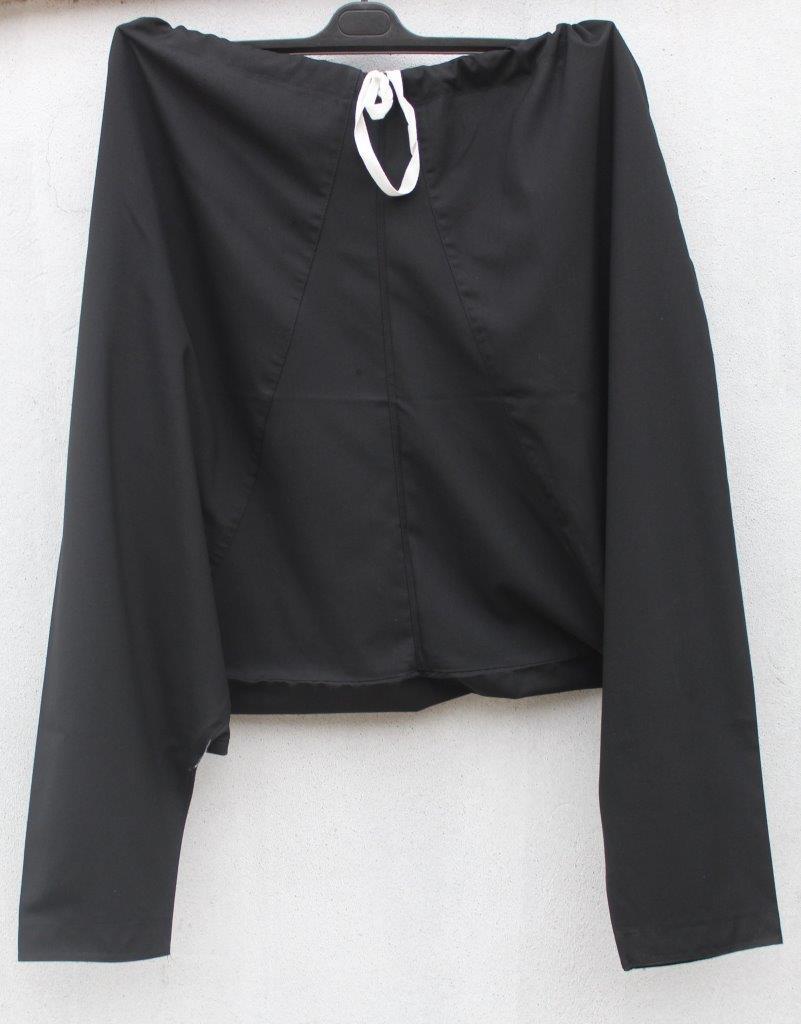
Adana şalvarı is a traditional garment worn by men in Adana Province, characterized by a gathered waist, low crotch, and extended leg sections known as “peyik.” Made from dark-colored cotton or polyviscose fabrics such as black, smoke, or navy, these trousers were originally preferred by agricultural workers but have since been adopted for special occasions such as weddings, holidays, henna ceremonies, and folk dances. A thin, long tie called “don bağı” is attached at the waist to adjust the fit to the wearer’s body. The peyik extensions, which extend down to the knee, provide enhanced mobility and functional volume.
Adana şalvarı is sewn to cover the legs from waist to ankle. Production typically uses dark-colored cotton or polyviscose fabrics such as black, navy, or smoke, which align with local preferences for durability and aesthetics. Key distinguishing structural elements include:
Although traditionally worn by agricultural workers, Adana şalvarı has gradually become part of everyday attire and is now commonly worn during weddings, holidays, henna ceremonies, folk dances, and daily life. Its presence in regional narratives, songs, and oral culture has established a strong geographic identity.
Adana şalvarı is produced using traditional sewing techniques and a practical cutting method. Four distinct patterns are available for different body types (S, M, L, XL). Since the waist is adjusted via the waist tie, the most critical measurement is the “yan boy,” which refers to the length from the side of the waist to the heel.
A total of four meters of fabric is cut as follows:
The cut pieces are assembled using industrial sewing or overlock machines. The two front peyiks are sewn approximately 32–36 cm below the waistline, while the back peyik is attached at the center of the front peyik. A space is left at the waist for the waist tie. Two side pockets, known as “fleto cep,” are added approximately 3–4 cm below the waistline on each side.
Four different pattern sizes (numbered 1, 2, 3, and 4) are used for Adana şalvarı. These patterns are differentiated by the length of the front and back body panels (yan boy) and the width and length of the front and back peyik sections. The waist width remains fixed; adjustments are made via the waist tie (don bağı), so the primary differences between patterns lie in the yan boy and peyik dimensions.
These measurements serve as the basis for producing trousers suited to different body types, ensuring the garment retains its traditional form while maintaining comfort and functionality.
The don bağı is traditionally woven from a type of cotton thread called “tırlık.” It can be produced in two distinct colors:
The karaboya yellow color is achieved through natural dyeing using pomegranate rind. The tırlık threads are boiled together with the rind, soaked in the mixture for several days, and then buried in “zibil” (cow dung) to dry. This process ensures natural fixation and color permanence.
Don bağıs are handwoven on a warp of stretched threads, using small wooden sticks. The warp threads are stretched between two nails or door handles at intervals of 3–4 meters. Weaving is performed by wrapping the warp threads around the sticks and passing the weft thread (“ıygı”) through them in sequence, then tightening it. At the end of weaving, the ends are braided into a plait and tied.
Adana şalvarı may only be produced within the boundaries of Adana Province using traditional methods. This requirement aims to preserve the historical, cultural, and economic ties between the product and the region.
Supervision activities are conducted by a three-member committee composed of experts from the Adana Governorship and the Textile and Fashion Design Department of Çukurova University Faculty of Fine Arts, coordinated by the Yüreğir Chamber of Agriculture. The following criteria are evaluated during inspections:
Expert support may be sought from public or private sector institutions when necessary. The registering institution is also responsible for safeguarding legal rights.
Turkish Patent and Trademark Office. "Adana Şalvarı – Coğrafi İşaret Tescil Belgesi (PDF)." Accessed August 16, 2025. https://ci.turkpatent.gov.tr/Files/GeographicalSigns/0ad8f328-29d3-4e30-aa3b-e97ad5b508de.pdf.
Turkish Patent and Trademark Office. "Adana Şalvarı – Coğrafi İşaret Tescil Detayı." Accessed August 16, 2025. https://ci.turkpatent.gov.tr/cografi-isaretler/detay/4887.

Registration Number | 1576 | ||||||||
|---|---|---|---|---|---|---|---|---|---|
Registration Date | 17.04.2024 | ||||||||
Application Number | C2021/000327 | ||||||||
Application Date | 25.08.2021 | ||||||||
Name of the Geographical Indication | Adana Şalvarı | ||||||||
Product / Product Group(s) | Handicraft Products Other Than Şalvar / Carpets Kilims and Textiles | ||||||||
Type of Geographical Indication | Certification Mark | ||||||||
Applicant/Registrant(s) | Yüreğir Chamber of Agriculture | ||||||||
Address of the Registrant | Sinanpaşa Mah. Kışla Cad. Yüreğir ADANA | ||||||||
Geographical Boundary | Adana Province | ||||||||
Structural Features
Production Method
Pattern and Cutting Process
Body Measurements and Pattern Characteristics
Don Bağı Production
Don Bağı Weaving Process
Production and Oversight Within the Geographic Boundary