This article was automatically translated from the original Turkish version.
Registration Number | 512 | ||||||||
|---|---|---|---|---|---|---|---|---|---|
Registration Date | 28.07.2020 | ||||||||
Application Number | C2017/057 | ||||||||
Application Date | 12.06.2017 | ||||||||
Name of the Geographical Indication | 12.06.2017 | ||||||||
Product / Product Group(s) | Watermelon / Processed and Unprocessed Fruits Vegetables and Mushrooms | ||||||||
Type of Geographical Indication | Certification Mark | ||||||||
Applicant/Registrant(s) | Yüreğir Chamber of Agriculture | ||||||||
Address of the Registrant | Sinanpaşa Neighborhood, Kozan Street No: 4A, Yüreğir / ADANA | ||||||||
Geographical Boundary | Adana Province and Mersin Province Tarsus District | ||||||||
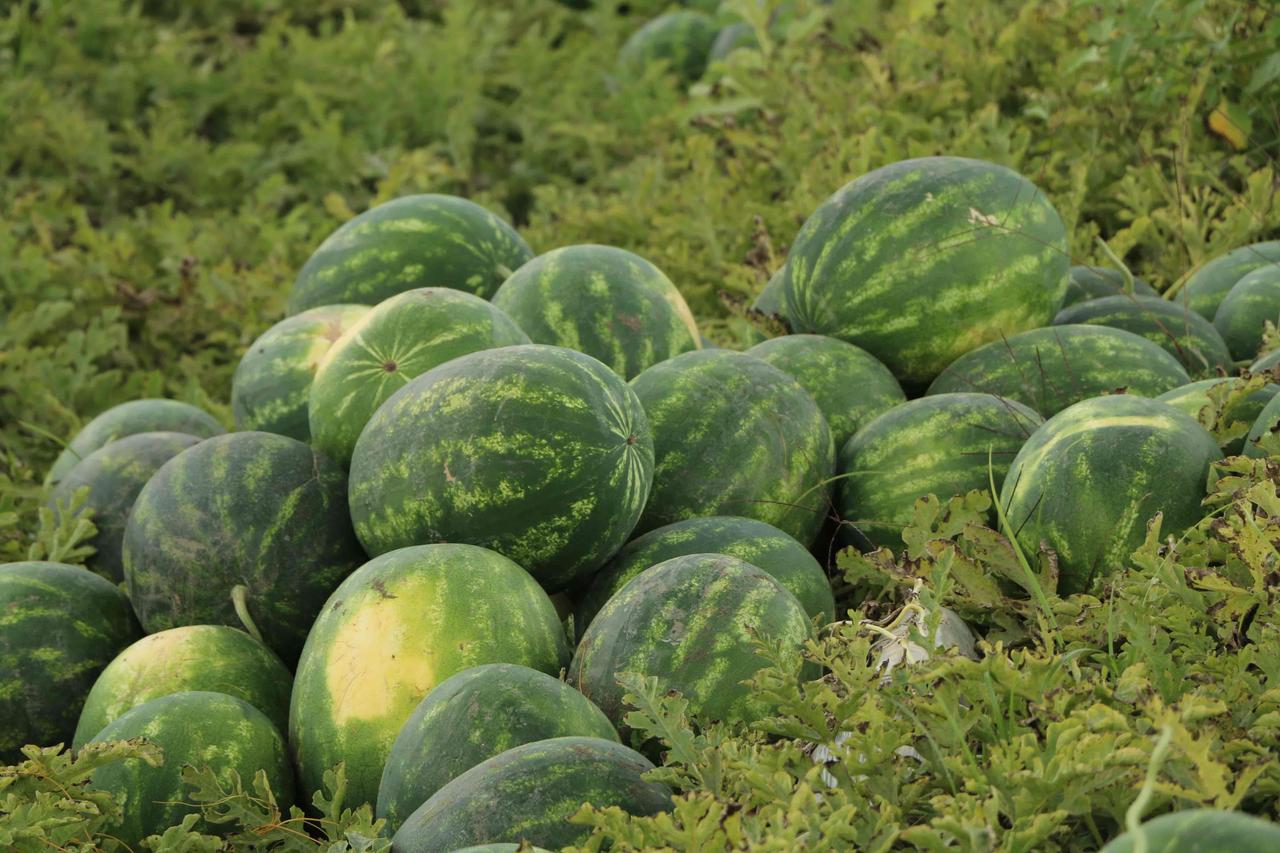
Adana watermelon is a variety of Citrullus lanatus cultivated within the geographic boundary encompassing Adana Province and the Tarsus district of Mersin Province. Due to its sandy soil structure and region-specific climatic conditions, it stands out as an early-season crop. Thanks to planting beginning at the end of January, Adana watermelon is among the earliest to reach markets in Türkiye. It is produced using either seeds or seedlings, through either open-field or protected cultivation methods. Grafted seedlings are preferred in cultivation to enhance resistance to diseases. Harvest time is determined based on physical indicators such as drying of the fruit stem and skin glossiness.
The region where Adana watermelon is grown is distinguished by its sandy soil structure and climatic conditions suitable for planting from early in the year. The most significant factor differentiating this product from watermelons grown in other regions is the early planting period, which begins in late January and enables earlier harvest. This early maturity allows the product to enter the market sooner. After harvest, the watermelon has an average shelf life of 10 to 20 days.
Cultivation of Adana watermelon is carried out using either seeds or seedlings and is based on two primary methods: open-field cultivation and protected cultivation (low tunnels).
In seed-based cultivation, soil preparation begins in autumn. In the first stage, deep plowing is performed with the addition of barn manure, followed by breaking up the hardpan layer using a subsoiler. The second soil treatment occurs in January–February during which basal fertilizer is applied. In planting areas, 3 to 4 seeds are sown per hill. Spacing is planned at 150–300 cm between rows and 50–75 cm within rows.
Seedling-based cultivation employs both grafted and non-grafted seedlings. Grafted seedlings are produced by grafting watermelon scions onto squash-type rootstocks to enhance disease resistance. Seedling growing media are composed of mixtures of 3/2 peat and 1/3 vermiculite or perlite. Seedlings are first kept in germination chambers before being transferred to greenhouses. In grafted seedling production, scions and rootstocks are developed separately; after grafting, they are maintained in a high-care room and their final development is completed in greenhouse conditions. The period from propagation in trays to field transplanting for non-grafted seedlings is 55–60 days.
Before seed sowing or seedling transplanting, the soil is worked with 3–5 tons of composted barn manure per hectare. In high-lime soils, powdered sulfur is additionally applied. Fertilizers applied between cultivations or before irrigation are either incorporated into the soil or delivered through irrigation to ensure interaction.
In protected cultivation, low tunnels are constructed using a framework of iron rods covered with plastic film. Tunnels are typically built to dimensions of 12–14 meters in length, 100–120 cm in width, and 50–60 cm in height. This structure provides protection from cold and supports early production. Yield increases are aimed for through the use of plastic mulch and double-layered tunnels.
The irrigation strategy is planned according to the growth stages of the plant. After transplanting, water requirements are limited until the flowering stage. From flowering onward, water demand increases, reaching its peak during fruit enlargement and ripening. However, excessive irrigation promotes vegetative growth at the expense of fruit set. Therefore, frequent but small-volume irrigation is recommended. In protected cultivation, drip irrigation or surface irrigation methods are preferred. Irrigation must be stopped close to harvest, as otherwise the risk of fruit cracking and rotting increases.
Harvest time is determined by the drying of the fruit stem’s tendrils, stem thinning, and skin glossiness. Harvesting must be done manually, and fruits must be handled carefully to avoid damage. Storage conditions must be cool, dark, and dry; products must not be stacked. Shelf life varies depending on the type of seedling used, grafting quality, cultivation conditions, and storage environment, but averages 15–30 days.
Adana watermelon is recognized as a geographical indication product only when produced within the defined boundaries of Adana Province and the Tarsus district of Mersin Province. Its reputation stems from its early market entry and the traditional cultivation practices sustained in the region. Therefore, all stages of production must be carried out within the specified geographical boundary.
The production and marketing of Adana watermelon are monitored by a five-member oversight body coordinated by the Yüreğir Chamber of Agriculture. This body consists of representatives from Yüreğir Municipality, Adana Chamber of Commerce, and the Provincial Directorates of Agriculture and Forestry of Adana and Mersin, along with the Yüreğir Chamber of Agriculture. Inspections are conducted twice annually, during the cultivation and harvest periods. Production methods, emblem usage, and compliance with the geographical boundary are verified. Inspections may also be carried out in response to complaints. Legal proceedings are managed by the registering authority.
Turkish Patent and Trademark Office. "Adana Karpuzu Coğrafi İşaret Belgesi." Accessed August 16, 2025. https://ci.turkpatent.gov.tr/Files/GeographicalSigns/59630d5b-64fd-46d3-a0f8-9c3ec1831343.pdf.
Türk Patent ve Marka Kurumu. "Adana Karpuzu." Coğrafi İşaretler Portalı. Accessed August 16, 2025. https://ci.turkpatent.gov.tr/cografi-isaretler/detay/38292.

Registration Number | 512 | ||||||||
|---|---|---|---|---|---|---|---|---|---|
Registration Date | 28.07.2020 | ||||||||
Application Number | C2017/057 | ||||||||
Application Date | 12.06.2017 | ||||||||
Name of the Geographical Indication | 12.06.2017 | ||||||||
Product / Product Group(s) | Watermelon / Processed and Unprocessed Fruits Vegetables and Mushrooms | ||||||||
Type of Geographical Indication | Certification Mark | ||||||||
Applicant/Registrant(s) | Yüreğir Chamber of Agriculture | ||||||||
Address of the Registrant | Sinanpaşa Neighborhood, Kozan Street No: 4A, Yüreğir / ADANA | ||||||||
Geographical Boundary | Adana Province and Mersin Province Tarsus District | ||||||||
Geographical and Agricultural Characteristics
Cultivation Methods
Seed-Based Production
Seedling-Based Production
Fertilization and Soil Enrichment
Protected Cultivation
Irrigation Management
Harvest and Storage
Geographical Boundary and Production Requirement
Monitoring and Protection