
Birth | 1939 Kahramanmaraş | ||||||||
|---|---|---|---|---|---|---|---|---|---|
Death | 2008 İstanbul | ||||||||
Nationality | Turk | ||||||||
Education | Turkish Language and Literature İstanbul University | ||||||||
Profession(s) | Writer Poet | ||||||||
Notable Works | İpek Yolundan Afganistan'a Risaleler Sebeb Ey | ||||||||
Literary Style | Metaphysical thought Social responsibility Islamic sensitivity | ||||||||
Artistic Environment | Yedi Güzel Adam community | ||||||||
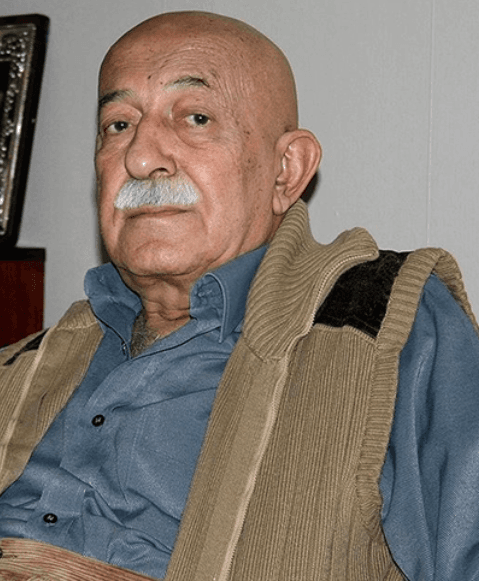
Adil Erdem Bayazıt was born in 1939 in Kahramanmaraş. Although his name appears in some sources as Erdem Bayazıt, his full name is Adil Erdem Bayazıt. He spent his childhood and early youth in Kahramanmaraş. Throughout much of his life, Bayazıt devoted himself to literary and intellectual pursuits while also holding various public offices. He died in Istanbul on 5 July 2008. His funeral was held at the Eyüp Sultan Cemetery in Istanbul.

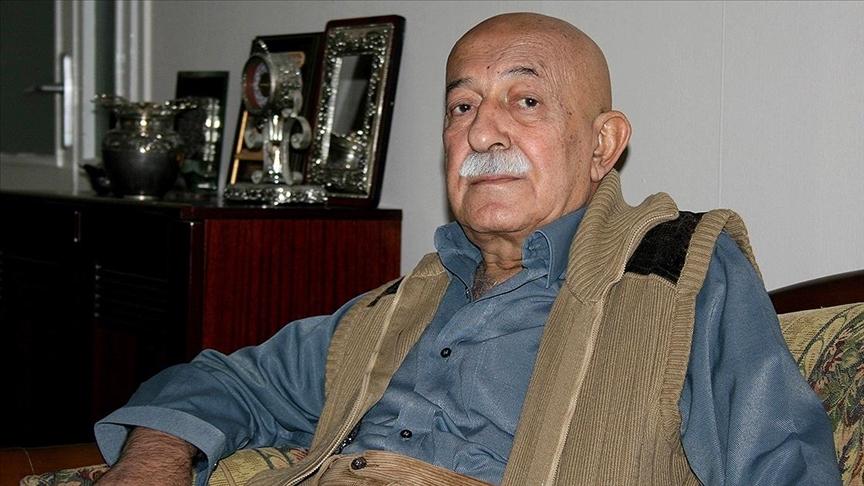
Adil Erdem Bayazıt (AA)
Adil Erdem Bayazıt completed his primary and secondary education in Kahramanmaraş and continued his high school education there. During his high school years, he became part of a circle of friends with a strong interest in literature, a period that proved decisive in the development of his literary identity. In 1959 he enrolled at the Faculty of Law of Istanbul University but soon left and transferred to the Department of Turkish Language and Literature at the Faculty of Letters of Istanbul University. During his studies he engaged with both classical and modern literature and established connections with various literary circles. He graduated in 1963. While at university he formed friendships with writers who would later be known as the “Seven Good Men” and began publishing articles in various journals alongside this group.
After graduating from university, Adil Erdem Bayazıt worked as a teacher for a period. He later held positions in various units under the Ministry of Culture. During this time he worked particularly in regional directorates of culture; he served in Maraş and Gaziantep. He played an active role in organizing cultural events and preparing regional publications. In the 1970s he worked as a scriptwriter for Istanbul Radio. At the end of the 1980s he entered politics and was elected as a member of the Grand National Assembly of Türkiye from Kahramanmaraş in the 1991 general elections as a candidate of the Welfare Party. During his parliamentary term he focused on cultural and social issues, especially conducting work on cultural policies and education. After his parliamentary service ended, he returned to emphasizing his literary activities and writings.
Adil Erdem Bayazıt’s literary journey began during his high school years. During this period he published poems in school journals he co-edited with his friends. At university he continued writing for various literary journals. Particularly from the 1960s onward he contributed poetry and articles to journals such as Diriliş, Edebiyat, and Mavera.
In his poetry Bayazıt addressed both individual and social themes while employing modern poetic techniques with a sensitivity rooted in tradition. His language is simple and sincere, characterized by a style that blends metaphysical thought with social responsibility. Prominent themes in his poetry include Islamic sensibility, the pursuit of justice, the idea of freedom, and the inner journey of the human being.
An important influence on his literary outlook was his circle of friends. His membership in the literary group known as the “Seven Good Men” sharpened both his intellectual depth and poetic line. His poems are marked by dense imagery, rhythmic structure, and mystical allusions. He viewed his art as a mirror reflecting the spirit of society and regarded poetry as a quest for truth.
Adil Erdem Bayazıt’s first poetry collection, Sebeb Ey, was published in 1972. This work is one of the foundational texts reflecting his poetic vision and thematic orientation. It foregrounds both personal emotion and social messages. In this book, while addressing themes such as freedom, justice, faith, and existence, the poet combines lyrical expression with intellectual intensity.
His 1983 publication Risaleler is characterized as a poetic text. This book presents the poet’s intellectual and aesthetic inquiries through a narrative that blends prose poetry and essay form. In it Bayazıt establishes a more thought-oriented relationship with words and concepts.
In addition to his poetry, he produced works in the travel genre. His book İpek Yolundan Afganistan’a was written after a journey to Afghanistan in the 1980s. This work not only bears witness to a war-torn geography but also contains the author’s observations on humanity, resistance, and civilization. In this sense it possesses both documentary and literary qualities.
Bayazıt’s works attracted attention in both literary and intellectual circles upon publication, and his poetry collections and writings received various awards. He was particularly honored by the Turkish Writers’ Union for his contributions to poetry and journalism.
First edition: 1972, Edebiyat Dergisi Yayınları
2nd edition: 1979, Akabe Yayınları
Publication: 1987, Akabe Yayınları (Latest poems)
2nd edition: 1989
Publication: 1992, İz Yayıncılık (4th edition: 1998)
Publication: 1982, Akabe Yayınları
Adil Erdem Bayazıt became part of an important intellectual and artistic community in Turkish literature, especially through the circle of friends he formed during his high school and university years. This group later became known as the “Seven Good Men.” Bayazıt shared the same intellectual ground with figures such as Cahit Zarifoğlu, Alaeddin Özdenören, Rasim Özdenören, Mehmet Akif İnan, Nuri Pakdil and Akif Aydoğan and developed both his literary production and ideological stance within this circle.
This group represented not only a literary but also an ideological and cultural stance. Bayazıt contributed poetry and articles to journals such as Diriliş, Edebiyat, and Mavera, which served as both platforms of expression and intellectual schools for young writers of the era who embraced Islamic sensibility.
This interaction within his artistic circle refined his literary outlook and helped him forge a distinctive line that united personal lyricism with social responsibility. These relationships extended beyond merely writing for shared journals; they evolved into a solidarity of thought and a shared cultural struggle.
Adil Erdem Bayazıt died in Istanbul on 5 July 2008 after a long struggle with illness. His death generated widespread反响 in the literary and intellectual world.
Bayazıt’s funeral was held at the Eyüp Sultan Cemetery in Istanbul. Following his death, various institutions and literary circles organized commemorative events, and evaluations of his writings, poems, and ideas were published.
In some cities, schools, libraries, and cultural centers were named in his honor. In commemorative events focusing on his place within the “Seven Good Men” group and his literary personality, both his poetic vision and cultural legacy were emphasized. His works continued to be read after his death, and his influence on Turkish literature endured.

Grave of poet Erdem Bayazıt (AA)
Oğuz, Mehmet. “Adil Erdem Bayazıt’ın Şiirlerinde Dört Unsur.”
TDV İslâm Ansiklopedisi. "Bayazıt, Erdem." Türkiye Diyanet Vakfı İslâm Ansiklopedisi. https://islamansiklopedisi.org.tr/bayazit-erdem.
TürkEdebiyati.org. "Erdem Bayazıt." *Türk Edebiyatı*. https://www.turkedebiyati.org/erdem-bayazit/.

Birth | 1939 Kahramanmaraş | ||||||||
|---|---|---|---|---|---|---|---|---|---|
Death | 2008 İstanbul | ||||||||
Nationality | Turk | ||||||||
Education | Turkish Language and Literature İstanbul University | ||||||||
Profession(s) | Writer Poet | ||||||||
Notable Works | İpek Yolundan Afganistan'a Risaleler Sebeb Ey | ||||||||
Literary Style | Metaphysical thought Social responsibility Islamic sensitivity | ||||||||
Artistic Environment | Yedi Güzel Adam community | ||||||||
Educational Life
Professional Life and Public Offices
Literary Activities and Poetic Vision
Works
Poetry Books
Sebeb Ey
Risaleler
Şiirler (Sebeb Ey and Risaleler)
Travel Book
İpek Yolundan Afganistan’a
Awards Received
1983 Turkish Writers’ Union Journalism Award
1988 Turkish Writers’ Union Poetry Award
Artistic and Intellectual Circle
Death and Legacy