

This article was automatically translated from the original Turkish version.
+1 More
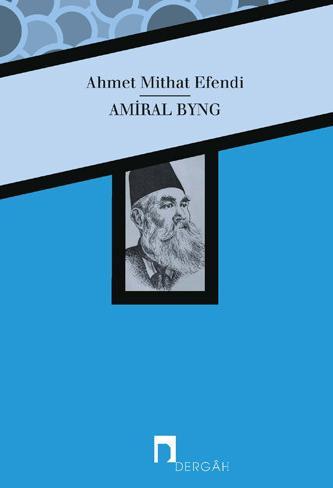
"Admiral Byng" is a historical novel written by Ahmet Mithat Efendi (1844–1912), one of the most prolific and significant figures in Turkish literature, and prepared for publication by İnci Enginün as part of Dergâh Publications’ "Turkish Literature" series. The novel centers on the trial and execution of British Admiral John Byng following his defeat by the French navy at Minorca during the mid-eighteenth-century Seven Years’ War. Ahmet Mithat Efendi adapted this historical event from a French play, transforming it into a literary narrative that offers a fictional interpretation of a real historical incident. The book, published in April 2014, consists of 217 pages.
The novel "Admiral Byng" focuses on the siege of Minorca, a key naval theater of the Seven Years’ War beginning in 1756, and the tragic events that followed. The central theme is the court-martial and eventual execution of British Admiral John Byng after he surrendered Minorca to the French. Inspired by the French play "Le Amiral de l'escadre bleue," Ahmet Mithat Efendi transformed this episode into a novel. The work explores Byng’s military strategies, the harsh conditions of war, failures in the chain of command, and political intrigues. The details of the trial—including charges, defenses, and the political atmosphere of the era—form the backbone of the narrative.
The book does not merely recount a historical event; it also interrogates universal themes such as justice, responsibility, patriotism, and the individual’s helplessness before systemic forces. Through Byng’s fate, the novel indirectly examines military discipline, the qualities of leadership, and the risks inherent in error. While reimagining the tragic end of a historical figure in literary form, Ahmet Mithat Efendi invites readers to reflect on the events of the period and the psychological dimensions of its characters.
The language and style of Ahmet Mithat Efendi’s "Admiral Byng" reflect the characteristics of the Tanzimat period’s novelistic tradition. The author employs a simple and accessible language with a didactic aim—to inform and educate the reader. The narrative flows smoothly, and the plot is structured to hold the reader’s interest. The text contains historical and military terminology consistent with the literary Turkish of the era. The style conveys events from an objective distance while offering subtle insights into the inner lives of the characters. In adapting the original French play into a novel, Ahmet Mithat Efendi preserved its dramatic structure while achieving a successful literary transformation.
Ahmet Mithat Efendi was one of the most productive and popular writers of the Tanzimat period, producing works across multiple genres including the novel, short story, article, and drama. He is regarded as a "Hace-i Evvel" (First Teacher) whose mission was to educate and enlighten the public. "Admiral Byng" exemplifies Ahmet Mithat Efendi’s skill in translation and adaptation, as well as his deep interest in historical events. The novel holds importance for introducing Turkish readers to historical and social developments in the West. It not only narrates the tragic story of Admiral Byng but also opens a window into European politics and military life of the time. In this regard, it is a valuable work for study both within Ahmet Mithat Efendi’s complete oeuvre and among the earliest examples of translation and adaptation in Turkish literature.
No Discussion Added Yet
Start discussion for "Admiral Byng (Book)" article
Content and Thematic Structure
Language and Style
The Author’s Position and the Significance of the Work