
+2 More

Doğum tarihi | 1960-11-21 | ||||||||
|---|---|---|---|---|---|---|---|---|---|
Education | Ege University Department of Philosophy | ||||||||
Specialization Area | Ancient Greek Philosophy | ||||||||
Profession(s) | Author Academic | ||||||||
Literary Genres | Novel, Essay, Short Story | ||||||||
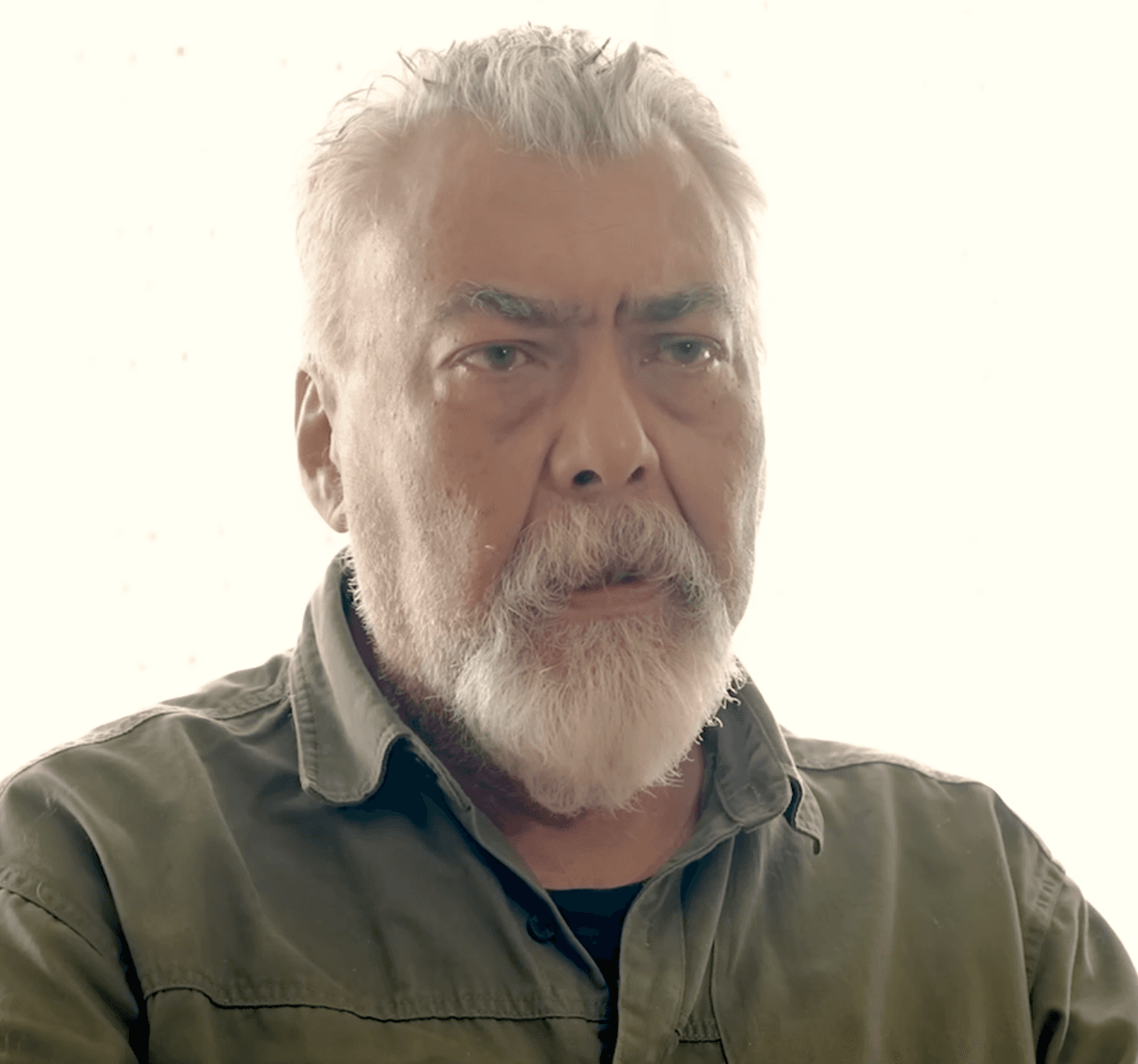
Ihsan Oktay Anar was born on 21 November 1960 in Yozgat as the youngest member of a family originating from Istanbul. His ancestors migrated from Kazan to Ottoman lands in 1893 and adopted the surname “Anar” during the Republic of Türkiye period. His father Mehmet Sait Bey worked as an alcohol expert at the state monopoly, while his mother Bedia Hanım served as a civil servant. Anar, who had two older sisters—Süheyla and Füruzan—began showing interest in books from an early age. He dedicated his novel Suskunlar to his sisters.
Anar completed his primary and secondary education in Istanbul. In 1974, after his family moved to İzmir, he enrolled at Karşıyaka Boys’ High School. Due to his preference for spending time in the library, he frequently skipped classes and did not complete his studies at the time; he later obtained his high school diploma from Akşam Art High School. He graduated from the Department of Philosophy at Ege University in 1984. Continuing his academic journey at the same university, Anar completed his master’s thesis in 1989 titled The Problem of Being in Pre-Socratic Philosophy and his doctoral dissertation in 1994 titled The Concept of Time in Ancient Greek Philosophy.
His primary academic specialization is Ancient Greek philosophy, with the thoughts of Socrates, Plato, and Aristotle forming the core of his teaching. In 2011, he retired from his position as assistant professor in the Department of Philosophy at Ege University.
In 1995, he fulfilled his military service as a reserve officer in Southeastern Anatolia. In 1999, he married Özlem Anar and dedicated his novel Amat to her. He engaged with the arts, painting, sign painting, classical music, and played the violin. He created the cover illustration for his wife Özlem Anar’s book Kayıp Ruhlar Kitabı. Throughout his writing career, he avoided public visibility. He declined interviews and avoided participation in mass media. He published articles in the newspaper Yeni Binyıl and literary journals such as Öküz, Hayvan, and Ot.
Anar’s first published short story, “Apologya for the Infidels,” appeared in the magazine Morköpük in 1985. His first novel, Puslu Kıtalar Atlası, published in 1995, is his literary debut. Set in 17th-century Istanbul, the novel blends the imaginary with the real in a complex narrative. It has been translated into more than twenty languages but has not been adapted into film. In 2015, it was adapted into a graphic novel by İlban Ertem. His 1996 novel Kitab-ül Hiyel recounts the life stories of three inventors through technical drawings. His 1998 work Efrâsiyâb’ın Hikâyeleri consists of tales told by the characters Death and Cezzar Dede to each other. This work has been staged at theaters in England and the Istanbul State Theatre.
Published in 2005, Amat is a sea-themed novel that reinterprets the motif of Noah’s Ark using an “interwoven fiction” technique. Suskunlar, published in 2007, explores the conflict between good and evil through allegorical elements. The 2012 novel Yedinci Gün, structured in three parts centered on the themes of father, son, and ghost, alludes to recent historical events. Galiz Kahraman, published in 2014, is Anar’s most linguistically minimalist work. His most recent publication, Tiamat, appeared in 2022. Additionally, he has written another unpublished work titled Tamu, composed before Puslu Kıtalar Atlası.
Anar’s novels employ postmodern narrative techniques. Nested fictions, dreams within dreams, and layered textual structures create depth within his texts. Intertextuality is a defining feature of his narrative universe. References to sacred texts such as the Quran, the Bible, and the Torah, as well as to the Masnavi, Ottoman divan literature, Greek mythology, and Western philosophy, appear frequently in his works. Philosophical allusions, such as the transformation of Descartes’ “I think, therefore I am” into “I dream, therefore I am,” are central to his approach to language. His style is enriched with Ottoman Turkish, slang, and colloquial expressions.
The characters in Anar’s narrative world are predominantly male. He presents a broad spectrum of male figures ranging from treasure hunters and dervishes to bandits and philosophers. Female characters are few in number and less dominant. The male figures in his novels typically pursue knowledge, power, or immortality—endeavors that usually end in failure.
The desire for power and authority is a central theme in nearly all his works. Relationships between men and women are generally portrayed through the lens of oppression and violence. Social critiques appear notably in novels such as Galiz Kahraman. These critiques address the instrumentalization of religion, the inadequacies of the academic world, the commercial exploitation of cultural heritage, and superficiality in the arts and literature. These critiques are presented through allegory and irony.
Ihsan Oktay Anar has established a distinct place in contemporary Turkish fiction through his unique language and narrative structure. By combining fantastical elements with historical layers, he constructs intricate plots and narrative universes. He does not adhere to traditional novel forms but rather employs their structures. His academic background and literary works have left a lasting imprint on the Turkish novel.
Puslu Kıtalar Atlası (1995): Set in 17th-century Ottoman Istanbul, this novel intertwines reality and dream, history and imagination. A multi-layered narrative is presented through the characters Bünyamin and his father Uzun İhsan Efendi. The novel includes philosophical allusions, imaginary cities, and fantastical motifs. It has been translated into over twenty languages and adapted into a graphic novel by İlban Ertem in 2015.
Kitab-ül Hiyel (1996): This novel tells the stories of three inventors—Üzeyir, Deli Efruz, and İdris Çelebi—centered on the theme of “hiyel” (mechanical devices), merging engineering knowledge with imagination. The novel is enriched with technical drawings and offers a perspective on the history of science in the Ottoman period. The drawings are by the author himself.
Efrâsiyâb’ın Hikâyeleri (1998): Set in a folkloric and mythological atmosphere, this work consists of eight tales told by Death and the elderly Cezzar Dede to each other. The stories focus on themes such as fear, love, childhood, and guilt. The “story within a story” technique is prominent. It has been adapted for the stage in Turkey and England.
Amat (2005): A sea-themed novel set in the late 17th century, it follows the crew of a warship named Amat. The image of Noah’s Ark, sacred text motifs, demonic figures, and mythological references are interwoven. It functions as a “sea allegory.”
Suskunlar (2007): Set in the final years of the Ottoman Empire, the novel unites music with mysticism. Centered on the life of the protagonist Eflatun, it presents an allegorical portrayal of the struggle between good and evil. Themes of city, music, fate, and silence are explored.
Yedinci Gün (2012): The novel is structured in three main sections titled “Father,” “Son,” and “Ghost.” It engages with Türkiye’s recent history and is woven with political and existential inquiries. Divine allusions and contemporary political critiques are interwoven throughout the text. The cover design was created by the author.
Galiz Kahraman (2014): This is Anar’s novel that uses the fewest Ottoman Turkish words. It centers on an ordinary anti-hero and examines the impact of the desire for power, status, and fame on individuals. Themes such as capitalism, literary circles, the academic world, and the commodification of religion are critically addressed through allegory.
Tiamat (2022): Referencing the Babylonian goddess of creation, Tiamat, the novel constructs a philosophical and cosmological narrative around the concepts of chaos and order, beginning and end.
Evet Evet Media. "Ahde Vefa | İhsan Oktay Anar." YouTube Video, Accessed August 23, 2025. https://www.youtube.com/watch?v=J1LArBMQ3e0.
Güler, Ahmet Faruk. “İhsan Oktay Anar’ın Galiz Kahraman Adlı Romanında Sosyal Eleştiri.” Yeni Türk Edebiyatı Araştırmaları 20, no. 20 (2018): 96–109. Accessed August 16, 2025. https://dergipark.org.tr/tr/download/article-file/602295
Hüküm, Muhammed. “İhsan Oktay Anar’ın Puslu Kıtalar Atlası Romanının Metinlerarası İlişkiler Açısından Değerlendirilmesi.” Akademik Matbuat 1, no. 1 (2017): 38–51. Accessed August 16, 2025. https://dergipark.org.tr/en/download/article-file/365393
Karlıdağ, Esra. “Anar, İhsan Oktay.” *Türk Edebiyatı İsimler Sözlüğü*. Accessed August 16, 2025. https://teis.yesevi.edu.tr/madde-detay/anar-ihsan-oktay
Karlıdağ, Esra. “İhsan Oktay Anar’ın Romanlarında Metinlerarası İlişkiler.” *Hacettepe Üniversitesi Türkiyat Araştırmaları Dergisi (HÜTAD)* 17, no. 17 (2012): 101–117. Accessed August 16, 2025. https://dergipark.org.tr/tr/download/article-file/3734926
Utanır, Ayşen. "İhsan Oktay Anar’ın Romanlarında Erkekler ve Erkeklikler." *Gaziantep University Journal of Social Sciences* 19, no. 2 (2020): 526–542. Accessed August 16, 2025. https://dergipark.org.tr/en/download/article-file/1058890.

Doğum tarihi | 1960-11-21 | ||||||||
|---|---|---|---|---|---|---|---|---|---|
Education | Ege University Department of Philosophy | ||||||||
Specialization Area | Ancient Greek Philosophy | ||||||||
Profession(s) | Author Academic | ||||||||
Literary Genres | Novel, Essay, Short Story | ||||||||
Education and Personal Life
Literary Output and Narrative World
Themes, Critiques, and Literary Position
Works